Beyond NVIDIA and TSMC: These AI Supply Chain Hidden Champions Deserve More Attention



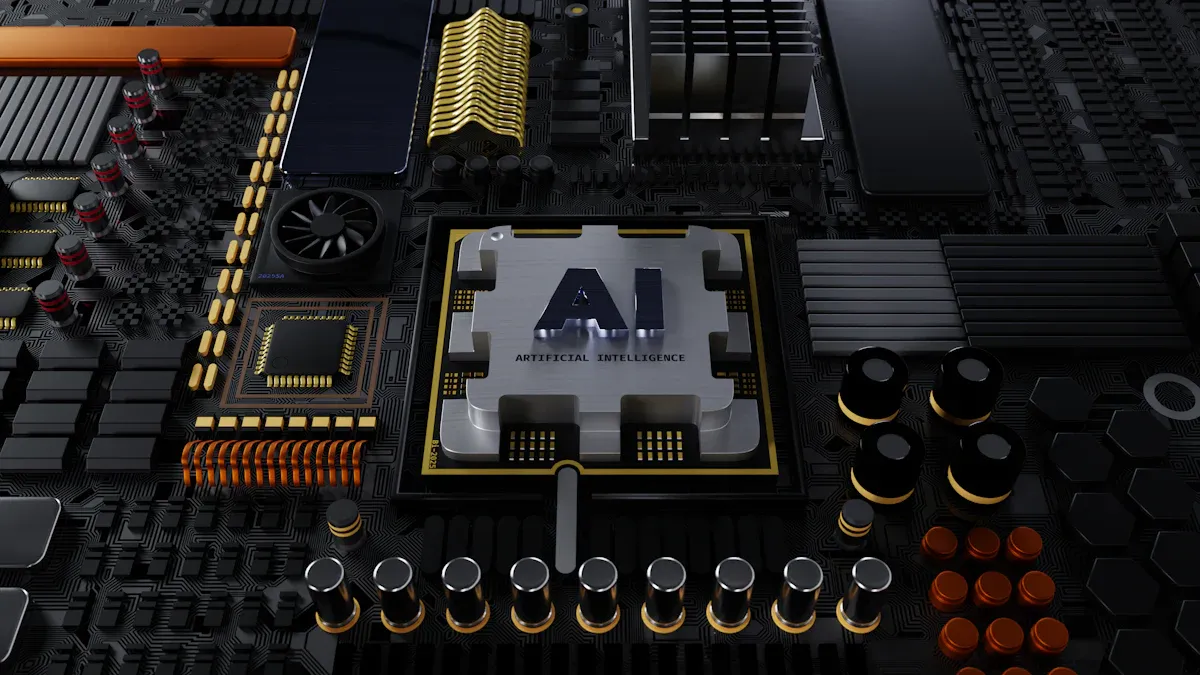
Image Source: unsplash
Current financial headlines are overwhelmingly focused on NVIDIA and TSMC. TSMC’s market dominance is indeed remarkable, holding a 70% share in foundry capacity and dominating the global AI data center logic semiconductor market.
When giants shine too brightly, could the true excess returns be hiding in the shadows of the supply chain?
The AI infrastructure market is projected to expand at a stunning 30.4% CAGR from 2024 to 2030. This means the entire value chain harbors massive growth potential waiting for investors to uncover.
Key Points
- AI development requires extensive support—not just NVIDIA and TSMC; many companies quietly contribute behind the scenes.
- AI servers and cooling technology are critical. Companies like Supermicro, Foxconn (Hon Hai), Auras, and Chaun-Choung enable AI systems to run faster and more stably.
- Manufacturing AI chips requires specialized equipment and materials—ASML, Applied Materials, and Lam Research are key providers of these tools.
- Data transmission speed is an AI bottleneck. SK Hynix’s high-bandwidth memory, Alchip’s custom chips, and Marvell’s high-speed interconnects help data flow faster.
- Investing in these “hidden champions” within the AI supply chain offers more growth opportunities and helps diversify risk.
Decoding Financial News: Servers and Cooling as the New Investment Focus

Image Source: pexels
AI development cannot function without powerful computing infrastructure, making AI servers direct beneficiaries of the current build-out wave. Many financial reports note that the AI server market is expected to grow from $245 billion in 2025 to $524 billion by 2030 at an 18% CAGR. This trend not only boosts system manufacturers’ performance but has also triggered urgent demand for efficient cooling solutions. Recent financial news shows investors shifting focus from chips themselves to these critical links that support computing power.
Supermicro (SMCI): The King of Customized AI Servers
Supermicro is a flagship player in the AI server market. Thanks to its close partnership with NVIDIA and rapid customization capabilities, the company has seized first-mover advantage. Its explosive stock price and revenue growth have become hot topics in financial news. For example, in the quarter ended September 30, 2025, revenue surged 15.49% year-over-year to $5.02 billion. Supermicro’s success proves that delivering highly integrated and optimized server systems is key to winning AI orders.
Foxconn (Hon Hai): Transformation Opportunity in AI Server Manufacturing
Compared to Supermicro’s spotlight in financial news, traditional manufacturing giant Foxconn’s transformation potential deserves closer attention. Foxconn is aggressively expanding its AI server business and has become a major supplier of NVIDIA chip substrates. From a valuation perspective, Foxconn offers significant upside.
| Company | P/E Ratio |
|---|---|
| Supermicro (SMCI) | 25.3 |
| Foxconn (Hon Hai) | 18.6 |
| Quanta Computer | 16.2 |
Foxconn’s relatively lower P/E ratio suggests the market may not have fully priced in its AI server growth potential, offering investors a unique entry point.
Auras and Chaun-Choung: Taiwan’s Liquid Cooling Twin Titans
With the launch of high-power GPUs like NVIDIA B100 or AMD MI300 series, traditional air cooling has reached its limit. Liquid cooling has become inevitable, expected to account for 12% of the overall data center cooling market by 2025. Taiwan’s Auras and Chaun-Choung are leaders in this field. Auras expects liquid cooling products to contribute over 40% of revenue by 2025. These companies focused on solving thermal bottlenecks may not headline financial news as often as chip giants, but they are indispensable hidden champions in the AI ecosystem.
Advanced Process Arsenal: Semiconductor Equipment and Materials Providers
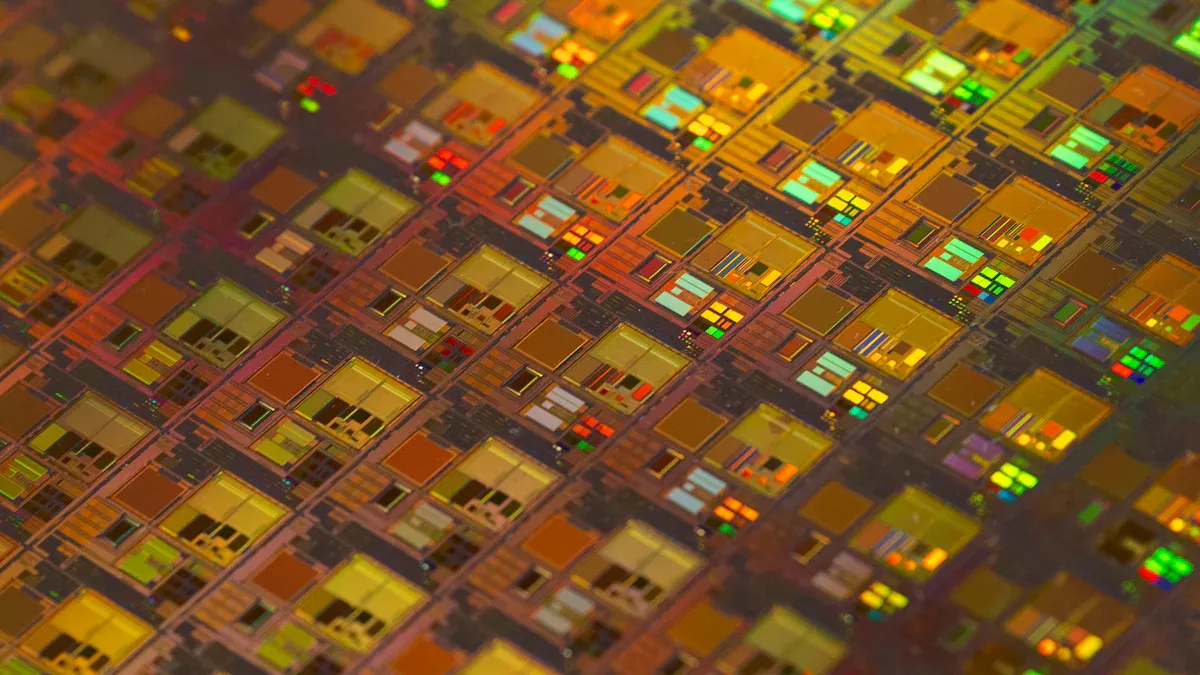
Image Source: unsplash
If TSMC is the super factory building AI chips, then semiconductor equipment providers are the “arsenal” supplying the tools and blueprints. AI chips’ dependence on advanced nodes has directly ignited massive demand for cutting-edge manufacturing equipment. The shift of generative AI from cloud to PCs and smartphones further drives volume demand for semiconductor manufacturing.
Market forecasts show the semiconductor equipment industry entering a golden growth period:
- Advanced node (7nm and below) capacity is projected to grow nearly 70% by 2028.
- Wafer fab equipment investment for advanced technologies is expected to rise 33% in 2025 and another 21% in 2027.
- The overall semiconductor manufacturing equipment market is forecasted to reach $211.24 billion by 2034.
This AI-driven capacity expansion wave brings unprecedented opportunities for equipment and materials providers.
ASML: Absolute Monopoly in EUV Lithography
ASML plays an irreplaceable role in the semiconductor supply chain. It is the world’s only manufacturer of extreme ultraviolet (EUV) lithography machines—essential technology for producing chips below 7nm. ASML holds over 90% of the global EUV market, creating an absolute technical monopoly.
This Dutch giant’s moat lies not only in technology but also in astonishing pricing power and demand. Its latest-generation EUV machines average around $250 million each, with a backlog of $39.7 billion as of Q2 2025, reflecting foundries’ extreme thirst for its equipment.
Applied Materials: Leader in Wafer Fabrication Equipment
Applied Materials is the world’s largest semiconductor equipment and services provider, offering broad solutions from wafer fabrication to packaging. Its materials engineering technology is crucial in AI chip production. Applied Materials leads in key processes like epitaxy, ion implantation, and chemical mechanical planarization (CMP). Its Kinex hybrid bonding system and advanced packaging equipment are core to optimizing AI chip power and cost, making it an essential partner in AI infrastructure expansion.
Lam Research: The Hidden Giant in Etch Technology
Lam Research leads in etch technology, vital for creating 3D chip structures. As AI applications explode data storage demand, high-bandwidth memory (HBM) and 3D NAND flash layers keep stacking higher. Lam Research’s Cryo™ 3.0 cryogenic etch technology enables nanometer-precision etching of ultra-high aspect ratio features, paving the way for over 1,000-layer 3D NAND. This technology directly addresses the data storage bottleneck of the AI era, making it the strongest technical backbone for memory manufacturers.
Breaking Data Transmission Bottlenecks: Key Chips and Components
AI models are like extremely hungry brains that constantly devour massive data. Yet when data movement between processors, memory, and servers cannot keep up with computation speed, severe “data bottlenecks” occur. It’s like a highway—however powerful the cars, traffic jams render them useless. To solve this, key chip and component companies in the supply chain have emerged, specializing in improving data transmission efficiency and speed.
- Memory Bandwidth Bottleneck: AI training involves frequent data exchange between GPUs and memory; insufficient bandwidth causes latency.
- Interconnect Bottleneck: In distributed training across multiple GPUs, data exchange speed between GPUs directly impacts overall efficiency.
These bottlenecks highlight the value of high-bandwidth memory (HBM) and high-speed transmission technology.
SK Hynix: Leader in HBM High-Bandwidth Memory
SK Hynix is the undisputed king of solving memory bottlenecks. It dominates the high-bandwidth memory (HBM) market with a 62% share as of Q2 2025. HBM dramatically increases data bandwidth by vertically stacking multiple DRAM dies, making it standard equipment for high-end AI chips from NVIDIA and others.
The HBM market is expected to grow from the current $2.3 billion to over $25.9 billion by 2034, showing astonishing growth potential.
SK Hynix’s HBM3E products not only deliver top performance but also achieve breakthroughs in power efficiency, making it the preferred partner for AI chip makers.
Alchip Technologies (Alchip-KY): Core of ASIC Custom Chip Design
Beyond general-purpose GPUs, many hyperscalers (CSPs) are shifting toward custom AI chips (ASICs) for higher performance and cost efficiency. Alchip is the design core in this field. It specializes in high-end ASIC design services, helping clients turn AI algorithms into physical chips.
Strong project orders signal rapid growth ahead. Alchip expects 2024 to be another record year and is confident of “super high-speed growth” in 2026. Its technology roadmap already extends from 5nm and 3nm to future 2nm processes, placing it in an ideal strategic position in the custom AI chip wave.
Marvell Technology: Pioneer in High-Speed Interconnects and Silicon Photonics
Marvell focuses on solving internal data center “interconnect bottlenecks.” As data volumes explode, traditional copper transmission is reaching its limit—optical communication is the inevitable trend. Through advanced PAM4 DSP and silicon photonics technology, Marvell drives 800G and even 1.6T ultra-high-speed Ethernet.
| Product Type | Product Name | Primary Use |
|---|---|---|
| PAM DSP | Perseus, Porrima, Spica | Drive 800G–1.6T optical modules for AI data centers and cloud interconnects |
| Coherent-lite DSP | Aquila | Bridge PAM4 and coherent optics for efficient campus links |
| PCIe Retimer | Alaska P Gen 6 | Extend PCIe signals in servers and AI compute clusters |
Marvell’s comprehensive portfolio makes it an indispensable partner for building low-latency, high-bandwidth AI infrastructure, ensuring smooth data flow inside AI factories.
This article highlights three major investment areas in the AI wave:
- Servers & Cooling: Supermicro, Foxconn (Hon Hai), Auras, and Chaun-Choung.
- Semiconductor Equipment: ASML, Applied Materials, and Lam Research.
- Critical Chips & Components: SK Hynix, Alchip-KY, and Marvell.
The success of the AI industry rests on collaboration across the entire ecosystem. Including these hidden champions with strong moats in your portfolio not only diversifies over-concentration in single giants but also effectively captures long-term growth across the full AI value chain.
Thoroughly researching these key companies supporting the AI era is the starting point for discovering the next growth engine.
FAQ
Besides the companies mentioned, which other areas deserve attention?
In addition to servers, semiconductor equipment, and critical components, investors should also watch advanced packaging (CoWoS), silicon photonics, and custom chips (ASICs). These fields directly address physical bottlenecks created by AI computing and possess high technical barriers and growth potential.
What are the risks of investing in these supply chain companies?
Main risks stem from rapid technology iteration and customer concentration. AI technology evolves quickly—if a company fails to keep up with the latest specifications, it may lose orders. Additionally, some companies heavily rely on a single major client (e.g., NVIDIA), so any shift in client strategy directly impacts revenue.
Why not just invest directly in NVIDIA or TSMC?
Investing directly in leaders is a stable choice, but their massive market caps may limit future upside multiples. Investing in supply chain hidden champions offers the chance to enter before their value is fully recognized by the market, potentially capturing higher excess returns.
How to evaluate the investment value of these hidden champions?
When assessing these companies, focus on the following aspects:
| Evaluation Metric | Key Focus |
|---|---|
| Technology Moat | Does it hold exclusive patents or irreplaceable technology? |
| Customer Relationships | Has it established solid partnerships with leading brands (e.g., NVIDIA, AMD)? |
| Revenue Growth | What is the revenue contribution and future growth outlook of related product lines? |
| Market Position | Is it a leader or monopolist in its niche segment? |
*This article is provided for general information purposes and does not constitute legal, tax or other professional advice from BiyaPay or its subsidiaries and its affiliates, and it is not intended as a substitute for obtaining advice from a financial advisor or any other professional.
We make no representations, warranties or warranties, express or implied, as to the accuracy, completeness or timeliness of the contents of this publication.
Related Blogs of

When the US Stock Market Sneezes, Does Taiwan’s Market Catch a Cold? Data Reveals the Real Correlation Between Major Indices


Master Dow Jones Futures Margin Rules: Risk Management Techniques to Avoid Margin Calls


CUDA Ecosystem vs MI350: Who’s Winning the Nvidia vs AMD AI Tech War?


Complete Guide to China's Six Core A-Share Indexes: Everything You Need to Know

Choose Country or Region to Read Local Blog
 Australia
 Austria
 Belgium
 Canada
 Cyprus
 Czech Republic
 Denmark
 Estonia
 Finland
 France
 Germany
 Greece
 Hong Kong
 India
India Indonesia
 Ireland
 Italy
Italy Japan
Japan Latvia
 Lithuania
 Luxembourg
 Malaysia
 Malta
Malta Morocco
 Nepal
Nepal Netherlands
 New Zealand
 Norway
 Pakistan
 Philippines
 Poland
 Portugal
 Romania
 Singapore
 Slovakia
 Slovenia
 South Africa
 South Korea
 Spain
Spain Sweden
 Thailand
 The United States
 Turkey
 United Arab Emirates
 United Kingdom
 Vietnam
Contact Us
Company and Team
BiyaPay Products
Customer Services




BIYA GLOBAL LLC is a licensed entity registered with the U.S. Securities and Exchange Commission (SEC No.: 802-127417); a certified member of the Financial Industry Regulatory Authority (FINRA) (Central Registration Depository CRD No.: 325027); regulated by the Financial Industry Regulatory Authority (FINRA) and the U.S. Securities and Exchange Commission (SEC).
BIYA GLOBAL LLC is registered with the Financial Crimes Enforcement Network (FinCEN), an agency under the U.S. Department of the Treasury, as a Money Services Business (MSB), with registration number 31000218637349, and regulated by the Financial Crimes Enforcement Network (FinCEN).
BIYA GLOBAL LIMITED is a registered Financial Service Provider (FSP) in New Zealand, with registration number FSP1007221, and is also a registered member of the Financial Services Complaints Limited (FSCL), an independent dispute resolution scheme in New Zealand.