Buffett angrily criticizes the tariff war: 'Extremely stupid!' Is the US stock market crash just a small wave?



In the current turbulent global economic situation, “Stock God” Warren Buffett’s speech at the Berkshire Hathaway Shareowner Conference has once again become the focus of market attention. He bluntly criticized tariff policies, emphasized that trade should not be used as a weapon, and calmly viewed the fluctuations of the US stock market, providing valuable rational perspectives for investors. This article will deeply analyze Buffett’s core views and explore how investors can seize opportunities in complex markets.
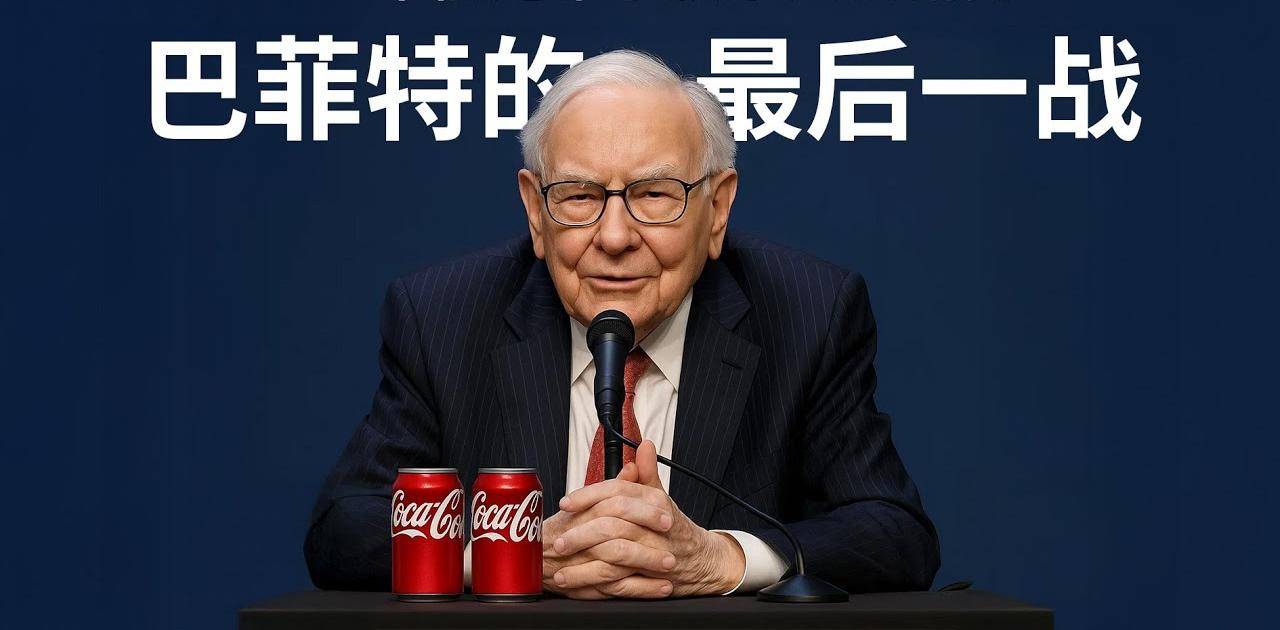
"This is the stupidest decision the US has made in 100 years!" Why is Buffett so angry?
Buffett made it clear at the Shareowner Conference that “the US should not use trade as a weapon.” This statement directly points to the current US government’s tariff policy. He believes that imposing tariffs not only disrupts the global market, but is also a “major mistake”.
1. The essence of the tariff war: harming others without benefiting oneself
Buffett pointed out that the globalized trading system was originally a pattern of mutual benefit and win-win, where countries leverage their own advantages to prosper together through the exchange of resources and Technology Implementation. However, the tariff war has disrupted this balance, leading to supply chain chaos, rising corporate costs, and ultimately shifting the burden to consumers.
2. The risk of US "isolationism"
Buffett warns: ‘When you make 7.50 billion people dissatisfied with you, and your 300 million people are showing off their achievements, it is not a wise move.’ This sentence directly points to the latent risk of the current US trade policy - excessive reliance on tariffs may lead to a decrease in global market trust in the US, and even trigger broader economic countermeasures. In the long run, this’isolationist 'tendency may weaken the international status of the US dollar and exacerbate inflationary pressures.
3. Buffett’s solution: a return to free trade
Buffett advocates that the US should engage in normal trade with other countries. “We do what we do best, and they do what they do best.” This view coincides with the “comparative advantage theory” in economics, where countries focus on their most competitive areas in order to achieve optimal allocation of resources.
Second, bloodbath on Wall Street? Buffett laughed: This is just the beginning!
Since the beginning of this year, affected by factors such as trade frictions and inflation concerns, the US stock market has experienced several violent fluctuations. However, Buffett calmly stated, “Compared to the major crashes in history, the decline of the past few decades is nothing.”
1. The normality of market volatility
Buffett reviewed Berkshire’s three stock price cuts in its history, emphasizing that short-term fluctuations do not affect the long-term value of high-quality companies. For example, during the 2008 financial crisis, Berkshire’s stock price plummeted, but then ushered in a stronger recovery. His core logic is: Short-term mood swings in the market cannot change the intrinsic value of a company.
2. Common investor misconceptions: being dominated by emotions
Buffett reminds that many investors are overly optimistic when the market rises and panic sell when it falls, and this emotional behavior is precisely the main cause of losses. He gives an example: “If you are the kind of person who gets excited when the situation is good and extremely scared when the situation is bad, then the stock market is a bad place for you to enter.”
3. Buffett’s coping strategy: Cash is king, wait for opportunities
Although Berkshire currently holds a large amount of cash (about $150 billion), Buffett is not in a hurry to invest. He emphasized that “good opportunities do not appear every day.” His strategy is to remain patient and buy high-quality assets at low prices during market panic. For example, in the early stages of the epidemic outbreak in 2020, Buffett did not rush to bottom fishing, but waited for more certain opportunities.

What should investors do? Three key action guidelines
Based on Buffett’s perspective, we can extract the following investment strategies to help ordinary investors maintain rationality in volatile markets.
1. Ignore short-term noise and focus on long-term value
The daily ups and downs of the market are full of randomness, and investors should avoid being disturbed by short-term fluctuations. Buffett’s approach is: Only invest in companies that he can understand and hold for the long term. For example, his reason for heavily investing in Apple is not short-term stock price trends, but Apple’s strong brand Competitive Edge and cash flow ability.
2. Keep cash reserves and wait for the "hitting zone"
Buffett always keeps some cash on hand for bottom fishing in the event of a market crash.
3. Risk Diversification, avoid betting on a single field
Although Buffett is bullish on the US economy, he has not invested all his money in US stocks. In recent years, he has increased his holdings in the five major Japanese trading companies and hinted that he may continue to increase his holdings. The core of this strategy is: Reducing systemic risk in the single market through global allocation.
In terms of specific operations, you can choose a more reliable securities firm for investment. For example, Jiaxin Wealth Management is a globally renowned investment securities firm. By opening an account with Jiaxin Wealth Management, you can obtain a bank account with the same name. You can deposit digital currency (USDT) into the multi-asset wallet BiyaPay, and then withdraw fiat currency to Jiaxin Securities for investment in US stocks. You can also directly search for its code on the BiyaPay platform to buy. At the same time, investors can monitor stock prices regularly according to their investment strategies and buy or sell stocks at the appropriate time.

Conclusion: Rationality is the most powerful weapon for investors
Buffett’s speech once again proves that the key to successful investment is not predicting the market, but maintaining rationality. The tariff war may bring short-term chaos, but the trend of globalization is difficult to reverse; the volatility of the US stock market may be unsettling, but history has proven that high-quality assets will eventually repair their valuations.
For investors, the real challenge is not the market itself, but how to overcome human greed and fear. As Buffett said, “At critical moments, rely on rational judgment, not emotions.” In the future investment journey, this wisdom may be more precious than any technical analysis.
*This article is provided for general information purposes and does not constitute legal, tax or other professional advice from BiyaPay or its subsidiaries and its affiliates, and it is not intended as a substitute for obtaining advice from a financial advisor or any other professional.
We make no representations, warranties or warranties, express or implied, as to the accuracy, completeness or timeliness of the contents of this publication.
Related Blogs of

Ultimate Guide to Applying for a Schengen Visa in the USA in 2025: Understand the Process, Documents, and Timeline in One Article


2025 Taiwan Stock Market Year-End Review and 2026 Outlook: Can the AI Boom Continue?


Say Goodbye to Bank Queues: Latest 2025 Bank of China App Guide for Converting Cash to Exchange


What Does Price-to-Earnings Ratio (PE) Mean? Master It to Navigate the Chinese Stock Market
Choose Country or Region to Read Local Blog
 Australia
 Austria
 Belgium
 Canada
 Cyprus
 Czech Republic
 Denmark
 Estonia
 Finland
 France
 Germany
 Greece
 Hong Kong
 India
India Indonesia
 Ireland
 Italy
Italy Japan
Japan Latvia
 Lithuania
 Luxembourg
 Malaysia
 Malta
Malta Morocco
 Nepal
Nepal Netherlands
 New Zealand
 Norway
 Pakistan
 Philippines
 Poland
 Portugal
 Romania
 Singapore
 Slovakia
 Slovenia
 South Africa
 South Korea
 Spain
Spain Sweden
 Thailand
 The United States
 Turkey
 United Arab Emirates
 United Kingdom
 Vietnam
Contact Us




BIYA GLOBAL LLC is a licensed entity registered with the U.S. Securities and Exchange Commission (SEC No.: 802-127417); a certified member of the Financial Industry Regulatory Authority (FINRA) (Central Registration Depository CRD No.: 325027); regulated by the Financial Industry Regulatory Authority (FINRA) and the U.S. Securities and Exchange Commission (SEC).
BIYA GLOBAL LLC is registered with the Financial Crimes Enforcement Network (FinCEN), an agency under the U.S. Department of the Treasury, as a Money Services Business (MSB), with registration number 31000218637349, and regulated by the Financial Crimes Enforcement Network (FinCEN).
BIYA GLOBAL LIMITED is a registered Financial Service Provider (FSP) in New Zealand, with registration number FSP1007221, and is also a registered member of the Financial Services Complaints Limited (FSCL), an independent dispute resolution scheme in New Zealand.