The Secret of Instant Arrival: Revealing the Deep Reasons Why Stablecoin USDT Remittance is Faster Than Wire Transfers




Image Source: pexels
Are you curious why, in the global remittance market exceeding $818 billion annually, a stablecoin USDT remittance can arrive in minutes, while traditional wire transfers need 1-5 business days? The answer is simple. It utilizes blockchain technology running 24/7, achieving direct peer-to-peer value transfer.
If traditional wire transfer is like an international letter needing sorting through multiple post offices, then USDT remittance is like an instant email going straight to the recipient’s inbox.
This technology bypasses banks’ complex clearing networks, providing you with a near-instant cross-border payment method.
In practice, keeping “amount estimation—on-chain transfer—payout verification” in one workflow amplifies blockchain’s speed gains. BiyaPay, a multi-asset trading wallet, supports two-way conversion between major fiat currencies and USDT/USDC plus cross-border remittances: a typical flow is to estimate costs with the free FX Converter, then pick TRC20 and a payout method on Remittance. If bank rails are used, verify routing via SWIFT Lookup or IBAN Lookup to reduce intermediary returns and delays.
Operating under licenses such as U.S. MSB and New Zealand FSP, BiyaPay can raise limits and streamline processing after KYC—useful for recurring tuition, payroll, and supplier payments.
Key Takeaways
- Traditional wire transfers are slow because they require complex bank networks and manual reviews, and only operate during business hours.
- USDT remittance is fast because it transmits peer-to-peer directly on the blockchain without intermediary banks.
- The USDT remittance system runs 24/7 with no downtime, allowing transactions anytime.
- Smart contracts automatically process USDT transactions, reducing human errors and delays, improving efficiency.
- USDT remittance is cheaper than traditional wire transfers, mainly charging only small network fees.
Why Traditional Wire Transfers Are “Slow”: Unveiling Process Bottlenecks

Image Source: pexels
To understand why USDT is fast, you first need to know why traditional wire transfers are slow. Its “slowness” is not accidental but an inevitable result of its underlying architecture and operation mode. This system has run for decades; although reliable, its efficiency bottlenecks are obvious.
Bottleneck 1: Complex SWIFT and Intermediary Bank Networks
When you initiate an international wire transfer from a licensed bank in Hong Kong, the funds do not fly directly from your account to the recipient. It relies on a global interbank communication system called SWIFT. SWIFT connects over 11,000 financial institutions worldwide, but it does not transfer funds itself, only responsibly passing secure payment instructions between banks, like a global financial messenger.
If your bank has no direct business relationship with the recipient bank, this “letter” needs to go through at least one, or even multiple “intermediary banks” for relay. Each intermediary bank requires processing and clearing, which not only increases remittance costs but also prolongs the entire process. The recipient name, address, bank SWIFT code, and account number you need to provide are precisely to ensure this “letter” is accurately delivered in the complex network.
Bottleneck 2: Limited Bank Operating Hours
The traditional financial system is built around “business days” and “business hours.” No matter how advanced the technology, bank systems (such as Fedwire in the US) must follow their operating schedules. For example, many systems operate on business days in Eastern Time and close on all federal holidays.
This means if you initiate a remittance on Friday afternoon, weekend, or before a public holiday, your fund instruction will be shelved, quietly lying in the bank’s system until the next business day when the bank opens and the system restarts for processing.
Operation Tip: To avoid unnecessary delays, try to avoid sending wire transfers late on Fridays or before major public holidays.
Bottleneck 3: Strict Compliance and Manual Reviews
Every wire transfer must undergo strict compliance checks. Bank staff need to manually verify transaction information to ensure compliance with anti-money laundering (AML) and know your customer (KYC) regulations. This process ensures fund security and combats financial crime, but manual intervention inevitably reduces efficiency.
Once the transaction amount is large or information slightly mismatches, it may trigger deeper reviews, further extending wait times. This “manual stamping” link is one of the key obstacles preventing traditional wire transfers from achieving 7x24-hour instant processing.
Why Stablecoin USDT Remittance is “Fast”: Analyzing Its Technical Advantages
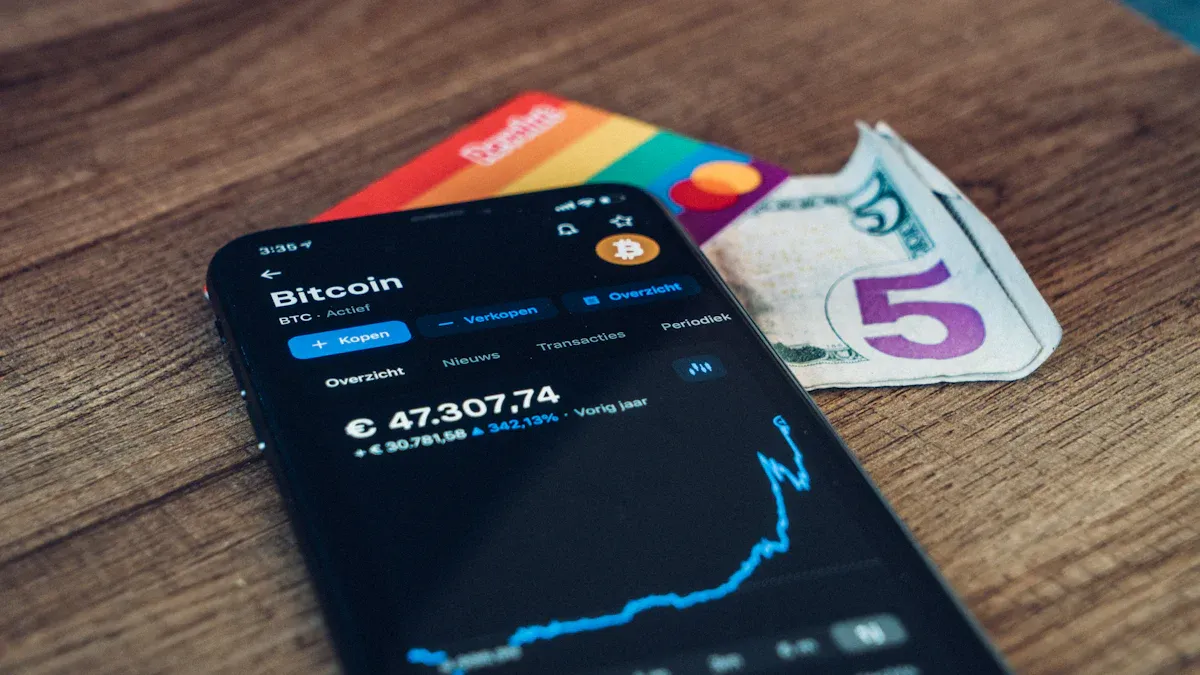
Image Source: unsplash
In sharp contrast to the layered barriers of traditional wire transfers, the “fast” of stablecoin USDT remittance stems from its revolutionary technical architecture. It is not an optimization of the old system but a completely new value transfer paradigm. This paradigm is built on three core advantages of blockchain technology.
Advantage 1: Peer-to-Peer Transmission Bids Farewell to Intermediaries
The first major advantage of USDT remittance is achieving true peer-to-peer (P2P) value transfer.
In the blockchain network, your USDT does not need to go through any bank or intermediary. When you initiate a transfer, you are actually creating a record on a decentralized global public ledger. This record points directly from your digital wallet address to the recipient’s wallet address.
It’s like handing cash directly to a friend, except everything happens in the digital world, and every transaction is publicly and transparently recorded, verifiable by anyone but untamperable. This on-chain verifiability establishes a strong trust foundation, reducing disputes from information opacity in traditional remittances.
Payment apps like Biyapay leverage this feature. When you pay through it, it helps you interact directly with the recipient’s address, with funds flowing directly on the blockchain, completely eliminating intermediary banks. This process removes fund suspension due to intermediaries and compliance reviews in traditional banking systems, ensuring direct and efficient value transfer between users.
Advantage 2: 7x24-Hour Uninterrupted Operation
Traditional banks have business hours, but blockchain networks do not. This is the second key reason stablecoin USDT remittance achieves instant arrival.
The blockchain networks supporting USDT, such as TRON or Ethereum, operate automatically year-round, 24/7. They are like a global automated financial system that never shuts down.
- Amazing Operational Stability: Taking the TRON network as an example, since its mainnet launch in 2018, uptime has remained at 100%, with block production efficiency up to 99.7%. This means the network almost never goes down, always ready to process your transactions.
- Minute-Level Confirmation Speed: Depending on network conditions, a USDT transaction on TRC-20 (TRON network) usually confirms in 1-3 minutes. Even on ERC-20 (Ethereum network), it typically takes 3-15 minutes. This forms a world of difference from traditional wire transfers taking several business days.
This 7x24-hour operation capability means you can initiate remittances anytime, whether late Friday night or on public holidays. Tools like Biyapay rely on blockchain’s “sleepless” nature to provide round-the-clock cross-border payment clearing services for global users and enterprises, handling daily transaction volumes up to hundreds of billions of dollars without worrying about bank closures.
Advantage 3: Smart Contract Automated Execution
If blockchain is a year-round global ledger, smart contracts are the tireless, absolutely fair accountants on this ledger. This is the third guarantee for USDT remittance’s efficiency and security.
Smart contracts are self-executing program codes deployed on the blockchain. You can preset a series of transaction rules for them, such as “when A pays B 100 USDT, automatically complete the transaction.”
Simply put, the logic of smart contracts is:
ifa condition is met,thenautomatically execute an operation.
This process is fully automated, requiring no manual review or intervention. It fundamentally eliminates delays and errors from manual operations in traditional processes.
- Initiate Transaction: You enter the recipient address and amount, confirm the transaction.
- Automatic Verification: The smart contract automatically verifies if your wallet has sufficient balance for the transfer amount and network fee (Gas Fee).
- Execute Settlement: After verification, the contract automatically executes the transfer instruction, deducting USDT from your address and crediting the recipient’s address.
- Permanent Record: The transaction completes and is permanently, untamperably recorded on the blockchain.
In apps like Biyapay, smart contracts ensure every payment automatically and securely settles upon meeting preset conditions. This greatly improves efficiency and reduces fraud risk through code-enforced execution, reliably protecting every fund.
Core Differences at a Glance: USDT vs Traditional Wire Transfer
To help you intuitively understand the differences, we can quickly compare from three dimensions: path, time, and efficiency. You will find this is not just a speed difference but two completely different operation logics.
Path Comparison: Multi-Layer Relay vs Peer-to-Peer Direct
The path of traditional wire transfer is like a slow train needing multiple transfers. Your fund instruction needs to go through the remitting bank, SWIFT network, at least one intermediary bank, and finally reach the receiving bank. This multi-step process ensures transaction compliance but dooms its lengthiness.
In contrast, USDT remittance is like a direct high-speed train. It uses blockchain technology to send funds directly from your digital wallet to the recipient’s wallet, with no transfer stations in between. The entire process completes on a public track, clear and transparent.
Time Comparison: Business Days vs 24/7
The time difference is the most intuitive distinction between the two. The traditional financial system has clear “business hours,” while blockchain networks never rest.
| Comparison Item | Traditional Wire Transfer | Stablecoin USDT Remittance (TRC-20 Example) |
|---|---|---|
| Arrival Time | 1-5 business days | Usually within 1 minute |
| Operation Mode | Follows bank hours, rests on holidays | 7x24-hour uninterrupted operation |
This table clearly tells you that when you cannot remit because the bank is closed, the blockchain network is still efficiently processing every global transaction.
Efficiency Comparison: Manual Processing vs Automated Settlement
The huge efficiency difference stems from fundamentally different processing methods. Traditional wire transfers highly rely on manual work primates. Bank staff need to manually perform compliance reviews, anti-fraud screening, and information verification and other operations. These manual links are time-consuming and increase costs. For example, a $1,000 international wire transfer may cost up to $55 in total fees.
USDT transfer efficiency comes from complete automation.
Blockchain technology relies on smart contracts, which automatically execute fund transfers when preset conditions are met, with no possibility of human delays or errors.
This automated process eliminates manual review bottlenecks, allowing transactions to be processed and settled almost instantly upon initiation, achieving a perfect combination of low cost and high efficiency.
Now you understand that the instant arrival of stablecoin USDT remittance is not a simple optimization but a fundamental change triggered by technology. It replaces the old model reliant on manual work and multi-level intermediaries with a decentralized automated network.
This peer-to-peer instant settlement capability is the key to digital currencies showing huge potential in cross-border payments and international trade, having helped many enterprises shorten settlement time from days to minutes. Despite facing evolving regulatory challenges and shaping the financial landscape together with future central bank digital currencies (CBDC), it opens new possibilities for enhancing global financial efficiency.
FAQ
Is using USDT remittance secure?
The technology itself is secure, but you need to note two risks. One is slight price fluctuations; the other is that you must safeguard your wallet private key to prevent theft.
Security Tip: Your asset security is in your own hands. Never share your private key or mnemonic words with anyone.
Are USDT remittance fees high?
Fees are usually far lower than wire transfers. You mainly pay a “network fee” (Gas Fee). This fee varies based on your chosen network (such as TRON or Ethereum) and network congestion, usually only a few dollars or less.
Which USDT should I choose (such as TRC-20 or ERC-20)?
It depends on your focus on speed and cost. TRC-20 network has fast transfer speed and extremely low fees, suitable for small high-frequency transactions. ERC-20 network has stronger consensus but relatively higher fees.
| Network Type | Main Advantages | Suitable Scenarios |
|---|---|---|
| TRC-20 | Fast speed, low fees | Daily payments, small transfers |
| ERC-20 | High security, mature ecosystem | Large asset storage and transfers |
Is using USDT remittance legal in my region?
Regulations vary greatly worldwide. You need to research and strictly comply with the laws and regulatory requirements in your jurisdiction. Please confirm compliance before any transaction.
*This article is provided for general information purposes and does not constitute legal, tax or other professional advice from BiyaPay or its subsidiaries and its affiliates, and it is not intended as a substitute for obtaining advice from a financial advisor or any other professional.
We make no representations, warranties or warranties, express or implied, as to the accuracy, completeness or timeliness of the contents of this publication.
Related Blogs of

Master US Stock Trading Hours in One Article: Never Miss Pre-Market and After-Hours Opportunities

Annual Review: Best Performing US Stock ETFs in 2026 and the Logic Behind Them


US-China Trade War Enters New Phase: How the Tech Industry Can Respond to Supply Chain Impacts


US Stock Market Holiday Countdown: How Investors Should Position for Next Week's Trading

Choose Country or Region to Read Local Blog
 Australia
 Austria
 Belgium
 Canada
 Cyprus
 Czech Republic
 Denmark
 Estonia
 Finland
 France
 Germany
 Greece
 Hong Kong
 India
India Indonesia
 Ireland
 Italy
Italy Japan
Japan Latvia
 Lithuania
 Luxembourg
 Malaysia
 Malta
Malta Morocco
 Nepal
Nepal Netherlands
 New Zealand
 Norway
 Pakistan
 Philippines
 Poland
 Portugal
 Romania
 Singapore
 Slovakia
 Slovenia
 South Africa
 South Korea
 Spain
Spain Sweden
 Thailand
 The United States
 Turkey
 United Arab Emirates
 United Kingdom
 Vietnam
Contact Us




BIYA GLOBAL LLC is a licensed entity registered with the U.S. Securities and Exchange Commission (SEC No.: 802-127417); a certified member of the Financial Industry Regulatory Authority (FINRA) (Central Registration Depository CRD No.: 325027); regulated by the Financial Industry Regulatory Authority (FINRA) and the U.S. Securities and Exchange Commission (SEC).
BIYA GLOBAL LLC is registered with the Financial Crimes Enforcement Network (FinCEN), an agency under the U.S. Department of the Treasury, as a Money Services Business (MSB), with registration number 31000218637349, and regulated by the Financial Crimes Enforcement Network (FinCEN).
BIYA GLOBAL LIMITED is a registered Financial Service Provider (FSP) in New Zealand, with registration number FSP1007221, and is also a registered member of the Financial Services Complaints Limited (FSCL), an independent dispute resolution scheme in New Zealand.