From SWIFT to Stablecoins: The Technological Evolution and Future Outlook of International Remittances




Image Source: unsplash
Companies paying overseas suppliers often face the dilemmas of traditional remittances. A single SWIFT transaction has an average cost between 20 and 50 dollars, with processing time averaging over 18 hours, sometimes even taking days.
Stablecoin international remittances offer a completely different experience. It is based on blockchain technology, transforming fund transfers from a complex “correspondent bank relay” model into simple “point-to-point digital accounting.” This approach bypasses all intermediate links, achieving synchronization and instant settlement of information and fund flows.
Key Takeaways
- Traditional international remittances (SWIFT) have high fees and long processing times, usually taking days.
- Stablecoin remittances use blockchain technology to achieve fast arrival with lower fees.
- The challenges of stablecoin remittances lie in fiat exchange and regulatory compliance; once a transaction error occurs, it cannot be revoked.
- In the future, central bank digital currencies (CBDC) and existing financial systems will develop international payments together with stablecoins.
SWIFT vs. Blockchain: Clash of Two Remittance Systems
The efficiency and cost of international remittances fundamentally depend on their underlying technological architecture. SWIFT and blockchain represent two completely different design philosophies: one is a trust- and intermediary-based information transmission network, the other is an algorithm- and consensus-based value settlement network.
SWIFT: Correspondent Bank-Based Information Flow Model
SWIFT stands for “Society for Worldwide Interbank Financial Telecommunication.” It is essentially a financial “post office,” not a bank. SWIFT itself does not hold or transfer funds but provides a secure, standardized messaging service for global financial institutions to send payment instructions. This network is massive, processing over 44 million FIN messages daily on average.
A cross-border remittance usually requires multiple banks (correspondent banks) to relay completion. The remitting bank sends payment instructions to the SWIFT system, which pass through one or more intermediary banks before finally reaching the receiving bank. Each bank records on its own ledger, with actual fund clearing occurring between these banks, a cumbersome and time-consuming process.
SWIFT vs. Real-Time Gross Settlement (RTGS) Systems To understand its operation mode more clearly, we can compare it to real-time gross settlement (RTGS) systems operated by central banks. SWIFT handles message transmission, while final fund settlement relies on the correspondent banking system or RTGS.
Feature SWIFT Network Real-Time Gross Settlement (RTGS) System Function Provides messaging services only for inter-institution transactions Transfers funds between financial institutions in real time and instantly Settlement Method Relies on correspondent bank relationships for settlement Settles each transaction individually, final and irrevocable upon completion Settlement Time Settlement may take longer, involving intermediary banks Achieves same-day settlement within operating hours Components Messaging and settlement are two independent parts Messaging and settlement are tightly integrated and completed instantly
Stablecoins: Blockchain-Based Value Settlement
Stablecoin international remittances bypass the complex correspondent banking system. It upgrades the fund transfer process from sending “instructions” to directly transferring “value.” A stablecoin is a digital asset pegged to fiat currency value, with transaction records on a globally distributed public ledger (blockchain).
When a stablecoin is transferred from one digital wallet to another, the transaction information is broadcast to the entire network. Nodes in the network jointly verify the transaction’s legitimacy and then pack and record it on the blockchain. This process unifies information and fund flows. Currently, stablecoins mainly operate on the following mainstream blockchain networks:
- Ethereum: Has the largest ecosystem but higher network fees.
- TRON: Attracts massive USDT transactions with low transfer fees and high speed.
- Binance Smart Chain (BSC): Compatible with Ethereum, offering high throughput and low costs.
- Solana: Known for extremely high transaction speeds and low costs.
Once a stablecoin transaction is confirmed on the blockchain, it has “finality”. This means the transaction is irreversible, effectively reducing revocation risks possible in traditional bank transfers and providing recipients with instant fund certainty.
Stablecoin International Remittances: Technical Dissection of Second-Level Arrival
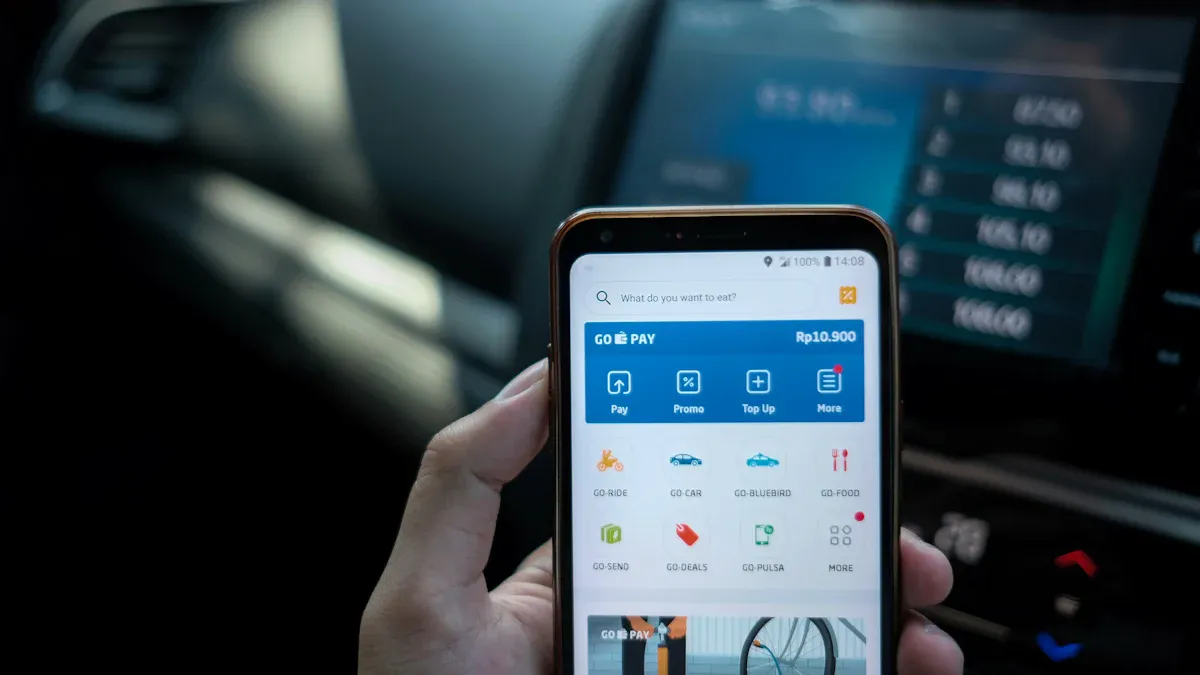
Image Source: unsplash
Stablecoins achieve near-instant cross-border payments by disrupting the underlying logic of traditional finance. It replaces layered approval centralized institutions with de-intermediated distributed networks, achieving leaps in efficiency and cost.
Technical Core: De-Intermediation and 7x24 Operation
Traditional banking systems rely on centralized servers and manual operations, not only with fixed working hours but also single points of failure risks. The underlying technology of stablecoin international remittances—blockchain—is a completely different species.
Blockchain’s de-intermediation feature distributes the ledger across thousands of participants (nodes), eliminating single points of failure.
- Each participant holds a copy of the ledger, ensuring data redundancy and security.
- If a node fails, other nodes in the network can still verify and process transactions, with system functionality almost unaffected.
- Since no central authority can unilaterally control or shut down the system, the entire network has extreme resilience against attacks and disruptions.
The most direct advantage of this distributed architecture is uninterrupted 24/7 operation. Unlike banks’ strict weekday and holiday restrictions, blockchain networks operate year-round, 7 days 24 hours, providing unprecedented flexibility for global business activities.
| System/Blockchain | Uptime Characteristics |
|---|---|
| Ethereum | Nearly a decade of uninterrupted operation, no planned downtime maintenance. |
| TRON | Historical uptime over 99.7%. |
| Traditional Banking System | Services only on weekdays, closed on weekends and holidays, with planned maintenance and unplanned interruptions. |
Cost Advantage: From Fixed Fees to Network Gas Fees
Traditional wire transfer cost structures are complex and opaque, including handling fees, telegraph fees, intermediary bank charges, and hidden exchange rate spreads. These fees are usually tied to the remittance amount; the larger the amount, the higher the cost.
When evaluating the combined cost of “on-chain gas + on/off-ramp service fees,” pairing the analysis with verifiable tools is more reliable. After the technical comparison, you can cross-check with features from BiyaPay:
- Use the Currency Converter to review real-time prices and typical spread ranges between major fiats and USDT, so you can model conversion costs up front;
- For execution, International Remittance lets you bridge on-chain settlement with fiat legs in one flow, improving certainty of funds and reconciliation;
- To validate beneficiary details, combine SWIFT lookup and IBAN verification to reduce last-mile mismatches.
For compliance and risk control, BiyaPay operates under multi-jurisdictional oversight (including U.S. MSB and New Zealand FSP registrations). For businesses, the 24/7 settlement posture and auditable records help accelerate collections and optimize working capital cycles. Embedding these tools into your cost modeling and process design helps strike a balanced trade-off among efficiency, compliance, and total cost.
Stablecoin transfers introduce a completely new cost model: network Gas fees. Gas fees are paid to blockchain network miners or validators for processing and confirming transactions. Its core features are:
- Irrelevant to amount: Whether transferring 100 dollars or 1 million dollars, the network resources consumed are basically the same, so Gas fees are also essentially consistent. Costs mainly depend on network congestion, not transfer amount.
- Highly transparent: Users can clearly see estimated Gas fees before initiating transactions, with no hidden costs.
Gas fees vary significantly across blockchain networks, directly affecting user choices. For example, the TRON network has become a mainstream choice for USDT transactions due to its low fees.
| Network | Average USDT Transaction Fee (USD) |
|---|---|
| TRON (TRC20) | About $1.00 - $3.00 |
| Ethereum (ERC20) | About $0.50 - $50.00 (fluctuates greatly based on network congestion) |
Note: The above fees are on-chain transfer fees, excluding platform service fees that providers may charge when converting fiat to stablecoins (on-ramp) or stablecoins back to fiat (off-ramp).
Case Demonstration: Process Comparison of a Cross-Border Payment
To feel the differences more intuitively, we use a specific business scenario: a foreign trade company in mainland China needs to pay a $10,000 invoice to its US supplier.
Scenario 1: Through Traditional SWIFT Wire Transfer
- Process: The company submits a remittance application to its correspondent bank (such as a licensed bank in Hong Kong). The bank converts RMB to USD and sends payment instructions via the SWIFT network to the US receiving bank. This instruction may pass through one or more intermediary banks.
- Time: The entire process usually takes 3-5 business days. If weekends or holidays are encountered, it takes longer.
- Cost:
- Bank handling fee: About 25-50 dollars.
- Intermediary bank fees: About 15-25 dollars each, usually deducted from principal.
- Exchange rate spread: Bank-provided rates are typically 2-4% higher than mid-market rates, forming the largest hidden cost, possibly up to 200-400 dollars.
- Total: Explicit and implicit costs combined may reach 245-465 dollars.
Scenario 2: Through Stablecoin International Remittance (Taking Biyapayas Example)
- Process: The company uses a digital payment platform like Biyapay to convert fiat (such as USD) to equivalent USDT. Then, through the platform, send this 10,000 USDT directly to the digital wallet address provided by the US supplier. After receiving USDT, the supplier uses a similar platform to convert it to USD and withdraw to their bank account.
- Time: The entire process, from initiating transfer to recipient confirmation, usually completes within 5-10 minutes. The arrival experience is similar to sending a WeChat red packet, almost instant.
- Cost:
- Fiat on-ramp/off-ramp fees: Providers usually charge 1-2% service fees, totaling about 2-4% for both sides, or 200-400 dollars.
- On-chain Gas fee: If using the TRON network, fees are usually below 3 dollars.
- Total: Total cost mainly consists of on-ramp/off-ramp service fees, about 200-400 dollars, and fully transparent.
The chart below clearly compares the cost and time differences between the two methods for processing a $10,000 payment.
| Feature | SWIFT International Wire | Stablecoin (USDT) Transfer |
|---|---|---|
| Total Cost ($10,000) | $245 - $465 | $200 - $450 |
| Settlement Time | 1-5 business days | 15 seconds - 10 minutes |
| Availability | Weekdays only | 24/7 all-weather |
| Hidden Costs | Exchange spreads, intermediary deductions, failure investigation fees | None |
For companies, this efficiency improvement is significant. A tech startup cooperating with global clients, by switching to stablecoin payments, not only reduces transaction costs but more importantly accelerates fund turnover, using payments that originally took days to wait for reinvestment in business, greatly enhancing operational efficiency and market competitiveness.
Real-World Challenges: Barriers and Risks of Stablecoin Remittances
Although stablecoin international remittances show huge potential in efficiency and cost, they are not without challenges. Users must face real-world barriers and risks while enjoying convenience, mainly concentrated on fiat exchange bottlenecks and security compliance complexities.
On-Ramp/Off-Ramp Layer: Fiat Exchange Bottlenecks and Solutions
No matter how high on-chain efficiency stablecoins have, they must go through fiat exchange (i.e., “on-ramp/off-ramp”) to complete the value loop. This link is currently the biggest bottleneck.
- Regulatory Barriers: Many money service businesses (MSB) providing exchange services face strict regulatory restrictions, affecting operational flexibility.
- Bank Non-Cooperation: A large number of traditional banks are unwilling or directly refuse to handle funds from cryptocurrency exchanges, forcing exchange providers to find workarounds, increasing process complexity and delays.
- "Last Mile" Problem: After companies receive stablecoins, they still need to convert them to local fiat to pay employee salaries and suppliers, and current infrastructure remains insufficient in this link.
To solve these problems, numerous professional on-ramp/off-ramp service providers have emerged in the market. However, these platforms have different fee structures, and users need to carefully screen. Some platforms use fixed percentage charges, while others offer tiered rates based on transaction volume.
Security Compliance: Irreversible Transactions and Regulatory Fog
Security and compliance are two Damocles swords hanging over stablecoins.
The Double-Edged Sword of “Code is Law” Once blockchain transactions are confirmed by the network, they are permanently recorded and unalterable. This “irreversibility” effectively prevents fraud like double-spending. But conversely, if users mistakenly transfer funds to the wrong address due to operational errors or fraud, the money is almost impossible to recover. This forms a stark contrast to revocation and recovery services provided by traditional banking systems.
Additionally, users must be vigilant against various security risks, such as:
- Phishing: Scammers impersonate legitimate platforms to trick users into leaking private keys or authorizing malicious transactions.
- Fake Tokens: Criminals create fake coins with names similar to well-known stablecoins to trick users into worthless exchanges.
- Smart Contract Vulnerabilities: Code defects in DeFi protocols may be exploited by hackers, leading to fund theft.
On the compliance front, global regulatory attitudes are moving from ambiguity to clarity, but at different paces. Frameworks like the EU’s Markets in Crypto-Assets (MiCA) regulation and the US’s advancing GENIUS Act aim to set clear reserve and operational standards for stablecoin issuers. While this helps boost market confidence, it also brings challenges for globally operating companies to adapt to regulations in different jurisdictions.
Future Outlook: The Next Stop for Cross-Border Payments
Image Source: pexels
The rise of stablecoins is not the end of the story but a catalyst for global payment system transformation. Looking ahead, the cross-border payment track is becoming increasingly crowded and diverse, with official forces and market innovations jointly shaping the next-generation payment network.
Official Entry: The Role of Central Bank Digital Currencies (CBDC)
Central banks worldwide are accelerating exploration of issuing their own digital currencies, namely CBDC. CBDC is not a single concept; it mainly falls into two types: retail CBDC for public daily use and wholesale CBDC designed for large inter-institution settlements.
| Feature | Retail CBDC | Wholesale CBDC |
|---|---|---|
| Target Audience | Individuals and businesses | Financial institutions |
| Transaction Scale | Large volume of small transactions | Small volume of large transactions |
| Design Purpose | Partially replace cash | Replace reserve deposits |
In cross-border payments, wholesale CBDC shows huge potential. A typical example is the "Multi-CBDC Bridge" project (Project mBridge). This project is jointly participated by the Bank for International Settlements and financial authorities in China, Thailand, UAE, Saudi Arabia, etc., aiming to build an efficient, low-cost cross-border payment universal platform.
The emergence of CBDC also sparks discussions on its relationship with existing stablecoins. The US and EU show different attitudes. Some US policymakers tend to support compliant USD stablecoins, viewing them as tools to consolidate USD dominance. The EU, through regulations like MiCA, paves the way for the digital euro while setting higher entry thresholds for non-euro stablecoins.
Ecosystem Evolution: From Single Tool to Payment Network
Future cross-border payments are unlikely to be completely dominated by any single technology but more likely a complex ecosystem of multiple solutions coexisting and interconnecting.
Traditional financial giants are not sitting idle. SWIFT launched SWIFT Go service to enhance SME payment experience, Visa optimizes inter-enterprise transactions through its B2B Connect network. More interestingly, these two giants have begun cooperating to integrate their network advantages and jointly simplify international B2B payment processes.
Meanwhile, major commercial banks are actively deploying. J.P. Morgan’s JPM Coin is a standout case. This blockchain-based system is designed for institutional clients to solve traditional payment inefficiencies. As of 2023, JPM Coin processes about $1 billion in transactions daily, demonstrating private institutions’ strong capabilities in driving value network innovation.
Ultimately, an efficient global payment network will integrate liquidity from different systems. Users may seamlessly exchange and pay between CBDC, commercial bank tokens, and public stablecoins through one wallet, with the system automatically selecting the optimal path and rate in the background, truly achieving instant, low-cost global value flow.
Stablecoins, with their underlying blockchain technology, pose a disruptive advantage in remittance efficiency and cost over traditional systems represented by SWIFT.
However, this is not a simple replacement story. Stablecoins still have a long way to go in user experience (especially on-ramp/off-ramp links), operational security, and global compliance.
Looking ahead, stablecoins are an important milestone in the evolution of global payment technology. They will compete and integrate with central bank digital currencies and improved traditional financial systems to jointly drive the arrival of a more efficient and inclusive new global payment landscape.
FAQ
What parts does the total cost of stablecoin transfers include?
The total cost mainly includes two parts. First is the Gas fee paid to the blockchain network for processing transactions. Second is the platform service fee charged by fiat exchange providers. Gas fees are usually low, while service fees form the main cost component.
What if I send stablecoins to the wrong address?
Blockchain transactions are irreversible. Once funds are sent to the wrong address, they are almost impossible to recover. This differs from traditional banks that can attempt recovery. Users must repeatedly verify the accuracy of the recipient address before transferring to ensure security.
What is the difference between USDT-TRC20 and USDT-ERC20?
They are the same stablecoin running on different blockchains. USDT-TRC20 is based on the TRON network, with fast transfer speeds and low fees. USDT-ERC20 is based on the Ethereum network, with a more mature ecosystem but usually higher fees.
Is using stablecoins for international remittances compliant?
Regulatory policies vary globally. Some countries and regions have issued clear regulations, while others are still exploring. Businesses and individuals must understand and comply with relevant legal and regulatory requirements in their location and the recipient’s before use.
*This article is provided for general information purposes and does not constitute legal, tax or other professional advice from BiyaPay or its subsidiaries and its affiliates, and it is not intended as a substitute for obtaining advice from a financial advisor or any other professional.
We make no representations, warranties or warranties, express or implied, as to the accuracy, completeness or timeliness of the contents of this publication.
Related Blogs of
Annual Review: Best Performing US Stock ETFs in 2026 and the Logic Behind Them


US-China Trade War Enters New Phase: How the Tech Industry Can Respond to Supply Chain Impacts


Is the W-8BEN Form Required for Opening a US Stock Account? Understand How to Save on Taxes in One Article


US Stock Market Holiday Countdown: How Investors Should Position for Next Week's Trading

Choose Country or Region to Read Local Blog
 Australia
 Austria
 Belgium
 Canada
 Cyprus
 Czech Republic
 Denmark
 Estonia
 Finland
 France
 Germany
 Greece
 Hong Kong
 India
India Indonesia
 Ireland
 Italy
Italy Japan
Japan Latvia
 Lithuania
 Luxembourg
 Malaysia
 Malta
Malta Morocco
 Nepal
Nepal Netherlands
 New Zealand
 Norway
 Pakistan
 Philippines
 Poland
 Portugal
 Romania
 Singapore
 Slovakia
 Slovenia
 South Africa
 South Korea
 Spain
Spain Sweden
 Thailand
 The United States
 Turkey
 United Arab Emirates
 United Kingdom
 Vietnam
Contact Us




BIYA GLOBAL LLC is a licensed entity registered with the U.S. Securities and Exchange Commission (SEC No.: 802-127417); a certified member of the Financial Industry Regulatory Authority (FINRA) (Central Registration Depository CRD No.: 325027); regulated by the Financial Industry Regulatory Authority (FINRA) and the U.S. Securities and Exchange Commission (SEC).
BIYA GLOBAL LLC is registered with the Financial Crimes Enforcement Network (FinCEN), an agency under the U.S. Department of the Treasury, as a Money Services Business (MSB), with registration number 31000218637349, and regulated by the Financial Crimes Enforcement Network (FinCEN).
BIYA GLOBAL LIMITED is a registered Financial Service Provider (FSP) in New Zealand, with registration number FSP1007221, and is also a registered member of the Financial Services Complaints Limited (FSCL), an independent dispute resolution scheme in New Zealand.