After-Hours, Pre-Market, or Overnight Trading: Which is Better? Liquidity & Risk Comparison




Image Source: pexels
For most investors, pre-market trading is the better choice. It has relatively sufficient liquidity and can quickly react to major news. However, you must understand there is no absolute “best” trading session. Whether pre-market, overnight, or during specific US stock after-hours trading times, the best choice depends on your personal trading strategy and risk tolerance.
Finding the rhythm that suits you best is far more important than chasing the market’s recognized “optimal timing.”
Key Takeaways
- After-hours, pre-market, and overnight trading each have different risks. Choosing the session that suits you best is more important than pursuing the market’s recognized optimal timing.
- Pre-market trading has relatively higher liquidity, suitable for information-sensitive investors. After-hours trading has high volatility, suitable for short-term speculators. Overnight trading has extremely low liquidity and extremely high risk—avoid unless necessary.
- Extended trading sessions have poorer liquidity, widening bid-ask spreads. This increases your trading costs and may cause orders to go unfilled.
- In extended sessions, you must use limit orders. This protects your funds from trading at unfavorable prices during sharp volatility.
- Opportunities in extended sessions come from major news. But risks are high—you need strict position control and adjust trading volume based on volatility.
Pre-Market, After-Hours, Overnight: Quick Comparison Table

Image Source: pexels
To quickly grasp the core differences between pre-market, after-hours, and overnight trading, we’ve compiled a detailed comparison table. This table evaluates from trading hours, liquidity, risk level, and other dimensions to help you establish clear judgment criteria.
| Comparison Item | Pre-Market Trading | After-Hours Trading | Overnight Trading |
|---|---|---|---|
| Liquidity | Medium | Medium-Low | Extremely Low |
| Bid-Ask Spread | Medium | Medium to Large | Extremely Large |
| Risk Level | High | High | Extremely High |
| Main Opportunities | Earnings releases, major news, economic data, geopolitical events | Earnings releases, after-hours news, sentiment continuation | Asian market open reactions, extreme events |
| Suitable Investors | Active traders, information-sensitive investors | Professional traders, short-term speculators | Speculators with extremely high risk tolerance, arbitrageurs |
Tip: Treat this table as your decision map. When considering trading outside regular hours, refer back to it to assess whether you’re ready for the corresponding risks.
Pre-Market, Overnight, and US Stock After-Hours Trading Times
First, you must understand that US daylight saving time affects opening and closing times. Every year from the second Sunday in March to the first Sunday in November is daylight saving time; the rest is standard time. Standard time trading sessions are one hour later than daylight saving time.
Below are the extended trading sessions corresponding to Taiwan time:
- Pre-Market Trading
- Daylight Saving Time (approx. Mar-Nov): Taiwan time 16:00 – 21:30
- Standard Time (approx. Nov-Mar): Taiwan time 17:00 – 22:30
- After-Hours Trading
- Daylight Saving Time: Taiwan time 04:00 – 08:00
- Standard Time: Taiwan time 05:00 – 09:00
- Overnight Trading
- Daylight Saving Time: Taiwan time 20:00 – 04:00
- Standard Time: Taiwan time 21:00 – 05:00
Understanding these specific US stock after-hours trading times and other extended sessions is the first step in formulating your trading plan.
Liquidity, Spread, and Risk Level Comparison
You may wonder why liquidity and risk differ so much across sessions. The root cause is “who participates” and “how much volume.”
Extended trading isn’t through the New York Stock Exchange (NYSE) or Nasdaq’s main matching systems but relies on Electronic Communication Networks (ECNs), such as NYSE Arca and Instinet. These platforms directly match buyers and sellers.
- Liquidity Differences: In pre-market and after-hours, though large pension and index funds (passive investors) are absent, many institutional and active retail participants remain, especially with major news. For example, popular stocks like NVIDIA (NVDA) may have after-hours volume exceeding pre-market after earnings. However, overnight volume shrinks sharply. This trading is mainly handled by platforms like
Blue Ocean ATSdesigned for Asian time zones, with very few participants. - Widening Spreads: Low liquidity directly widens bid-ask spreads. The spread is the gap between the highest price you’re willing to buy and the lowest price you’re willing to sell—it’s your implicit trading cost. Research shows spreads at market open can be three times wider than the previous close. In even lower-liquidity overnight sessions, this gap becomes exaggerated—you may be forced to “buy at peak prices, sell at troughs.”
- Margin Requirements: If using margin, brokers require far higher overnight positions than intraday. This is due to unpredictable gap risk overnight. Holding positions overnight after after-hours or pre-market trading may require accounts with $20,000 to $25,000 to handle potential volatility, far above daytime margin requirements.
In summary, trading during specific US stock after-hours trading times or pre-market puts you in a market with fewer participants and sharper price swings.
Trading Opportunities and Suitable Investor Types
Since extended sessions are so risky, why do people participate? Because this is also where opportunities lie.
Main opportunities come from information time gaps. Many companies release earnings after hours, and major economic data, M&A news, or geopolitical events can happen anytime. These events trigger sharp price swings, creating profit opportunities for quick responders.
Based on risk and opportunity characteristics, you can judge your type:
- Pre-Market Trader: You’re a highly information-sensitive active investor. You habitually research earnings and news before opening and aim to position before the market digests this information. You’re willing to accept medium-high risk for potential excess returns.
- After-Hours Trader: You’re more like a short-term speculator or professional trader. You focus on capturing initial emotional swings after earnings releases and complete trades while liquidity is still acceptable.
- Overnight Trader: Unless you have very special reasons (e.g., cross-market arbitrage), you should avoid overnight trading. This session has extremely low liquidity and is full of price traps—like walking in a pitch-black forest; the risk is extremely high and unsuitable for most investors.
Remember: Extended trading amplifies market volatility. This is an advantage for opportunity seekers but a deadly trap for those unable to bear risk.
Extended Session Practical Strategies and Risk Control
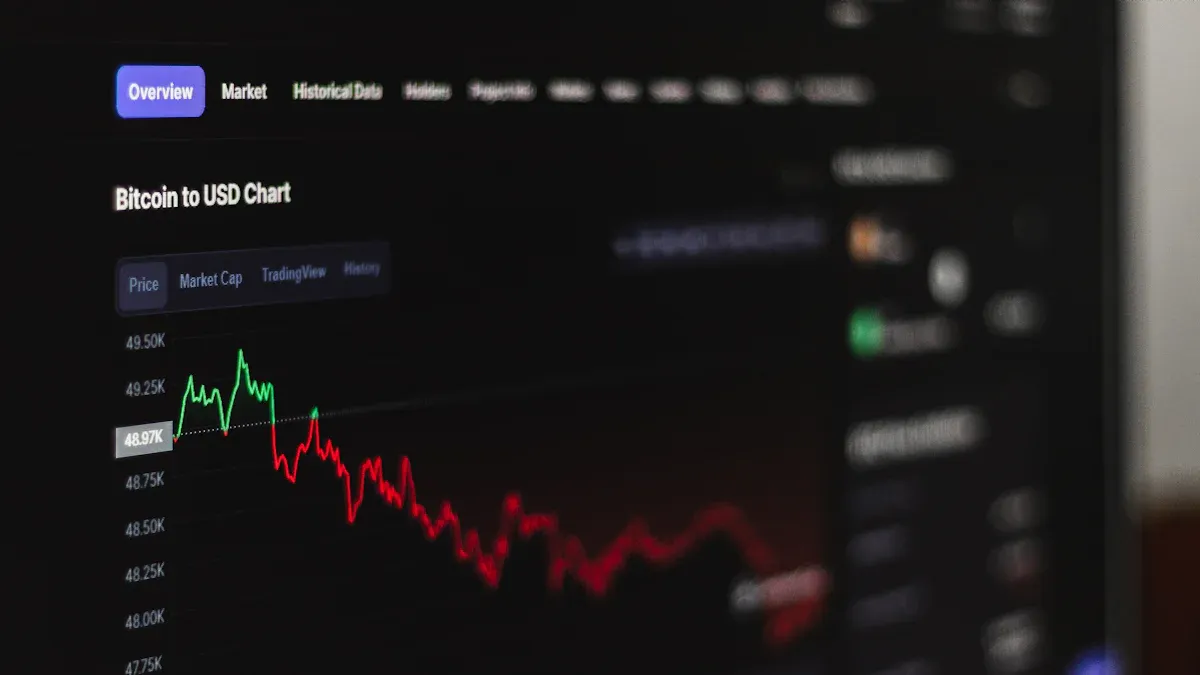
Image Source: unsplash
Understanding risk is just the first step; more importantly, how you respond. In highly volatile extended sessions, without strict strategies and risk control, it’s like sailing in a storm without a compass. Next, we provide specific practical strategies to protect yourself in this high-risk environment.
Risk Control Iron Rule: Why Only Use Limit Orders
In extended session trading, you must follow the most important rule: always use limit orders only. Market orders are extremely dangerous here.
The reason is low liquidity. Broker platforms, such as Biyapay, typically require limit orders only in this session. This isn’t just a suggestion but a necessary measure to protect you from huge losses. Per FINRA regulations, brokers must inform clients of extended session risks and can set specific order types like limit-only.
- Buy Limit Order: Sets the “highest” price you’re willing to pay. The order executes only at or below your set price.
- Sell Limit Order: Sets the “lowest” price you’re willing to sell. The order executes only at or above your set price.
Using limit orders lets you precisely control execution price, avoiding “buying at peak, selling at trough” during sharp swings.
Pre-Market and After-Hours Strategies: Focus on Major Event-Driven Trading
Opportunities in pre-market and after-hours mainly come from earnings, M&A, and other major news. Your strategy should revolve around these “event-driven” swings.
You can observe price trends in the first 30-60 minutes before opening to judge whether buyers or sellers dominate. For example, whether a gap-up stock maintains strength is a key momentum indicator.
However, greater opportunities come with higher risks. Strictly manage position size to avoid FOMO-driven chasing. An effective risk control method is adjusting position size based on volatility:
As shown, when market volatility (e.g., measured by Average True Range) is higher, use lower leverage and smaller positions. During specific US stock after-hours trading times with sharp earnings-driven swings, controlling single-trade risk to 1-2% of total account value is wise for capital protection.
Overnight Strategy: Avoid Unless Necessary, Steer Clear of Liquidity Traps
For overnight trading, the most effective strategy is: avoid unless necessary.
While overnight trading lets you react instantly to geopolitical events in Asian time zones (e.g., affecting gold or oil prices), for most people, the cons far outweigh the pros.
Overnight volume is extremely sparse, creating a dangerous “liquidity trap.” Imagine a stock with millions of shares traded daily shrinking to hundreds of thousands overnight. If holding a large short position, you may find no buyers to cover, forced to close at terrible prices, causing huge losses.
In some cases, not trading is the best trade. Unless you have highly professional cross-market arbitrage strategies, proactively avoid overnight sessions and patiently wait for better-liquidity pre-market or regular sessions to protect your capital.
In summary, pre-market trading strikes a better balance between liquidity and risk and is most people’s first choice; after-hours comes second; overnight should be approached with extreme caution due to very high risk. The US Securities and Exchange Commission (SEC) has also listed extended session risks as a regulatory focus, highlighting potential dangers. Ultimately, return to yourself and use online questionnaires to assess your risk appetite and trading style.
Use this article’s analysis as a decision tool to make the choice “right” for you, not the absolute “best.”
FAQ
Why can extended sessions only use limit orders?
In extended sessions, market liquidity is low and price volatility is sharp. Using limit orders locks in your execution price, avoiding unacceptable prices during wild swings. This is the most important risk control measure to protect your funds.
Can all stocks be traded pre-market and after-hours?
No. Only stocks listed on ECNs with trading activity can be traded in extended sessions. Usually, large-cap and popular stocks have more activity, while small-cap stocks may have no liquidity at all.
Is overnight trading risk really that high?
Yes. Overnight volume is extremely sparse, leading to huge bid-ask spreads and severely distorted prices. Your orders may not execute or execute at terrible prices. For most people, risk far outweighs potential returns.
Are extended session trading costs higher?
Yes. Besides possible broker fees, you pay higher implicit costs. Due to poor liquidity, spreads widen significantly, directly increasing your total trading cost.
*This article is provided for general information purposes and does not constitute legal, tax or other professional advice from BiyaPay or its subsidiaries and its affiliates, and it is not intended as a substitute for obtaining advice from a financial advisor or any other professional.
We make no representations, warranties or warranties, express or implied, as to the accuracy, completeness or timeliness of the contents of this publication.
Related Blogs of
Say Goodbye to Bank Queues: Latest 2025 Bank of China App Guide for Converting Cash to Exchange


After Over 100 Billion in Buybacks, Has Tencent's Long-Term Investment Logic Changed?


Say Goodbye to Panic: Master the Winning Rules for Stock Investing in a Bear Market


2026 China Stock Market Investment Guide: Spotlight on 5 Must-Watch Leading Tech Stocks

Choose Country or Region to Read Local Blog
 Australia
 Austria
 Belgium
 Canada
 Cyprus
 Czech Republic
 Denmark
 Estonia
 Finland
 France
 Germany
 Greece
 Hong Kong
 India
India Indonesia
 Ireland
 Italy
Italy Japan
Japan Latvia
 Lithuania
 Luxembourg
 Malaysia
 Malta
Malta Morocco
 Nepal
Nepal Netherlands
 New Zealand
 Norway
 Pakistan
 Philippines
 Poland
 Portugal
 Romania
 Singapore
 Slovakia
 Slovenia
 South Africa
 South Korea
 Spain
Spain Sweden
 Thailand
 The United States
 Turkey
 United Arab Emirates
 United Kingdom
 Vietnam
Contact Us




BIYA GLOBAL LLC is a licensed entity registered with the U.S. Securities and Exchange Commission (SEC No.: 802-127417); a certified member of the Financial Industry Regulatory Authority (FINRA) (Central Registration Depository CRD No.: 325027); regulated by the Financial Industry Regulatory Authority (FINRA) and the U.S. Securities and Exchange Commission (SEC).
BIYA GLOBAL LLC is registered with the Financial Crimes Enforcement Network (FinCEN), an agency under the U.S. Department of the Treasury, as a Money Services Business (MSB), with registration number 31000218637349, and regulated by the Financial Crimes Enforcement Network (FinCEN).
BIYA GLOBAL LIMITED is a registered Financial Service Provider (FSP) in New Zealand, with registration number FSP1007221, and is also a registered member of the Financial Services Complaints Limited (FSCL), an independent dispute resolution scheme in New Zealand.