ACH Transfer vs. Wire Transfer: Comprehensive Comparison to Find Your Best Remittance Solution




Image Source: pexels
Are you confused when choosing a remittance method? The core conclusion is actually simple. For non-urgent, small routine payments, low-cost ACH is your best choice. For example, a survey by the American Payroll Association (APA) shows that up to 94% of employees receive their wages via ACH direct deposit, demonstrating its widespread use.
Core Takeaways On the other hand, for urgent, large, or international remittances, the Chinese term for wire transfer—wire transfer—excels with its speed and security. Understanding the key differences between the two will help you make informed decisions based on specific needs.
Key Takeaways
- ACH transfers are suitable for everyday small payments—they are low-cost but take longer to arrive.
- Wire transfers are suitable for urgent large payments—they are fast but more expensive.
- ACH transfers can be reversed, while wire transfers cannot be reversed once sent.
- ACH is mainly used domestically in the U.S., while wire transfers can be used for global remittances.
- Choosing which method depends on your payment needs, considering speed, fees, and security.
ACH vs. Wire Transfer: Core Definitions
To make an informed choice, you first need to understand the essential differences between these two remittance methods. They operate on completely different underlying logic, which directly determines their speed, cost, and applicable scenarios.
ACH Transfer: Automated Clearing House Network
You can think of the ACH (Automated Clearing House) network as an electronic payment “bus system.” It does not dispatch for individual transactions but collects a large number of payment requests, bundles them into batches, and processes them.
When you initiate an ACH payment, your bank (ODFI) bundles this transaction with others and submits it to the ACH operator. The operator sorts and processes these batch files before sending them to the recipient’s bank (RDFI), where the funds are finally deposited into the recipient’s account. This process occurs several times a day.
Core Mechanism: Batch Processing This batch processing model is the key to ACH’s low cost. The entire system is managed by the National Automated Clearing House Association (Nacha). Nacha establishes and oversees detailed operating rules, providing precise guidance for the secure storage, access, and transmission of every ACH payment, ensuring the network’s efficiency and reliability.
Wire Transfer: The Chinese Term for Wire Transfer Explained
Wire transfer, known in Chinese as 电汇, is like a “taxi” dedicated exclusively to you. It uses a real-time gross settlement (RTGS) system specifically designed to handle individual, high-value urgent transactions.
When you initiate a wire transfer, the bank sends payment instructions directly to the recipient bank through a secure system (such as Fedwire). Funds are deducted from your account and deposited almost immediately into the recipient’s account. This process happens in real time, and once completed, the transaction is final and irrevocable. After understanding the Chinese term for wire transfer, you also need to know the main systems behind it.
Different systems serve different scopes:
| System Name | Main Use | Operating Scope | Key Features |
|---|---|---|---|
| Fedwire | Real-time USD payment settlement | Domestic U.S. | Operated by the Federal Reserve, handles large, instant, irrevocable transactions |
| SWIFT | Global messaging network facilitating cross-border payments | International | Connects global financial institutions, transmits secure payment instructions, does not transfer funds itself |
Therefore, the core of the Chinese term for wire transfer lies in its “real-time” and “final” characteristics, making it a reliable choice for urgent or large payments.
Four Key Dimensions Comparison
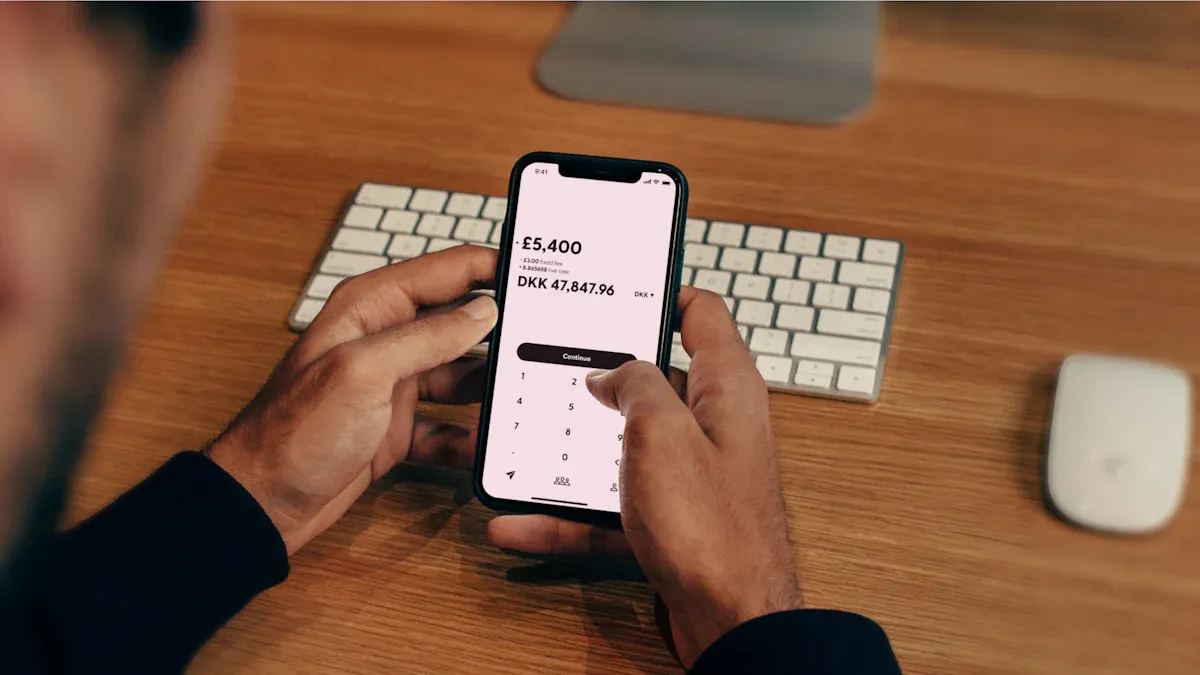
Image Source: unsplash
After understanding the basic definitions, you need to examine these two methods from a practical perspective. We will directly compare them across the four most critical dimensions—speed, fees, security, and limits—to clearly show their strengths and weaknesses.
Speed: Standard ACH vs. Same-Day ACH vs. Wire Transfer
The arrival time of remittances directly affects your fund arrangements. The speed differences between options are huge.
- Standard ACH: 1-3 business days. Your initiated standard ACH transfer takes time to complete. Due to the batch processing model, funds usually take 1 to 3 business days to reach the recipient’s account. For example, an ACH credit transaction submitted before the bank’s 4 PM cutoff can arrive as early as the next business day.
- Same-Day ACH: Within hours on the same day. If you need faster speed, same-day ACH is a great choice. Thanks to Nacha rule updates, the ACH network now settles payments multiple times a day. As long as you submit before the 4:45 PM Eastern Time cutoff, the transaction can settle on the same day, with funds arriving within hours.
- Wire Transfer: Within hours, nearly real-time. When time is critical, wire transfer is the undisputed champion. According to the Expedited Funds Availability Act (EFAA), domestic U.S. wire transfers usually complete within 24 hours. If initiated before the bank’s weekday cutoff (usually afternoon), funds often arrive in the recipient’s account within hours. This makes it the only reliable choice for urgent payments.
Speed Summary Choose wire transfer for emergencies. For planned payments, same-day ACH offers a balance of speed and cost, while standard ACH is suitable for non-urgent routine transactions.
Fees: Free, Low-Cost vs. High-Cost
Cost is another core consideration when choosing a remittance method. The fee structures of the two stem from their completely different processing mechanisms.
ACH Transfer Fees ACH is extremely low-cost due to its efficient batch processing. For person-to-person transfers, many banks even offer free service. For businesses, the cost per transaction is usually between $0.20 and $1.50. Of course, total costs vary based on transaction volume, monthly fees, and whether expedited service is used.
Wire Transfer Fees Wire transfer, as a dedicated real-time service, is much more expensive.
- Domestic Wire Transfer: Sending a domestic U.S. wire transfer usually costs $15 to $30.
- International Wire Transfer: Fees are higher, usually between $35 and $50.
More importantly, the recipient of a wire transfer may also need to pay a receiving fee, sometimes up to $25, while ACH receiving is usually free. After understanding the Chinese term for wire transfer, you should also be aware of its high cost.
| Fee Comparison | ACH Transfer | Wire Transfer |
|---|---|---|
| Sender Fee | Free or usually below $1.50 | Domestic ~$15-$30, international higher |
| Recipient Fee | Usually free | May incur fees (up to $25) |
| Cost Driver | Batch processing, economies of scale | Real-time, individual processing, manual intervention |
Security: Reversibility vs. Finality
Security here does not refer to which is more prone to theft but to transaction reversibility.
ACH Transfer: Reversibility Provides Protection The ACH system, under Nacha rules, offers payers a certain level of protection. In specific cases, you can request to reverse a transaction. These cases include:
- Duplicate payments
- Wrong recipient or amount
- Incorrect transaction date
Additionally, for consumers, if you discover an unauthorized ACH debit, you have up to 60 days to dispute it with your bank. This traceability provides security for everyday bill payments and subscription services.
Wire Transfer: Highly Secure Finality Once a wire transfer is processed and sent by the bank, it is considered “final and irrevocable”. Funds transfer almost immediately and cannot be unilaterally withdrawn. This “finality” is precisely its security value. When you conduct large transactions (such as paying a home down payment), the recipient needs assurance that the funds will not be reversed. Therefore, the instant and definitive nature represented by the Chinese term for wire transfer makes it the gold standard for high-risk, high-value transactions.
Limits and Scope: Domestic vs. International
Your remittance amount and destination also determine which method is more suitable.
Transfer Limits
- ACH Transfer: Limits vary widely. Same-day ACH has a single transaction limit of $1,000,000. For standard ACH, different banks set different daily or monthly limits based on your account type (personal or business) and history. Business account limits are usually much higher than personal accounts.
- Wire Transfer: Usually no fixed transfer limit or a very high limit. This makes it the only viable option for transferring large sums (such as corporate acquisitions or bulk purchases).
Remittance Scope
- ACH Transfer: ACH is primarily a domestic U.S. payment network. Although cross-border payments are possible through International ACH Transactions (IAT), not all banks support this service.
- Wire Transfer: Wire transfer is the global standard for international remittances. Through the SWIFT network, you can send funds to almost any bank worldwide. When you need international payments, wire transfer service is your most reliable choice.
Scenario-Based Decision: How to Choose?
Image Source: unsplash
With theoretical knowledge mastered, let’s move to practical application. For specific remittance needs in daily life, how should you choose? Below, we provide clear decision guidance through specific personal and business scenarios.
When to Choose ACH Transfer?
When your remittance needs fit the keywords “non-urgent, recurring, domestic,” ACH is usually the most cost-effective choice.
1. Personal Routine Payments and Receipts
For most personal financial activities, ACH’s low cost and reliability make it the top choice.
- Receiving Salary: Your employer most likely uses ACH direct deposit to pay your salary. This is both convenient and secure.
- Paying Fixed Bills: You can set up automatic ACH payments to handle monthly recurring expenses. This effectively avoids late fees and simplifies financial management. Common examples include:
- Utility bills (electricity, water, internet)
- Gym membership fees
- Various subscription services (streaming, SaaS products)
- Credit card repayments and mortgage payments
Personal Transfer Supplement: P2P Payment Tools If you need to split a dinner bill with friends or make small transfers, in addition to ACH, you can consider P2P (peer-to-peer) payment tools like Zelle. Zelle uses the ACH network but achieves near-real-time transfers and is usually free. However, note that its transfer limits are usually lower (e.g., about $500 per week) and it is mainly for domestic U.S. personal transfers.
2. Business Batch Payments
For businesses, ACH is a powerful tool to optimize cash flow and reduce operating costs.
- Paying Employee Salaries: This is the most typical commercial application of ACH. Businesses no longer need to handle cumbersome paper checks. The entire process is highly automated:
- Businesses first need to obtain employees’ direct deposit authorization and collect their bank account information.
- Then input this information into the payroll system.
- In each pay cycle, the business initiates batch ACH credit instructions to the bank.
- Funds are then efficiently distributed to each employee’s account.
- Paying Suppliers: Using ACH to pay suppliers brings significant cost and efficiency advantages. According to industry data, the cost of initiating an ACH transaction is only $0.26 to $0.50, far lower than the average $2 to $4 for paper checks. This not only saves money but also brings other benefits:
- Faster Settlement: Most ACH payments can settle within 1 business day, helping you build more reliable relationships with suppliers.
- Simplified Reconciliation: Electronic payment records are clear and easy to track, can be directly integrated with your ERP system, reducing errors and time costs from manual verification.
When to Choose Wire Transfer?
When your remittance needs involve “urgent, large, international” factors, wire transfer’s unparalleled speed and security make it the only choice.
1. Personal High-Value and Urgent Transactions
In certain important life moments or emergencies, you need to rely on wire transfer.
- Paying Home Down Payment or Buying a Car: In such large transactions, the recipient needs to ensure funds arrive instantly and irrevocably. Using cash is neither safe nor convenient, and cashier’s checks carry forgery risks. Wire transfer’s “finality” provides the highest security for both parties.
- Urgent Remittance to Overseas Family: If your family overseas urgently needs money, wire transfer is the fastest way to get funds to them. You only need to provide the bank with the recipient’s name, address, bank information, and SWIFT/BIC code, and funds usually arrive within 1-5 business days.
2. Business Critical Payments and International Trade
For businesses, wire transfer is a core tool for handling high-risk transactions and global operations.
- Paying Overseas Suppliers: In international trade, wire transfer is the most common and reliable way to pay overseas suppliers. Through the SWIFT network, you can securely send funds to almost any bank worldwide, supporting multi-currency transactions and securing your global supply chain.
- Conducting Major Capital Operations: Whether for corporate acquisitions, paying large deposits, or completing other high-value business investments, wire transfer’s high (or no) limit and transaction finality are necessary to ensure these critical transactions complete smoothly.
Modern Payment Solutions: Balancing Cost and Efficiency Traditional international wire transfers are reliable but expensive and sometimes cumbersome. For businesses and individuals with frequent international payment needs, consider using modern fintech platforms like Biyapay. Biyapay integrates global wire transfers with local payment networks worldwide. You can easily initiate global remittances on one platform. It not only offers more competitive fees and exchange rates than traditional banks but also simplifies the process, making your international payments as convenient as domestic transfers.
| Scenario | Recommended Method | Core Reason |
|---|---|---|
| Paying Monthly Rent | ACH Transfer | Recurring, non-urgent, low cost |
| Transferring $50 to a Friend | P2P App (e.g., Zelle) | Free, real-time, small amount |
| Paying Home Down Payment | Wire Transfer | Large amount, secure, finality |
| Business Batch Payroll | ACH Transfer | Extremely low cost, efficient, automated |
| Urgent Remittance to Overseas Family | Wire Transfer | Fast, broad international coverage |
| Paying Suppliers in Mainland China | Wire Transfer or Biyapay | Reliable, supports international trade, latter may be better |
Choosing ACH or wire transfer comes down to how you balance speed, cost, and security.
Decision Guide 📝
- Choose ACH: When handling everyday, non-urgent payments, economical ACH with some reversal protection is your wise choice.
- Choose Wire Transfer: When handling important, urgent large or international payments, choose fast and final wire transfer.
We hope this guide helps you confidently make the best remittance decision based on your specific situation.
FAQ
Can I reverse a wire transfer that has already been sent?
Usually, you cannot reverse a wire transfer. Wire transfer transactions are designed to be final and irrevocable. Once the bank processes your request, funds transfer almost immediately. If you suspect fraud, contact your bank immediately, but the chance of recovering funds is very low.
What is the difference between ACH transfer and Zelle?
Zelle uses the ACH network but provides a faster experience.
- Zelle: Designed specifically for real-time small transfers between individuals, usually free.
- ACH: Supports large batch, scheduled payments for individuals and businesses, such as payroll and bills, slower but with higher limits.
What information is needed for an international wire transfer?
You usually need to provide the bank with the following information:
- Recipient’s full name and address
- Recipient bank’s name and address
- Recipient’s bank account number
- Recipient bank’s SWIFT/BIC code
Tip: Having this information ready ensures your international remittance goes smoothly.
How long does an ACH transfer take to complete?
The speed of an ACH transfer depends on the type you choose.
- Standard ACH: Usually takes 1-3 business days.
- Same-Day ACH: If submitted before the bank’s cutoff time, funds can arrive on the same day.
*This article is provided for general information purposes and does not constitute legal, tax or other professional advice from BiyaPay or its subsidiaries and its affiliates, and it is not intended as a substitute for obtaining advice from a financial advisor or any other professional.
We make no representations, warranties or warranties, express or implied, as to the accuracy, completeness or timeliness of the contents of this publication.
Related Blogs of

Beginner's Must-Read: How to Participate in US Stock Pre-Market and After-Hours Trading on Friday


2025 Must-Read Guide to Investing in Global Stock Markets: Key Indices and Market Themes Analysis

Beginner Guide to After-Hours Trading: Easily Master Key Buy and Sell Points


From Dow Jones to Nasdaq: How US Stock Indices Reflect Economic Changes and Investment Opportunities

Choose Country or Region to Read Local Blog
 Australia
 Austria
 Belgium
 Canada
 Cyprus
 Czech Republic
 Denmark
 Estonia
 Finland
 France
 Germany
 Greece
 Hong Kong
 India
India Indonesia
 Ireland
 Italy
Italy Japan
Japan Latvia
 Lithuania
 Luxembourg
 Malaysia
 Malta
Malta Morocco
 Nepal
Nepal Netherlands
 New Zealand
 Norway
 Pakistan
 Philippines
 Poland
 Portugal
 Romania
 Singapore
 Slovakia
 Slovenia
 South Africa
 South Korea
 Spain
Spain Sweden
 Thailand
 The United States
 Turkey
 United Arab Emirates
 United Kingdom
 Vietnam
Contact Us




BIYA GLOBAL LLC is a licensed entity registered with the U.S. Securities and Exchange Commission (SEC No.: 802-127417); a certified member of the Financial Industry Regulatory Authority (FINRA) (Central Registration Depository CRD No.: 325027); regulated by the Financial Industry Regulatory Authority (FINRA) and the U.S. Securities and Exchange Commission (SEC).
BIYA GLOBAL LLC is registered with the Financial Crimes Enforcement Network (FinCEN), an agency under the U.S. Department of the Treasury, as a Money Services Business (MSB), with registration number 31000218637349, and regulated by the Financial Crimes Enforcement Network (FinCEN).
BIYA GLOBAL LIMITED is a registered Financial Service Provider (FSP) in New Zealand, with registration number FSP1007221, and is also a registered member of the Financial Services Complaints Limited (FSCL), an independent dispute resolution scheme in New Zealand.