Navigating Through Cycle Fog: A Review of Key Bear Markets in Hang Seng Index History




Image Source: pexels
Understanding market cycles is a key step for investors toward maturity. Historical data on the Hang Seng Index clearly reveals its high volatility characteristics. Compared to mature markets, this volatility presents unique challenges and opportunities for investors.
Hang Seng Index vs. U.S. Stock Market Volatility Comparison
Indicator Hang Seng Index U.S. Stocks (Dow Jones Index) Daily market return standard deviation (1992-2002) Much higher Lower 2007 financial crisis decline Over 66% 54% Proportion of institutional investors in total trading volume 64% Over 96% (New York Stock Exchange)
In such a market environment, seeking wisdom from history is particularly important. This article aims to provide investors with a “survival guide” for future market fluctuations by reviewing the past.
Key Takeaways
- The Hong Kong Hang Seng Index has high volatility, and investors need to understand market cycles.
- Historical bear markets share common signals, such as overvaluation and increased leverage.
- External events often trigger bear markets, such as financial crises and pandemics.
- Investors should maintain independent thinking, hold cash, and diversify investments.
- Bear markets are good opportunities to buy quality assets, and long-term holding can bring returns.
Overview of Key Bear Markets in the Hang Seng Index
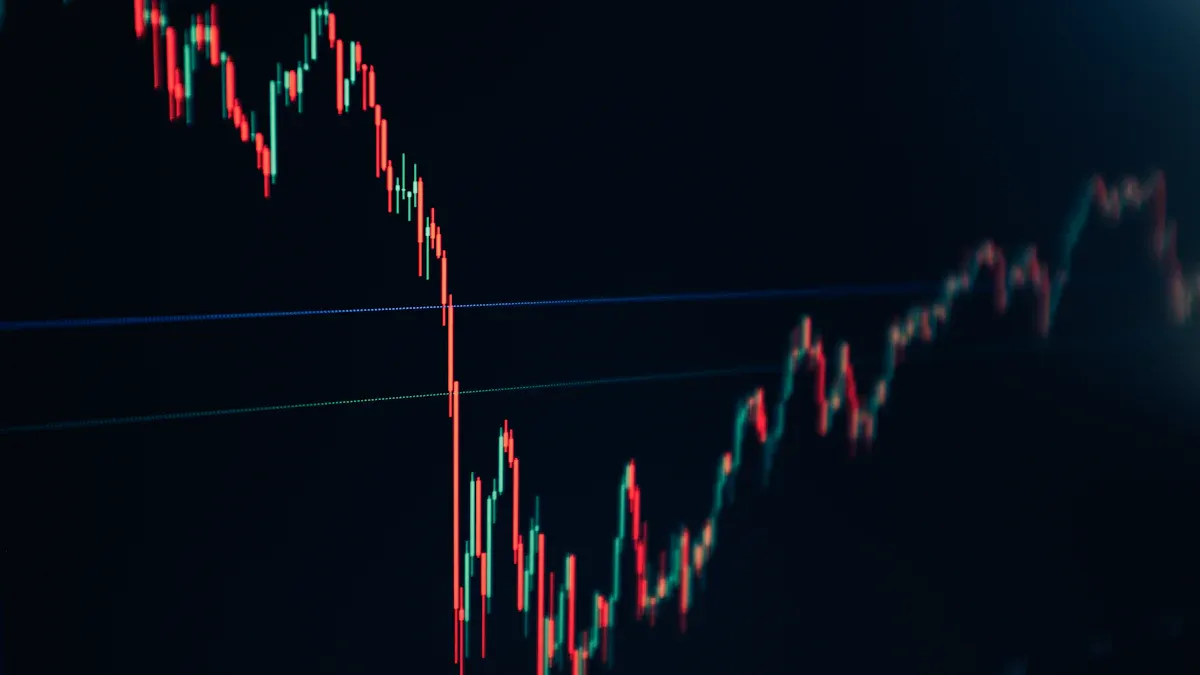
Image Source: unsplash
History does not simply repeat itself, but it often rhymes similarly. Reviewing major bear markets in the Hang Seng Index, we can discover patterns and lessons that run through cycles.
1973 Stock Crash: From Mania to Bubble Burst
In the early 1970s, the Hong Kong stock market experienced an unprecedented period of mania. The belief that “any stock will rise” permeated the market. Many investors amplified leverage using “margin trading” (investors borrowing more funds from brokers with a small amount of their own capital as collateral), inflating the bubble even larger.
Peak of Mania and Collapse On March 9, 1973, the Hang Seng Index climbed to a historical high of 1774.96 points. However, just three days later, rumors of fake stocks triggered panic selling. The bubble burst began and accelerated due to factors like the government’s proposal to impose taxes.
This bear market lasted nearly two years, leaving a profound mark on Hong Kong’s financial history due to its severity.
| Date | Event | Hang Seng Index Level | Decline from Peak |
|---|---|---|---|
| March 9, 1973 | Reached new high | 1774.96 | - |
| March 12, 1973 | Rumors of fake stocks, panic selling | - | Over 3% |
| March 26, 1973 | Government proposes capital gains tax | - | Over 14% |
| May 9, 1973 | Index falls below 1000 | 656.03 | 60% |
| End of 1973 | Government raises interest rates | 433.7 | 75% |
| December 10, 1974 | Bear market bottom | 150.11 | 91.54% |
1987 Black Monday: Global Panic and Market Halt
On October 19, 1987, the U.S. Dow Jones Industrial Average plunged over 22% in a single day, known as “Black Monday.” This storm quickly swept the globe, and Hong Kong was not spared. That day, the Hang Seng Index fell 11.1%. Facing unprecedented panic, the Hong Kong Futures Exchange made a highly controversial decision: halt trading for four days.
The reasons behind this move were multiple:
- Fear of panic spreading: Regulators worried that continued selling would cause a complete market collapse.
- Settlement system pressure: Concerns that many investors could not fulfill futures contracts, leading to clearing system paralysis.
- Global chain reaction: The New York stock crash was the direct trigger, sparking global risk aversion.
However, the halt did not stop the decline. On the reopening day of October 26, the Hang Seng Index plummeted 33.3%, with a cumulative drop of 45.8% for the entire month of October. This event exposed the fragility of Hong Kong’s market mechanisms at the time and prompted profound reforms after the crisis.
1997 Asian Financial Storm: Battle to Defend the Linked Exchange Rate
In 1997, a financial crisis starting in Thailand swept across Asia. International speculators used so-called “double play” tactics, short-selling the Hong Kong dollar in the forex market to attack the “linked exchange rate system” (a currency board system pegging the HKD to the USD), while shorting stocks and futures to profit from crashing the market.
Facing the attack, the Hong Kong Monetary Authority used massive foreign reserves to counter.
- Stabilize the exchange rate: The HKMA bought large amounts of HKD and sold USD in the market, causing interest rates to soar and increasing short-selling costs for speculators.
- Intervene in the stock market: In August 1998, the Hong Kong government directly entered the market, using about US$15 billion in foreign reserves to buy blue-chip stocks to counter speculators’ selling pressure.
This thrilling “battle between officials and crocodiles” ultimately ended with the Hong Kong government’s victory, successfully defending the linked exchange rate system. However, the Hang Seng Index paid a heavy price, falling over 60% from its 1997 high, bottoming out only in August 1998 before rebounding.
2000 Dot-Com Bubble: End of the Internet Mania
At the turn of the century, the world was swept by the internet wave. Any company related to “.com” was frantically chased by capital, and the Hong Kong market was no exception. Numerous technology, media, and telecom (TMT) companies listed, with share prices pushed to unrealistic heights.
However, supporting these high valuations was often just a concept, not real profits. When the U.S. Nasdaq peaked and retreated in March 2000, the global dot-com bubble began to burst. Leading tech stocks in Hong Kong plummeted, dragging the Hang Seng Index into a two-year bear market. This bear market taught investors that a company’s fundamentals and profitability are far more important than a compelling story.
2003 SARS Impact: Market Bottoming Under the SARS Pandemic
The 2003 bear market was different from previous ones; its trigger was not from the financial sector but a sudden public health crisis—the SARS (Severe Acute Respiratory Syndrome) outbreak.
The pandemic dealt a direct and heavy blow to Hong Kong’s economy.
- Service sector stagnation: Tourism, retail, catering, and aviation—pillars of Hong Kong’s economy—nearly ground to a halt.
- Frozen consumer confidence: Residents reduced outings, and local consumption spending plummeted.
The halt in economic activity was directly reflected in the capital markets, with the Hang Seng Index falling to a low of 8331 points in April 2003. However, since this shock was not rooted in endogenous economic or financial system issues, the market quickly recovered as the pandemic was brought under control.
2008 Global Financial Tsunami: Subprime Crisis Chain Reaction
The 2008 bear market originated from the U.S. subprime crisis and evolved into a global financial tsunami following the collapse of investment bank Lehman Brothers. Although Hong Kong banks had limited direct exposure to U.S. subprime mortgages, systemic risks in the global financial system still caused massive impact.
Confidence Crisis and Market Plunge As global credit markets froze, investor confidence collapsed. The Hang Seng Index fell from its historical high of 31,958 points in October 2007 all the way down, losing over half by October 2008. Additionally, tens of thousands of Hong Kong investors bought structured products like “mini-bonds” related to Lehman Brothers, which plummeted in value after Lehman’s collapse, triggering large-scale rights protection events involving about US$2 billion.
This crisis once again proved that in today’s globalized world, no market can be an isolated island.
2020 COVID-19 Pandemic: Global Shutdown and Market Volatility
In early 2020, the outbreak of the COVID-19 pandemic had broader and deeper impacts than the 2003 SARS. Countries worldwide imposed lockdowns, disrupting global supply chains and halting economic activity.
Facing an unprecedented situation, global stock markets experienced severe volatility in March 2020. The Hang Seng Index fell over 20% in one month, entering a technical bear market. To counter the economic shock, the Hong Kong government quickly launched large-scale fiscal stimulus plans, including:
- Employment support schemes: Providing wage subsidies to employers to stabilize jobs.
- Cash and consumption vouchers: Directly issuing cash and vouchers to residents to stimulate local consumption.
- Industry aid: Providing targeted support to the hardest-hit sectors (such as tourism and retail).
Due to extremely loose monetary policies by major global central banks and strong government interventions, this bear market was relatively short-lived, with the market rebounding quickly after bottoming.
Common Characteristics of Bear Markets in Hang Seng Index Trends

Image Source: unsplash
Reviewing past bear markets, some recurring common features can be identified. These are like dark clouds before a storm, providing warning signals for vigilant investors. Understanding these commonalities helps us better grasp the pulse of Hang Seng Index trends.
Warning Signal One: Valuations Far Exceeding Historical Averages
Market peaks during prosperity are often accompanied by extremely high valuations. When investor optimism reaches its zenith, stock prices far exceed intrinsic value. People believe prices will rise forever, ignoring actual company profitability. The 1973 market mania and 2000 dot-com bubble are typical examples 1973. During these periods, overall market valuation metrics like P/E ratios were pushed to unsustainable historical highs, setting the stage for subsequent crashes. Healthy Hang Seng Index trends require rational valuations as support.
Warning Signal Two: Sharp Rise in Market Leverage
Leverage is a tool to amplify gains but also a catalyst for magnifying losses. In the late stages of bull markets, investors and institutions often borrow more funds for investment, causing overall market leverage to surge. The widespread use of “margin trading” before the 1973 crash is a profound lesson. When the market reverses, high leverage triggers chain reactions. Investors are forced to sell assets to repay debts, further depressing prices and forming a vicious cycle that can lead to systemic risks.
Catalyst: Reversal in External Macro Environment
High valuations and high leverage make the market extremely fragile; at this point, just one external shock can ignite a crisis. Looking across Hang Seng Index trends, many bear market triggers come from external sources.
Key External Events Impacting Hong Kong Markets Historically:
- 1973 (Oil crisis)
- 1987 (U.S. Black Monday)
- 1997 (Asian financial storm)
- 2008 (Global financial tsunami)
- 2018 (U.S.-China trade tensions)
For example, in 2018, due to escalating U.S.-China trade frictions, Hang Seng Index trends experienced severe volatility, falling over 13% for the year. The market saw what was described as “indiscriminate selling,” showing the huge impact of external macro environments on investor confidence.
Investment Survival Principles from Historical Bear Markets
History provides valuable lessons for investors. By analyzing past bear markets, a set of effective investment survival principles can be summarized. These are not magic for predicting markets but wisdom to increase survival probability in uncertainty and ultimately seize opportunities. They help rational investors navigate through cycle fog steadily.
Principle One: Beware of Mania, Maintain Independent Thinking
Market mania has enormous infectious power. When everyone around is making money, staying calm and thinking independently becomes extremely difficult. History repeatedly proves that the biggest investment mistakes often stem from psychological factors, not lack of information or analysis. The 1973 crash and 2000 dot-com bubble clearly demonstrated the destructive power of group mania.
Successful investors need to cultivate “second-level thinking.”
- First-level thinking says: “This is a promising company; let’s buy the stock.”
- Second-level thinking considers: “This is a good company, but has the market already overhyped it? Is its price far above intrinsic value? Maybe it’s time to sell.”
This deeper thinking ability is key to outperforming the market average. It requires investors not only to analyze facts but also to insight into market sentiment and dare to make contrarian decisions. As investing master Warren Buffett said:
“The less prudent others are, the more prudent we should be.”
At bull market peaks, optimism leads people to pay high prices for high-risk investments. At this time, independent thinkers proactively reduce risk exposure. In bear market bottoms, when panic causes assets to be undervalued, they dare to buy contrarian.
Principle Two: Cash is King, Reserve “Ammunition” for Crises
In financial markets, cash plays a dual role. It is the ultimate defensive tool in bear markets to preserve capital and “ammunition” to seize opportunities when markets collapse. Past bear markets prove that investors with ample cash flow during crises can buy at low prices, sowing seeds for the next bull market.
Smart investors gradually increase cash or cash equivalents when markets are prosperous and valuations high. This is not bearish but disciplined risk management. When crises arrive and irrational selling occurs, this reserved “ammunition” becomes the investor’s greatest advantage.
In modern financial environments, managing this “ammunition” requires efficient tools. For example, investors can hold USD stablecoins through digital payment platforms like Biyapay. This not only effectively avoids risks from single markets or currencies but ensures quick, low-cost fund transfers when global opportunities arise, keenly capturing fleeting buying moments.
Principle Three: Diversified Allocation, Build Defensive Portfolio
“Don’t put all eggs in one basket” is one of the oldest investment principles, with its core being asset allocation. A truly diversified portfolio not only includes stocks from different sectors but should cover different asset types, such as stocks, bonds, gold, and cash. These assets often perform differently in various economic cycles, smoothing overall portfolio volatility.
Building a defensive portfolio means prioritizing risk control while pursuing returns. Here is a reference model for a defensive investment portfolio designed for Hong Kong investors:
- Bonds: As the portfolio’s “ballast stone,” mainly investing in high-quality global government bonds and high-rated corporate bonds. In market turmoil, these assets typically provide stable cash flows and capital preservation.
- Stocks: Moderately allocated to high-quality global stocks, such as Apple, Microsoft, Tencent Holdings, to capture long-term capital appreciation. Through strategy optimization, returns can be enhanced while controlling risks.
- Gold: As a traditional safe-haven asset, gold often hedges in high inflation or escalating geopolitical risks, improving long-term portfolio performance.
In the 1997 Asian financial storm or 2008 global financial tsunami, investors holding only Hong Kong stocks suffered heavy losses. A diversified portfolio including global bonds and gold could significantly mitigate downside impacts.
Principle Four: Embrace Quality Assets, Adhere to Long-Termism
Accurately timing market bottoms and tops is nearly impossible for most investors. A more realistic strategy is to abandon timing, focus on selecting quality assets, and hold long-term. Quality assets typically refer to companies with strong moats, healthy finances, excellent management teams, and sustained profitability.
Bear markets are golden periods to buy these quality assets. When markets panic, many excellent companies’ shares are “wrongfully killed,” priced far below intrinsic value, offering excellent entry opportunities for long-term investors. Once market sentiment recovers, these quality assets often lead rebounds and hit new highs.
Hang Seng Index historical trends also confirm the power of long-termism.
| Bear Market Bottom | Bottom Level | Time to Recover to Previous High | Eventually Hit New High |
|---|---|---|---|
| December 1974 | 150 | About 9 years | Yes |
| August 1998 | 6,544 | About 2 years | Yes |
| October 2008 | 10,676 | About 2 years | Yes |
| March 2020 | 21,139 | About 10 months | Yes |
Historical data shows that despite huge pain and losses in each bear market, the Hong Kong market ultimately recovered and reached new peaks. For long-term investors holding quality assets and persisting, bear markets are just bumps on the road to eventual wealth growth.
Historical reviews clearly illustrate market cyclicality. From stock crashes to global crises, each bear market reminds us of the market’s unpredictability. Therefore, staying rational, holding cash, diversifying allocation, and adhering to long-termism form the core investment principles for navigating cycles. Internalizing historical experience into investment discipline helps investors face future fluctuations with greater composure, ultimately achieving the goal of traversing bull and bear markets.
FAQ
What is a bear market?
A bear market typically refers to a period when financial markets fall over 20% from recent highs. This phase is often accompanied by spreading pessimism among investors and generally dim economic prospects. Market confidence is low, and trading activity may decrease.
How long do bear markets usually last?
Bear markets have no fixed duration, ranging from months to years. Historical data shows markets always recover after crises. For investors, the key is patience and strategies to navigate cycles.
Should all stocks be sold in a bear market?
Panic selling all stocks is usually not wise, as it may lock in actual losses. Instead, bear markets make quality assets cheaper. For long-term investors, this is often a good opportunity to buy in batches.
How can ordinary investors prepare for bear markets?
Ordinary investors can prepare through several key methods:
- Hold cash: Maintain a certain proportion of cash to seize opportunities at market lows.
- Diversify investments: Allocate assets across different regions and types to reduce risks.
- Focus on quality assets: Concentrate on companies with healthy finances and long-term competitiveness.
*This article is provided for general information purposes and does not constitute legal, tax or other professional advice from BiyaPay or its subsidiaries and its affiliates, and it is not intended as a substitute for obtaining advice from a financial advisor or any other professional.
We make no representations, warranties or warranties, express or implied, as to the accuracy, completeness or timeliness of the contents of this publication.
Related Blogs of

A Blessing for Small Investors: Finding the Lowest Trading Cost US Stock Brokers

Master US Stock Trading Hours in One Article: Never Miss Pre-Market and After-Hours Opportunities

Is the W-8BEN Form Required for Opening a US Stock Account? Understand How to Save on Taxes in One Article

How to Choose US Major Indices: Pros and Cons Analysis of S&P 500, Dow Jones, and Nasdaq

Choose Country or Region to Read Local Blog
 Australia
 Austria
 Belgium
 Canada
 Cyprus
 Czech Republic
 Denmark
 Estonia
 Finland
 France
 Germany
 Greece
 Hong Kong
 India
India Indonesia
 Ireland
 Italy
Italy Japan
Japan Latvia
 Lithuania
 Luxembourg
 Malaysia
 Malta
Malta Morocco
 Nepal
Nepal Netherlands
 New Zealand
 Norway
 Pakistan
 Philippines
 Poland
 Portugal
 Romania
 Singapore
 Slovakia
 Slovenia
 South Africa
 South Korea
 Spain
Spain Sweden
 Thailand
 The United States
 Turkey
 United Arab Emirates
 United Kingdom
 Vietnam
Contact Us




BIYA GLOBAL LLC is a licensed entity registered with the U.S. Securities and Exchange Commission (SEC No.: 802-127417); a certified member of the Financial Industry Regulatory Authority (FINRA) (Central Registration Depository CRD No.: 325027); regulated by the Financial Industry Regulatory Authority (FINRA) and the U.S. Securities and Exchange Commission (SEC).
BIYA GLOBAL LLC is registered with the Financial Crimes Enforcement Network (FinCEN), an agency under the U.S. Department of the Treasury, as a Money Services Business (MSB), with registration number 31000218637349, and regulated by the Financial Crimes Enforcement Network (FinCEN).
BIYA GLOBAL LIMITED is a registered Financial Service Provider (FSP) in New Zealand, with registration number FSP1007221, and is also a registered member of the Financial Services Complaints Limited (FSCL), an independent dispute resolution scheme in New Zealand.