Essential Apps for Getting Started with US Stock Futures: These Apps Will Turn You into a Pro



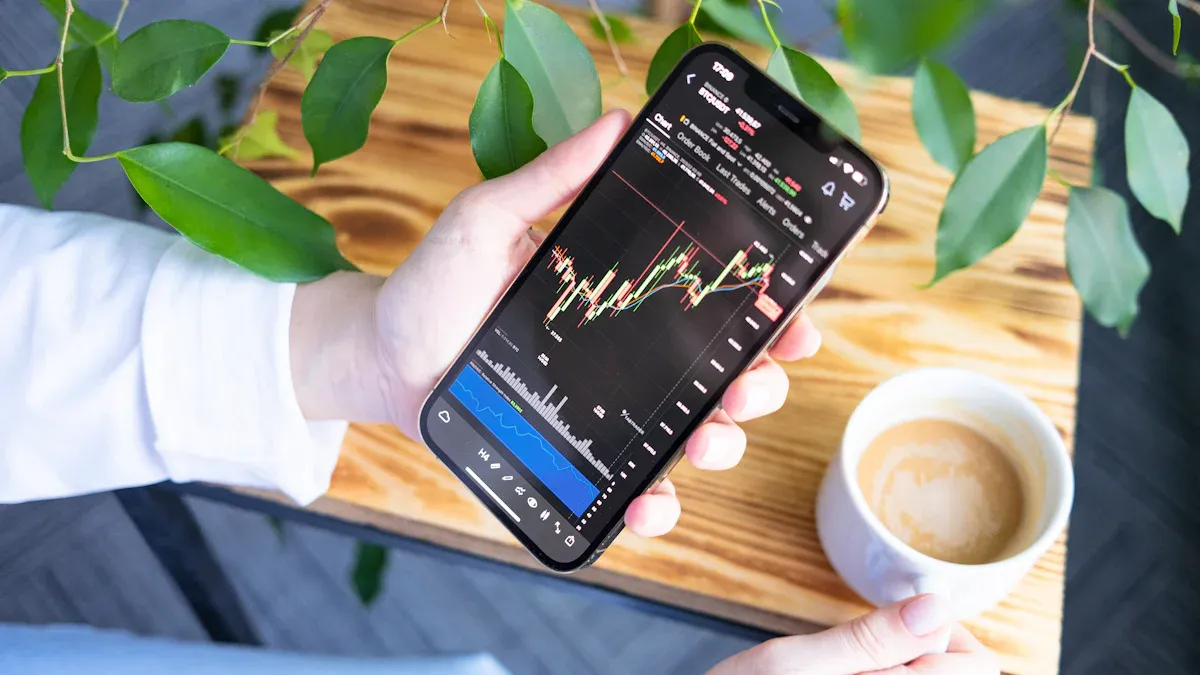
Image Source: unsplash
In 2025, choosing the right trading app is your crucial first step to successfully trading US stock futures. We have selected the top platforms on the market for you:
- Interactive Brokers (IBKR): The preferred tool for professional traders.
- TD Ameritrade (thinkorswim): A powerful technical analysis platform.
- Webull: A pioneer in convenient mobile trading.
You need to find the trading partner that best suits you. We will help you make an informed choice from dimensions such as fees, features, and ease of use.
Key Takeaways
- Choosing the right US stock futures trading app is the first step to success, mainly including IBKR, TD Ameritrade, and Webull.
- IBKR is suitable for professional traders, offering global market access and very low trading fees.
- TD Ameritrade’s thinkorswim platform has powerful charting and analysis tools, ideal for those who love technical analysis.
- Webull App is convenient for mobile trading, very friendly to beginners, and offers excellent Chinese language support.
- Beginners should start by practicing with a demo account and begin with lower-risk Micro E-mini contracts.
In-Depth Review of Core Futures Apps
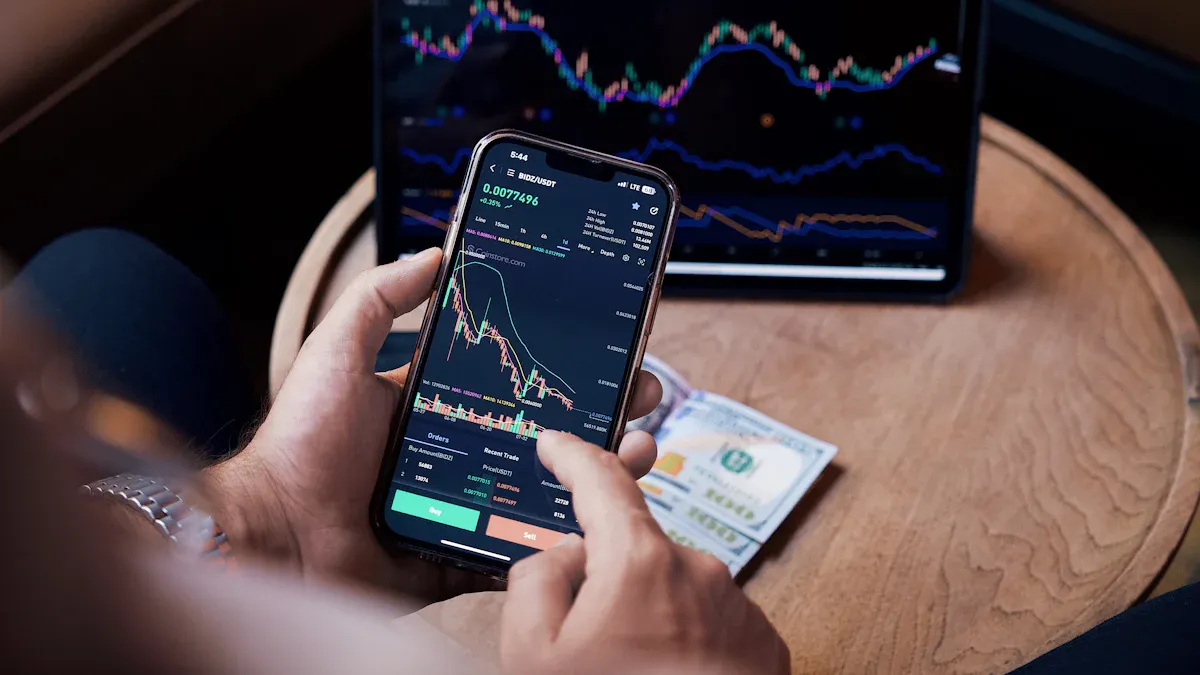
Image Source: pexels
Choosing a platform is the cornerstone of your trading journey. Below, we will deeply analyze three mainstream apps to help you find the most suitable trading tool.
Interactive Brokers (IBKR): The Choice for Professional Traders
If you pursue ultimate trading efficiency and the lowest costs, Interactive Brokers (IBKR) is undoubtedly your top choice. It is widely used by global professional traders and institutions for very clear reasons.
- Core Advantages: Global Market Access and Extremely Low Fees. IBKR provides access to over 150 markets worldwide, with a highly competitive futures commission structure, usually far below the industry average. This gives you a competitive edge in the US stock futures market.
- Fee Structure: IBKR offers tiered or fixed commission plans. For active traders, the tiered plan can have fees as low as less than $1.00 per contract (plus exchange and regulatory fees), making it extremely attractive.
- Key Features:
- Powerful Trading Platform (TWS): The desktop Trader Workstation (TWS) is extremely powerful, with a steep learning curve, but once mastered, it allows highly customized trading layouts.
- Rich Order Types and API: The tools available go far beyond standard limit and market orders.
- The platform offers over 100 order types, including complex algorithmic orders, helping you execute precise strategies.
- Its TWS API, Web API, and FIX API all support full order types, making it easy to develop your own automated trading programs.
- Comprehensive Product Coverage: In addition to futures, you can trade global assets like stocks, options, forex, and more through a single account.
Funding Tip: How to Fund Efficiently? You can fund your IBKR account in multiple ways, such as wire transfers from your licensed Hong Kong bank account. Additionally, you can consider using third-party payment services like Biyapay, which can help you conveniently complete currency exchange and cross-border transfers, improving funding efficiency.
- Target Users: IBKR is best suited for experienced, high-frequency individual traders, as well as quantitative traders or small institutions seeking low costs and advanced features.
TD Ameritrade (thinkorswim): Technical Analysis Powerhouse
If you are a trader passionate about technical analysis of US stock futures, then TD Ameritrade’s thinkorswim platform is tailor-made for you.
- Core Advantages: Top-Tier Charting and Analysis Tools. The thinkorswim platform is an industry benchmark in charting, technical indicators, and strategy backtesting, with depth comparable to many paid professional software.
- Fee Structure: TD Ameritrade’s futures trading fees are relatively transparent. However, you need to note the merger dynamics with Charles Schwab.
The merger of the two companies is expected to be gradually completed. After the merger, the new fee structure may be adjusted, potentially offering more competitive pricing, but specific plans have not yet been announced.Broker Standard Futures Contract Fee TD Ameritrade $2.25 per contract Charles Schwab $1.50 per contract - Key Features:
- thinkorswim Platform: This is its soul. You can use hundreds of technical indicators, custom scripts (thinkScript), and powerful drawing tools on the platform.
- OnDemand Backtesting: You can “travel back” to any historical trading day and test your trading strategies using real market data from that time, an excellent tool for practice and review.
- High-Quality Paper Trading: Its paper trading account provides an experience almost identical to a real account on the thinkorswim platform, very suitable for beginners to familiarize themselves with the platform and practice risk-free.
- Target Users: Suitable for technical analysis enthusiasts of all levels, especially intermediate to advanced traders who want to develop and validate trading strategies through powerful charting tools.
Webull: Mobile Trading Pioneer
For those accustomed to handling everything on their phone, Webull provides an unparalleled mobile trading experience. Its interface is clean and smooth, making futures trading unprecedentedly convenient.
- Core Advantages: Mobile-First Design and Beginner-Friendly. Webull integrates powerful features into a simple mobile app, with a straightforward account opening process, very suitable for users new to futures trading.
- Fee Structure: Webull is known for commission-free stock trading and has launched highly attractive promotions for futures trading. New futures account users can enjoy commission-free trading on the first 50 contracts for the initial 3 months after depositing $100, along with free CME Group Level 2 market data.
- Key Features:
- Excellent Chinese Language Support: Webull offers comprehensive Chinese interface and customer support, greatly facilitating Chinese users in mainland China and other regions. In this aspect, another broker, Firstrade, also performs excellently, providing high-quality service for Chinese users.
- Active Community: The app has a built-in trading community where you can exchange ideas and strategies with other traders and get firsthand market sentiment information.
- Clean Charting Tools: Although not as professional as thinkorswim, Webull’s charting features are sufficient for most mobile users’ daily analysis needs.
- Target Users: Mobile traders, US stock futures beginners, and users needing a good Chinese environment and community atmosphere.
Key Metrics Side-by-Side Comparison
Image Source: unsplash
Theoretical analysis is important, but intuitive side-by-side comparisons can help you see platform differences more clearly. To help you make quick decisions, we have organized a detailed comparison table and analysis from the three core dimensions of cost, features, and security.
Trading Costs and Fees Comparison
Trading costs directly affect your final profits. You need to consider not only per-trade commissions but also potential hidden fees for funding and withdrawals.
- IBKR: Its advantage lies in tiered rates designed for high-frequency traders. The more you trade, the lower the per-trade cost. For popular contracts like Micro E-mini, commissions can be as low as $0.10–$0.25 per contract, highly competitive.
- TD Ameritrade (thinkorswim): After merging with Charles Schwab, its fee structure is being adjusted. Currently, standard futures contracts cost $2.25 per contract, while Micro E-mini contracts are around $0.50 - $0.75 per contract. Although not the lowest, you get a top-tier analysis platform.
- Webull: It attracts users with low barriers and promotions. Its Micro E-mini contract commissions are about $0.25 per contract, and there are often commission-free promotions for new users, very suitable for initial small-scale attempts.
Cost Tip: Don’t Forget Funding Flow Fees In addition to trading commissions, wire transfers from your bank account (e.g., licensed Hong Kong bank) to the broker may incur fees and exchange rate differences. You can consider using third-party payment services like Biyapay to optimize this process, helping you handle currency exchange and cross-border transfers more conveniently, effectively managing overall costs.
Platform Features and Tool Strength
Powerful tools are the guarantee for executing your trading strategies. Different platforms have distinctly different focuses in this area.
- Charting Analysis: thinkorswim is the undisputed king in this field. It offers hundreds of built-in technical indicators and powerful custom scripting, comparable to professional paid software like TradingView. In comparison, IBKR’s TWS platform is equally powerful but has a steep learning curve, while Webull provides clean and clear mobile charting that meets daily analysis needs.
- Paper Trading: Practice is the mother of success. thinkorswim’s paperMoney feature is widely praised, providing real-time data and a platform experience almost identical to a live account. IBKR also offers a complex simulation environment, very suitable for professional traders testing advanced strategies. These simulators allow you to safely master US stock futures trading skills without risking real capital.
Account Opening Threshold and Security
When choosing a platform, a convenient account opening process and reliable account security are your bottom line considerations.
- Account Opening Threshold: Webull and TD Ameritrade (Charles Schwab) both offer $0 minimum deposit requirements, greatly lowering the barrier to start trading. You can open an account to familiarize yourself with the platform first, then decide how much to fund.
- Account Security and Regulation: The platform you choose must be reputable and strictly regulated. IBKR, TD Ameritrade, and Webull are all regulated by the Financial Industry Regulatory Authority (FINRA) and the Commodity Futures Trading Commission (CFTC).
- They all provide basic insurance from the Securities Investor Protection Corporation (SIPC) for your account.
- Additionally, brokers like Webull provide extra excess insurance through their clearing firm, offering higher coverage for your assets.
- In terms of account login, these platforms generally support two-factor authentication (2FA) via SMS or authenticator app, adding another layer of protection to your account.
To give you a clear overview, we have summarized all key information in the table below:
| Key Metrics | Interactive Brokers (IBKR) | TD Ameritrade (thinkorswim) | Webull |
|---|---|---|---|
| Futures Commission (Per Contract) | Highly competitive, as low as below $0.25 | Relatively higher, about $2.25 | Lower, with beginner promotions |
| Chinese Language Support | Good, with Chinese interface and support | Average, platform mainly in English | Very friendly, comprehensive Chinese experience |
| Charting Tool Strength | Professional level, comprehensive but complex | Top-tier, preferred for technical analysis | Mobile-friendly, meets basic needs |
| Paper Trading Feature | Available, complex and professional | Very powerful (paperMoney) | Available, simple and easy to use |
| Minimum Deposit Requirement | Usually none, but recommend $2,000+ | $0 | $0 |
| Security and Regulation | FINRA/NFA regulated, SIPC insurance | FINRA/NFA regulated, SIPC insurance | FINRA/NFA regulated, SIPC + excess insurance |
| Best Suited For | Experienced active traders, quantitative traders | Technical analysis enthusiasts, intermediate to advanced traders | Mobile users, trading beginners, Chinese users |
Supporting Tools: Enhance Your Trading Decision-Making
Top trading apps provide you with execution weapons, while professional supporting tools sharpen your decisions, allowing you to see farther and more accurately. The following two tools are essential in many successful traders’ toolboxes.
TradingView: The Strongest Charting Analysis Platform
Whether you are a beginner or a seasoned trader, TradingView is an indispensable platform for technical analysis. Its charting is powerful and intuitive, recognized as an industry benchmark.
- Cloud-Based Charts: You can access your chart layouts and analysis on any device, seamlessly synced.
- Vast Indicators: The platform offers thousands of built-in and community-shared technical indicators and strategy scripts.
- Social Network: You can follow top traders’ analyses, learn their thinking, and even share your own views.
In addition to powerful analysis features, one major advantage of TradingView is its direct integration with some brokers, allowing you to place orders directly while analyzing charts. For example, Optimus Futures and AMP Futures both offer deep integration with TradingView, enabling seamless futures order execution through the TradingView platform. Interactive Brokers also supports connection, letting you manage trades in the familiar charting interface.
Seeking Alpha: Deep Market Insights Tool
Technical analysis tells you what the market is “doing,” while fundamental analysis helps you understand “why” the market is doing it. Seeking Alpha is precisely the tool to help you gain deep market insights.
It aggregates massive analysis articles and data, providing you with a perspective beyond price charts to make more comprehensive trading decisions.
- Crowdsourced Analysis: You can read bullish and bearish views from thousands of global analysts and investors, gaining a multidimensional perception of market sentiment.
- Earnings Data: The platform provides detailed earnings call transcripts, financial data, and analyst ratings.
- Real-Time News: Quickly access breaking news and in-depth interpretations that affect the market, keeping you one step ahead.
If you want to combine technical analysis with understanding of macroeconomics and company fundamentals, Seeking Alpha will be an indispensable information source.
Beginner Guide: Three Steps to Start US Stock Futures Trading
You have chosen your preferred platform, and now you are just three steps away from starting trading. Follow this guide, and you will smoothly complete the entire process from account opening to placing orders.
Step 1: Choose Platform and Open Account
After selecting a platform, you need to prepare account opening materials. Although requirements vary slightly among brokers, as a non-US resident, you typically need to provide the following two types of documents:
- Identity Proof: A valid photo ID, such as a passport or national ID card. The document must include your full name, date of birth, and photo.
- Proof of Residential Address: A document from the last six months clearly showing your name and address. Acceptable documents include utility bills, bank statements, or government letters.
After submitting the application, you need to patiently wait for approval. Webull’s approval is usually the fastest, sometimes completed within 24 hours. For comprehensive brokers like IBKR, approval may take several days.
Step 2: Fund Account and Setup
Once the account is approved, the next step is to fund it. Direct cross-border remittances from mainland China banks to US stock brokers may encounter obstacles. Therefore, a more efficient path is to first transfer funds to your licensed Hong Kong bank account.
Then, you can use third-party payment services like Biyapay to conveniently convert HKD or RMB to USD, and then deposit via wire transfer, which usually arrives the same day. Note that brokers do not accept physical cash deposits and will charge special handling fees.
Step 3: Familiarize with Interface and Execute First Trade
After funds arrive, do not rush to place orders. You should first spend time familiarizing yourself with the trading interface, especially risk management tools. For beginners, setting a stop-loss for your first US stock futures trade is crucial.
Taking Webull as an example, you can use the “bracket order” feature. This tool allows you to preset a take-profit price and a stop-loss price when placing an order.
For example, when placing a buy order, you can simultaneously set:
- A take-profit order higher than the buy price.
- A stop-loss order lower than the buy price.
When your main order is filled, these two sub-orders will automatically activate. This way, no matter how the market fluctuates, your potential profits and losses are within controllable ranges, helping you develop good trading habits.
There is no absolute best trading platform, only the one that suits you best.
- IBKR represents professionalism.
- TD Ameritrade provides comprehensive analysis tools.
- Webull excels in mobile convenience.
Webull’s convenience is reflected in user reviews, with its mobile app receiving high recognition in major app stores.
App Store Rating Apple App Store 4.7 Google Play Store 4.6
We encourage you to take the first step boldly based on your trading style and capital amount. Use paper trading to find the most comfortable tools and start your US stock futures journey.
FAQ
How Much Starting Capital Do I Need for US Stock Futures Trading?
In theory, platforms like Webull support $0 deposits. But actual trading requires margin. We recommend preparing at least $500 to $1,000, which is sufficient for you to start trading Micro futures contracts with controllable risk and withstand certain market fluctuations.
As a Non-US Resident, Do I Need to Pay US Taxes?
Generally no. As a non-US resident, you just need to fill out the W-8BEN form declaring your non-resident status. Capital gains from US stock futures trading are generally exempt from US tax. But tax regulations are complex, so consult a professional tax advisor.
Is My Money Safe on These Broker Platforms?
Yes, your funds are strictly protected. The platforms you choose are regulated by the Financial Industry Regulatory Authority (FINRA) and the Commodity Futures Trading Commission (CFTC).
Your account enjoys insurance from the Securities Investor Protection Corporation (SIPC). Additionally, some brokers provide extra commercial insurance, offering higher coverage for your assets.
What Are the Trading Hours for US Stock Futures?
US stock futures are traded almost 24 hours, from 6:00 PM ET Sunday to 5:00 PM ET Friday, with brief closures.
- Main Trading Session: The US stock market hours (9:30 AM - 4:00 PM ET) have the best liquidity.
- Asian Session: Trading is relatively quiet.
Should I Choose E-mini or Micro E-mini Contracts?
For beginners, we strongly recommend starting with Micro E-mini contracts. Their contract size is one-tenth of standard E-mini contracts, meaning lower margin requirements and smaller risk exposure, very suitable for learning and gaining experience.
*This article is provided for general information purposes and does not constitute legal, tax or other professional advice from BiyaPay or its subsidiaries and its affiliates, and it is not intended as a substitute for obtaining advice from a financial advisor or any other professional.
We make no representations, warranties or warranties, express or implied, as to the accuracy, completeness or timeliness of the contents of this publication.
Related Blogs of
US Stock Market Holiday Countdown: How Investors Should Position for Next Week's Trading

How to Choose US Major Indices: Pros and Cons Analysis of S&P 500, Dow Jones, and Nasdaq

Micro Dow, Micro Nasdaq, Micro S&P Futures Comprehensive Comparison – Helping You Find the Best Trading Choice

A Blessing for Small Investors: Finding the Lowest Trading Cost US Stock Brokers

Choose Country or Region to Read Local Blog
 Australia
 Austria
 Belgium
 Canada
 Cyprus
 Czech Republic
 Denmark
 Estonia
 Finland
 France
 Germany
 Greece
 Hong Kong
 India
India Indonesia
 Ireland
 Italy
Italy Japan
Japan Latvia
 Lithuania
 Luxembourg
 Malaysia
 Malta
Malta Morocco
 Nepal
Nepal Netherlands
 New Zealand
 Norway
 Pakistan
 Philippines
 Poland
 Portugal
 Romania
 Singapore
 Slovakia
 Slovenia
 South Africa
 South Korea
 Spain
Spain Sweden
 Thailand
 The United States
 Turkey
 United Arab Emirates
 United Kingdom
 Vietnam
Contact Us




BIYA GLOBAL LLC is a licensed entity registered with the U.S. Securities and Exchange Commission (SEC No.: 802-127417); a certified member of the Financial Industry Regulatory Authority (FINRA) (Central Registration Depository CRD No.: 325027); regulated by the Financial Industry Regulatory Authority (FINRA) and the U.S. Securities and Exchange Commission (SEC).
BIYA GLOBAL LLC is registered with the Financial Crimes Enforcement Network (FinCEN), an agency under the U.S. Department of the Treasury, as a Money Services Business (MSB), with registration number 31000218637349, and regulated by the Financial Crimes Enforcement Network (FinCEN).
BIYA GLOBAL LIMITED is a registered Financial Service Provider (FSP) in New Zealand, with registration number FSP1007221, and is also a registered member of the Financial Services Complaints Limited (FSCL), an independent dispute resolution scheme in New Zealand.