Want to Invest in the Chinese Stock Market? Start by Understanding the Shanghai Composite Index




Image Source: pexels
If you want to know today’s weather, you check the forecast. So, if you want to know the “weather” of the Chinese stock market, what should you look at?
In China, there are over 200 million individual investors like you, concerned about every market fluctuation. The Shanghai Composite Index is one of the most important “barometers.”
Understanding this key index is the first essential lesson you must complete to enter the Chinese market and make informed investment decisions.
Key Takeaways
- The Shanghai Composite Index is an important indicator of the Chinese stock market, reflecting the overall performance of the Chinese economy.
- The Shanghai Composite Index includes all stocks on the Shanghai Stock Exchange, with larger market cap companies having greater influence on the index.
- The SSE 50 and CSI 300 are other important indexes, representing different types of companies respectively.
- Ordinary investors can invest in the Shanghai Composite Index by buying index funds (Exchange Traded Funds).
- Investing in index funds can diversify risk and has a low investment threshold.
Shanghai Composite Index Basics: What Is It?

Image Source: unsplash
You already know the Shanghai Composite Index is the stock market’s “barometer,” but what is the principle behind this metaphor? Let’s unveil its mystery together.
The “Barometer” of the Chinese Stock Market
Why is the Shanghai Composite Index said to forecast the stock market’s “weather”? Because it is closely linked to the pulse of the Chinese economy.
Simply put, when China’s economic growth is strong, most companies’ performance improves, stock prices rise accordingly, pushing the index higher. Studies show a positive correlation between China’s GDP growth and the Shanghai Composite Index performance. Therefore, by observing the long-term trend of the index, you can roughly sense the direction of China’s macroeconomy.
At the same time, the index directly reflects market sentiment and policy effects.
- Policy Support: When the government launches policies supporting the capital market, a steady index rise may indicate positive market response.
- Market Volatility: When the index drops sharply, it signals regulators. The government may adjust policies to stabilize the market, such as introducing stimulus measures.
- Opening to the Outside: As China’s capital market opens, inflows of international capital also affect the index. Its performance reflects global investors’ confidence in the Chinese market.
Looking back at history, the Shanghai Composite Index has recorded every major market fluctuation. For example, in 2007, amid extreme market mania, the index peaked at 6124 points on October 16; but then, affected by the global financial crisis, it plunged over 65% by the end of 2008. These historical data are clearly etched on the index’s K-line chart.
Index Composition and Samples
The official full name of the Shanghai Composite Index is the “Shanghai Stock Exchange Composite Stock Price Index.” As the name suggests, it is a “composite” index. This means it attempts to comprehensively reflect the overall performance of all stocks listed on the Shanghai Stock Exchange.
This is like a big exam covering all students, not just sampling a few top performers. Its sample stocks include all A-shares and B-shares listed on the Shanghai Stock Exchange.
To give you a clearer understanding of its basic information, see the table below:
| Attribute | Description |
|---|---|
| Official Name | Shanghai Stock Exchange Composite Stock Price Index |
| Launch Date | July 15, 1991 |
| Base Date | December 19, 1990 |
| Base Point | 100 points |
| Components | All A-shares and B-shares listed on the Shanghai Stock Exchange |
The base date and base point here are very key. You can understand it as: on December 19, 1990, we defined the total value of all stocks at that time as 100 points. The over 3000 points you see today mean that compared to that starting point, the market’s total value has grown about 30 times.
Although the Shanghai Composite Index covers all stocks, companies in different industries have different influences on the index. Industries with larger market caps have higher weights. Currently, finance, industrials, and information technology are the sectors with the greatest impact on the index.
How Are Index Rises and Falls Calculated?
You might be curious how the daily news reports of the index rising or falling by certain points are calculated.
You do not need to remember the complex official formula (Paasche Weighted Composite Price Index Formula); just understand its core logic: weighted average.
Imagine calculating a class’s average score. If every student’s weight is the same, it is a simple average. But the index calculation is more like: high-performing “key students” (that is, large market cap companies, such as big banks and big oil companies) have greater weight in the average score calculation.
- When these large market cap companies’ stock prices rise, they more powerfully “pull” the entire index up.
- Conversely, even if many small companies rise, as long as one or two large market cap companies fall sharply, the index may still drop.
So, you can simply understand it this way: the index points are positively correlated with the total market cap of all components. When total market cap increases, the index rises; when total market cap decreases, the index falls. This mechanism makes the Shanghai Composite Index a scale for measuring overall market value changes.
Shanghai Composite Index vs. Other Key Indexes
After understanding the Shanghai Composite Index, you may also hear names like SSE 50 and CSI 300. What are the differences between them? Which one should you follow? Think of them as maps with different functions to help you observe the market from different angles.
Comparison with SSE 50: Large-Cap Blue-Chips
If the Shanghai Composite Index is a “group photo” reflecting the entire Shanghai stock market, then the SSE 50 Index is a photo including only “star players.” It selects the 50 companies with the largest scale and best liquidity in the Shanghai market. These companies are usually well-known industry giants, known as “large-cap blue-chips.”
The table below clearly shows their core differences:
| Index Name | Component Stock Range | Selection Criteria | Features |
|---|---|---|---|
| Shanghai Stock Exchange Composite Stock Price Index | All listed stocks on Shanghai Stock Exchange | None | Comprehensive index |
| SSE 50 Index | Top 50 company stocks on Shanghai Stock Exchange | Selected by “free-float adjusted market cap” and other criteria | Blue-chip index |
Therefore, when you only want to focus on the performance of China’s largest and most mature leading enterprises, the SSE 50 is a more precise indicator.
Comparison with CSI 300: Cross-Market Elites
The CSI 300 Index goes further; it is like a “national team.” It includes not only Shanghai stocks but also Shenzhen Stock Exchange stocks, jointly selecting 300 most representative companies from both markets.
Because the Shanghai Composite Index includes all Shanghai listed companies, its weights are heavily tilted toward traditional energy and finance giants like PetroChina and ICBC. In contrast, the CSI 300, by including Shenzhen market companies (with more tech and consumer enterprises), has a more balanced industry distribution.
Many professional investors believe the CSI 300 better represents the vitality and structure of China’s overall economy.
Uniqueness and Limitations of the Shanghai Composite Index
Despite other options, the Shanghai Composite Index still holds an irreplaceable position. Its uniqueness lies in its comprehensive representativeness:
- It has a long history, comprehensively reflecting the evolution of the Chinese stock market, and is a recognized market barometer.
- Its components cover all industries including finance, energy, and tech, giving you an overall market perception.
- It uses weighted market cap calculation, accurately reflecting the market influence of large companies.
However, its limitations also stem from this. Overemphasis on traditional industries like finance and energy sometimes fails to sensitively reflect growth trends in emerging industries. Therefore, the smart approach is to combine multiple indexes for a more three-dimensional and comprehensive market understanding.
How to Invest in the Shanghai Composite Index?
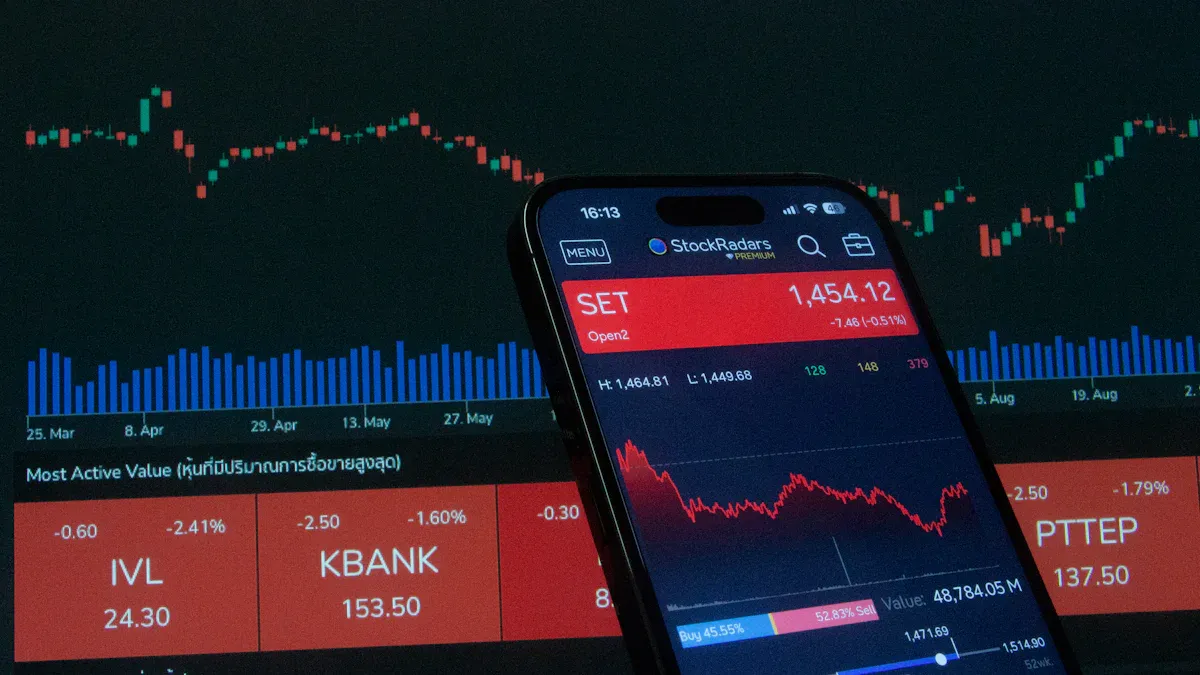
Image Source: pexels
Now that you understand what the Shanghai Composite Index is and its differences from other indexes, the next step is naturally: how to actually invest in it? You cannot directly buy an “index,” but you can let your assets grow with the index by buying financial products that track it. For beginners, the most direct and friendly way is through index funds.
Method One: Buying Index Funds (Exchange Traded Funds)
Imagine you do not want to bet on just one company but want to buy a “basket” of stocks representing the entire Shanghai stock market at once. Index funds (Exchange Traded Funds, ETFs) can help you achieve this.
ETFs tracking the Shanghai Composite Index aim to replicate the index performance. If the index rises 1%, it also rises about 1%. This is an excellent entry tool for beginners because it has two core advantages:
- Risk Diversification: You are no longer investing in a single stock but indirectly holding shares in hundreds of companies. This greatly reduces risks from poor performance of individual companies.
- Low Threshold: Compared to buying all stocks in the index yourself (almost impossible), buying one ETF share usually costs only tens or hundreds of dollars, very suitable for starting with small amounts.
Tip: ETFs are listed and traded on stock exchanges like stocks. You can buy and sell anytime during trading hours, with very flexible operations.
When you buy ETF shares through a securities account, there is a rigorous settlement process behind it to ensure transaction safety. In mainland China, this process is handled by China Securities Depository and Clearing Corporation Limited (China Securities Depository and Clearing Corporation Limited). It adopts the “Delivery Versus Payment” (DVP) principle, simply meaning:
- When you pay, you are ensured to receive ETF shares.
- When you sell, you are ensured to receive funds.
This settlement system provides guarantees for various financial instruments including A-shares and ETFs, ensuring your investment safety.
Method Two: SIP in Off-Exchange Linked Funds
If you find daily monitoring and timing ETF trades troublesome, or want to develop a long-term savings-style investment habit, then systematic investment plan (SIP) in off-exchange linked funds is a more worry-free choice.
“Linked funds” are funds that mainly invest in specific target ETFs. You can think of them as an “off-exchange channel” to access target ETFs. Their biggest benefit is supporting automatic SIP.
You can set up an automatic investment plan through banks or third-party financial service platforms like Biyapay. For example, agree to automatically use 100 dollars each month on a fixed day to buy linked funds tracking the Shanghai Composite Index.
This method helps you average investment costs, avoiding buying too much at market highs and accumulating more cheap shares at market lows. It tests not your market prediction ability but your patience and discipline.
Method Three: Other Investment Channels
Besides the two mainstream methods above, there are some more professional channels suitable for experienced investors. As a beginner, you just need a simple understanding.
- Stock Index Futures: This is a financial derivative allowing investors to bet on future index rises or falls. Its main functions are price discovery and risk hedging. For example, in the mainland China market, CSI 300 Index futures are highly correlated with the spot index and can even play a stabilizing role during sharp market fluctuations. But stock index futures trading is complex, highly leveraged, and extremely risky, not suitable for ordinary investors.
- Qualified Foreign Investor Channels (QFII/RQFII): These are channels designed for large overseas institutional investors. If you are a qualified overseas investor, investing in the Chinese capital market through these channels involves specific tax policies.
The table below briefly explains tax situations foreign institutional investors may face:
| Tax Item | Applicable To | Tax Rate/Policy |
|---|---|---|
| Capital Gains Tax | QFII and RQFII | Gains from stock transfers temporarily exempt from corporate income tax (since November 17, 2014) |
| Dividend Income | QFII and RQFII | 10% withholding income tax, lower rate applicable under tax treaties |
| Bond Interest | Foreign Institutional Investors | Temporarily exempt from corporate income tax and VAT in specific periods |
In summary, for the vast majority of investors wanting to get started, starting with ETFs or off-exchange linked funds is the safest and simplest path to participate in and share China’s economic growth dividends.
You now know that the Shanghai Composite Index is your important window to observe the Chinese economy and stock market, but it is not the only window.
As correlation between the Shanghai Composite Index and S&P futures reaches new highs, China’s market is increasingly connected to the world. At the same time, institutions like Goldman Sachs and the IMF have given positive forecasts for China’s economic growth in 2026. This all indicates that understanding the index composition and characteristics is the foundation for avoiding blind following and making rational investments.
Now, you have mastered the first key to opening the door to the Chinese stock market. Remember, investing starts with learning; continuous learning leads to steady progress.
FAQ
What is the difference between A-shares and B-shares?
A-shares are traded in RMB, mainly for mainland Chinese investors. B-shares are traded in foreign currencies (such as USD), initially set up for overseas investors. You can think of them as stocks on the same exchange but settled in different currencies.
Can I directly invest in the Shanghai Composite Index?
You cannot directly buy the index itself. But you can invest by buying index funds or ETFs that track the Shanghai Composite Index. These financial products allow you to indirectly hold a basket of stocks and share the overall index performance.
What fees are involved in investing in index funds?
Investing in ETFs mainly involves two types of fees:
- Management Fee: Charged annually by the fund company, usually a very low percentage.
- Trading Commission: Charged by the broker each time you buy or sell ETFs, for example, 5 dollars per trade.
*This article is provided for general information purposes and does not constitute legal, tax or other professional advice from BiyaPay or its subsidiaries and its affiliates, and it is not intended as a substitute for obtaining advice from a financial advisor or any other professional.
We make no representations, warranties or warranties, express or implied, as to the accuracy, completeness or timeliness of the contents of this publication.
Related Blogs of

Ultimate Guide to Applying for a Schengen Visa in the USA in 2025: Understand the Process, Documents, and Timeline in One Article

Say Goodbye to Bank Queues: Latest 2025 Bank of China App Guide for Converting Cash to Exchange


2026 China Stock Market Investment Guide: Spotlight on 5 Must-Watch Leading Tech Stocks


Say Goodbye to Panic: Master the Winning Rules for Stock Investing in a Bear Market

Choose Country or Region to Read Local Blog
 Australia
 Austria
 Belgium
 Canada
 Cyprus
 Czech Republic
 Denmark
 Estonia
 Finland
 France
 Germany
 Greece
 Hong Kong
 India
India Indonesia
 Ireland
 Italy
Italy Japan
Japan Latvia
 Lithuania
 Luxembourg
 Malaysia
 Malta
Malta Morocco
 Nepal
Nepal Netherlands
 New Zealand
 Norway
 Pakistan
 Philippines
 Poland
 Portugal
 Romania
 Singapore
 Slovakia
 Slovenia
 South Africa
 South Korea
 Spain
Spain Sweden
 Thailand
 The United States
 Turkey
 United Arab Emirates
 United Kingdom
 Vietnam
Contact Us




BIYA GLOBAL LLC is a licensed entity registered with the U.S. Securities and Exchange Commission (SEC No.: 802-127417); a certified member of the Financial Industry Regulatory Authority (FINRA) (Central Registration Depository CRD No.: 325027); regulated by the Financial Industry Regulatory Authority (FINRA) and the U.S. Securities and Exchange Commission (SEC).
BIYA GLOBAL LLC is registered with the Financial Crimes Enforcement Network (FinCEN), an agency under the U.S. Department of the Treasury, as a Money Services Business (MSB), with registration number 31000218637349, and regulated by the Financial Crimes Enforcement Network (FinCEN).
BIYA GLOBAL LIMITED is a registered Financial Service Provider (FSP) in New Zealand, with registration number FSP1007221, and is also a registered member of the Financial Services Complaints Limited (FSCL), an independent dispute resolution scheme in New Zealand.