Detailed Explanation of Bank Routing Number: Ensuring the Accuracy and Security of Cross - border Remittances



In modern financial transactions, the bank routing number, as an important tool in the financial system, plays an indispensable role. Especially in cross - border remittances and bank transfers, the correct use of the bank routing number can ensure the accurate and safe transfer of funds to the payee’s account.
This article will explore the importance of the bank routing number, how to obtain and verify it, and its practical application in cross - border remittances.
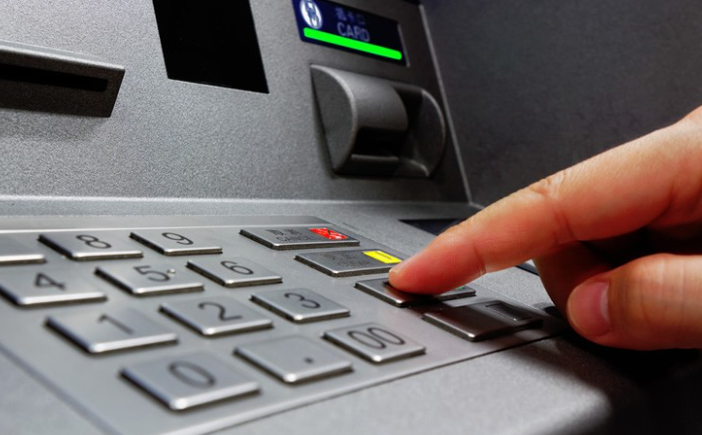
The Role of Bank Routing Number in Cross - border Remittances
The bank routing number is a key element in ensuring the accuracy of cross - border remittances. For many cross - border remittances, the bank routing number and the SWIFT code (or IBAN) are usually used together. The routing number helps identify a specific bank and its branches, which is crucial for the precise transfer of funds.
Cross - border remittances are usually more complex than domestic remittances, involving multiple financial institutions and transfer networks. The bank routing number helps avoid errors or delays in fund transfers, especially when handling large amounts of funds or cross - border transactions. The correct use of the routing number not only ensures that the funds can reach the account in a timely manner but also avoids additional handling fees or transfer failures caused by incorrect information.
Multiple Ways to Obtain the Bank Routing Number
For users who want to make remittances, obtaining the bank routing number is a necessary skill. First of all, if you have opened a bank account, the bank usually provides the bank routing number when opening the account. If you don’t have a check, you can also view this information in your online banking account.
If you don’t have the above - mentioned ways, you can also obtain the bank routing number by directly contacting the bank or visiting a bank branch. It should be noted that make sure the bank routing number provided is consistent with your account information to avoid fund transfer failures due to input errors.
Format and Usage Requirements of Bank Routing Number
The bank routing number usually consists of 9 digits, but some banks may also use 10 digits. There may be separators (such as dashes) between the digits, but in most cases, the routing number is a continuous string of numbers. When making any cross - border remittance, it is very crucial to ensure that the format of the bank routing number filled in is correct.
If you plan to make an international remittance, make sure to use the format that exactly matches the number provided by the bank. Banks and financial institutions usually list the accurate routing number on the account information page or bank statement provided to customers.
Why is it So Important to Verify the Validity of the Bank Routing Number?
When making a bank transfer, verifying the validity of the bank routing number is a key step to avoid incorrect fund transfers. Most remittance service providers and banks have an automatic verification system that allows users to check whether the bank routing number is valid before submitting remittance information. This function not only improves the accuracy of transactions but also reduces transaction delays caused by incorrect routing numbers.
In addition, some banks or remittance companies also provide manual verification services. After providing the routing number to the bank or remittance company, customers can request a manual check to ensure that the provided routing number is accurate.
With the popularity of electronic payments, the bank routing number is not only widely used in traditional bank transfers and check payments but also plays an important role in digital payment platforms. Many online payment platforms (such as PayPal, Venmo, etc.) allow users to transfer funds to a bank account by entering the bank routing number.
Although these platforms provide users with convenient payment methods, it is still crucial to ensure the use of the correct bank routing number when making electronic payments. An incorrect routing number may lead to transfer failures and even generate unnecessary fees due to repeated failed transactions.
Historical Background and Development of Bank Routing Number
The Bank Routing Number (BRN) is a crucial standardized tool in the US financial system. It was first proposed by the American Bankers Association (ABA) in the 1910s, aiming to simplify the fund transfer process between banks and effectively reduce transfer problems caused by human errors. Initially, the bank routing number was only used for check clearing and bank transfers. However, with the rise of electronic payments and digital payments, the use of the routing number has gradually expanded and become an indispensable part of modern bank transactions.
With the development of technology, the format and function of the bank routing number have also been continuously optimized. Today, the routing number has become a standardized identification code in domestic financial transactions in the US, widely used in ACH (Automated Clearing House) transfers, wire transfers, check payments, direct deposits, etc., ensuring that funds can be transferred quickly and accurately from one bank account to another.
Security of Bank Routing Number: How to Protect Your Information?
The bank routing number is part of your bank account information, and it is of great importance to protect its security. Criminals may use the stolen routing number to conduct unauthorized transactions. To ensure that your routing number is not misused, here are some protection suggestions:
- Avoid entering information on public devices: Do not enter your bank account or routing number on public computers or in an insecure network environment.
- Regularly check account activities: Ensure that there are no unauthorized transfers or transactions in your bank account.
- Enable two - factor authentication: Many banks and payment platforms offer two - factor authentication to increase account security.
- Be cautious when sharing information: Avoid sharing the routing number through insecure channels (such as email or social media). By taking these simple security measures, you can greatly reduce the risk of the bank routing number being misused.
Conclusion
The bank routing number plays a vital role in financial transactions, ensuring the accurate and safe transfer of funds from one account to another. When making cross - border remittances, it is crucial to understand the format, acquisition method, and verification steps of the bank routing number. Ensuring that you provide the correct bank routing number can greatly improve the accuracy of fund transfers and avoid unnecessary delays and fees.
If you are looking for a remittance service with no limits, high efficiency, and security, BiyaPay may be your ideal choice. BiyaPay adopts a local remittance method to ensure a fast and safe remittance process and supports remittances to multiple regions and countries. Whether you need to make a quick small - value remittance or a large - value cross - border transfer, BiyaPay can provide you with convenient and reliable services.
*This article is provided for general information purposes and does not constitute legal, tax or other professional advice from BiyaPay or its subsidiaries and its affiliates, and it is not intended as a substitute for obtaining advice from a financial advisor or any other professional.
We make no representations, warranties or warranties, express or implied, as to the accuracy, completeness or timeliness of the contents of this publication.
Related Blogs of
What Does Price-to-Earnings Ratio (PE) Mean? Master It to Navigate the Chinese Stock Market


Say Goodbye to Panic: Master the Winning Rules for Stock Investing in a Bear Market


The Relationship Between Fed Rate Cuts and New York Stock Market Fluctuations Is No Longer a Simple Cause-and-Effect


2026 China Stock Market Investment Guide: Spotlight on 5 Must-Watch Leading Tech Stocks

Choose Country or Region to Read Local Blog
 Australia
 Austria
 Belgium
 Canada
 Cyprus
 Czech Republic
 Denmark
 Estonia
 Finland
 France
 Germany
 Greece
 Hong Kong
 India
India Indonesia
 Ireland
 Italy
Italy Japan
Japan Latvia
 Lithuania
 Luxembourg
 Malaysia
 Malta
Malta Morocco
 Nepal
Nepal Netherlands
 New Zealand
 Norway
 Pakistan
 Philippines
 Poland
 Portugal
 Romania
 Singapore
 Slovakia
 Slovenia
 South Africa
 South Korea
 Spain
Spain Sweden
 Thailand
 The United States
 Turkey
 United Arab Emirates
 United Kingdom
 Vietnam
Contact Us




BIYA GLOBAL LLC is a licensed entity registered with the U.S. Securities and Exchange Commission (SEC No.: 802-127417); a certified member of the Financial Industry Regulatory Authority (FINRA) (Central Registration Depository CRD No.: 325027); regulated by the Financial Industry Regulatory Authority (FINRA) and the U.S. Securities and Exchange Commission (SEC).
BIYA GLOBAL LLC is registered with the Financial Crimes Enforcement Network (FinCEN), an agency under the U.S. Department of the Treasury, as a Money Services Business (MSB), with registration number 31000218637349, and regulated by the Financial Crimes Enforcement Network (FinCEN).
BIYA GLOBAL LIMITED is a registered Financial Service Provider (FSP) in New Zealand, with registration number FSP1007221, and is also a registered member of the Financial Services Complaints Limited (FSCL), an independent dispute resolution scheme in New Zealand.