How to Exchange Pesos with JPMorgan Chase Bank: A Detailed Guide to Steps and Fees



Image Source: pexels
Planning to use Chase Bank to exchange pesos? This is a safe and reliable choice. Please remember that you cannot get cash on the spot and must place an order at a branch in advance.
Understanding the specific steps and costs involved can help you make the financial decision that best suits you. Our goal is to make you a smart exchanger, ensuring your travel currency exchange process is clear and worry-free.
Key Takeaways
- To exchange pesos at Chase Bank, you must place an order in advance and cannot get cash directly at the bank.
- The fees for exchanging pesos at Chase Bank mainly come from the exchange rate spread, where the bank raises the rate slightly to make a profit.
- In addition to bank exchange, you can also use a credit card with no foreign transaction fees or withdraw cash from ATMs in Mexico.
- When withdrawing cash from ATMs abroad, be sure to choose settlement in the local currency and not in USD to save money.
- If you are not a Chase Bank customer, you usually need to open an account first to exchange pesos.
Chase Bank Peso Exchange Process

Image Source: pexels
The process of exchanging pesos through Chase Bank is very straightforward, but the key lies in “advance planning.” Bank branches usually do not stock large amounts of foreign currency cash, so you cannot complete the transaction on the spot like at a currency exchange booth. The entire process is more like online shopping: you need to place an order first and then wait for pickup.
The following are the four core steps to convert USD to pesos.
Step One: Check Branch Eligibility
Not all Chase Bank branches offer foreign currency exchange services. Therefore, your first step is to confirm eligibility and understand basic information. Before going to the branch, you should contact the nearest branch first.
You can confirm the following points with bank staff by phone or in person:
- Whether they offer foreign currency exchange services.
- What fees are required to exchange pesos.
- What the current USD to peso exchange rate is.
- Whether you need an appointment to handle the business.
Important Tip: Usually, you must hold a Chase Bank checking or savings account to use this service. If you are not yet their customer, you need to open an account first.
Step Two: Submit Exchange Order
After confirming that the branch offers the service, you can submit the order. You need to go to the branch in person to handle it. Tell the teller that you want to exchange pesos at Chase Bank and inform them of the specific USD amount you want to exchange.
The bank staff will calculate the total pesos you can get based on the day’s exchange rate and inform you of all related fees. After confirming that everything is correct, they will formally submit the order for you.
Step Three: Confirm Pickup Date
After the order is submitted, the bank needs time to allocate cash from its foreign exchange center. This process usually takes up to 2 business days.
The bank staff will give you an estimated pickup date. At that time, they will notify you by phone or text message that your peso cash has arrived at the branch and you can go to pick it up. Be sure to remember this time and arrange your itinerary reasonably.
Step Four: Bring ID for Pickup
After receiving the bank’s pickup notification, you can go to collect your pesos. To ensure fund security, the bank needs to verify your identity.
When picking up the cash, you must bring valid identification documents. Usually, the bank accepts the following documents:
- Government-issued photo ID (such as a driver’s license)
- Passport
Hand the ID and your order receipt (if any) to the bank staff. After they verify the information, they will hand you the peso cash you exchanged. After counting and confirming the amount on the spot, the entire exchange process is complete.
Cost Structure of Exchanging Pesos
Understanding the fees for exchanging pesos through Chase Bank is crucial. The total cost is not just the USD you pay; it consists of two parts: the markup hidden in the exchange rate and possible additional service fees. Let’s break down these fees in detail.
Core Cost: Exchange Rate Markup
This is the most major and easily overlooked cost when exchanging foreign currency. To understand it, you first need to know what the “mid-market rate” (Mid-Market Rate) is.
The mid-market rate is the “real” exchange rate used when banks and large financial institutions trade currencies. You can find this rate on Google or Reuters. However, when you go to the bank as an individual customer to exchange, the rate offered to you by the bank will be worse than this.
Before you lock an order at the branch, use BiyaPay’s Currency Converter & Rate Comparison to cross-check the mid-market rate against the branch quote and fold both markup and any service fee into your all-in cost. BiyaPay is a multi-asset trading wallet covering cross-border payments, investing and treasury use cases; it supports free conversion among multiple fiat and digital currencies with transparent reference quotes to help you decide whether “order now at the branch” or “use a no-FX-fee card/ATM on arrival” is more economical.
For trip budgeting, open the website and simulate your target amount to estimate pesos in hand; when conditions change, revisit the Currency Converter & Rate Comparison to review intraday moves and reduce slippage from rate spreads. Note: BiyaPay operates under multi-jurisdictional compliance frameworks (including US MSB and New Zealand FSP), which can be helpful if you value pricing transparency and process control.
This difference is the “exchange rate markup” (Exchange Rate Markup). The bank makes money by adding a profit margin to the market rate.
Simply put: The bank buys pesos at wholesale price (mid-market rate) and sells them to you at retail price (marked-up rate). This spread is the bank’s main source of profit.
Fee Calculation Example
Let’s intuitively feel it through an example. Suppose you want to exchange 1,000 USD for Mexican pesos.
- Mid-market rate: 1 USD = 18.82 MXN
- Rate offered by Chase Bank: 1 USD = 18.26 MXN
In this case:
- According to the market rate, you should get:
$1,000 * 18.82 = 18,820 MXN - Through Chase Bank, you actually get:
$1,000 * 18.26 = 18,260 MXN
Just the exchange rate markup alone means you get 560 MXN less. This markup is approximately 3%, which is the core cost of the entire exchange process.
Additional Fees: Service Fees and Shipping Fees
In addition to the exchange rate markup, you may need to pay some explicitly listed fees.
- Order Service Fee (Order Fee): For smaller exchanges, Chase Bank usually charges a fixed service fee. For example, for orders under $1,000, a $5 fee may be charged. If your exchange amount exceeds $1,000, this fee is usually waived.
- Shipping Fee (Shipping Fee): In rare cases, if the branch needs to urgently allocate cash from a very distant location, a shipping fee may be incurred. However, for regular advance bookings, this is not common.
It is worth noting that the type of Chase Bank account you hold will also affect related fees, especially when using cards abroad. Although this is not exactly the same as exchanging cash at a branch, understanding this information helps you plan your finances comprehensively.
| Account or Card Type | Foreign Transaction Fee |
|---|---|
| Chase Sapphire℠ Banking | 0% |
| Chase Private Client Checking℠ | 0% |
| Standard Chase Debit Card | 3% |
| Chase Sapphire Preferred® Card | 0% |
| Chase Sapphire Reserve® Card | 0% |
Important Reminder: Even if you hold a premium account that waives foreign transaction fees, you should avoid choosing “settle in USD” at ATMs or merchants abroad. This practice, known as dynamic currency conversion (DCC), will subject you to very unfavorable exchange rates, and Chase Bank will not compensate for this loss.
Finally, if you need to make a large exchange (for example, over 10,000 USD), Chase Bank has no publicly disclosed exchange limit. The best practice is to contact your branch directly to inquire about their specific policies and procedures.
Alternatives to Cash Exchange
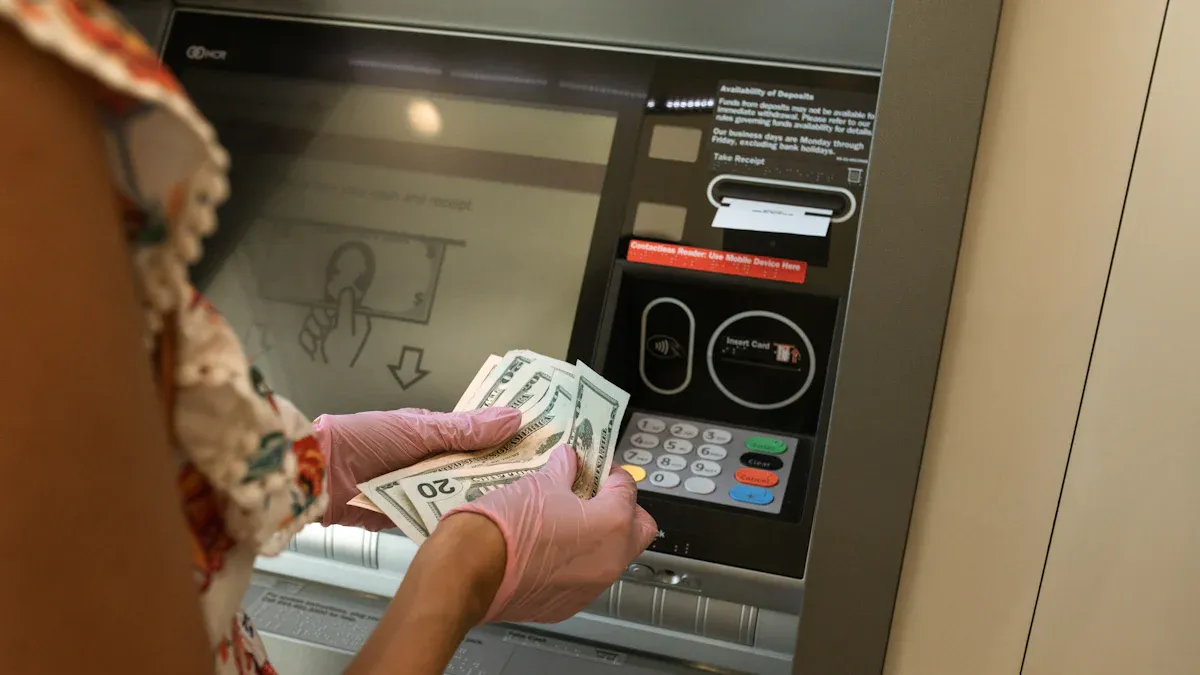
Image Source: pexels
Exchanging cash at a branch is a traditional method, but it is not the only option. Understanding other options can help you save money and increase convenience during your trip. The following are four effective alternatives.
Option One: Use Credit Cards with No Foreign Transaction Fees
When spending locally in Mexico, using a credit card is one of the most convenient ways. You need to choose a card that does not charge foreign transaction fees to avoid additional costs per transaction.
Many Chase Bank credit cards offer this benefit, such as:
- Chase Sapphire Preferred® Card
- Chase Sapphire Reserve®
- The World of Hyatt Credit Card
- IHG One Rewards Premier Credit Card
Using a credit card is not only safe but also gets you a better exchange rate. The exchange rates of credit card networks (such as Visa and Mastercard) are usually much better than bank branches.
| Institution/Network | Exchange Rate Markup Range |
|---|---|
| Visa / Mastercard | About 0.05% - 0.06% |
| Bank Branch | May be as high as 5% or more |
Option Two: Through Online Currency Exchange Services
If you need to send funds to Mexico, online services like Wise or Remitly are excellent choices. These platforms usually offer more competitive exchange rates and lower fees than traditional banks.
| Service | Advantages | Disadvantages |
|---|---|---|
| Wise | Uses mid-market rate, transparent fees | Does not support cash pickup |
| Remitly | Supports cash pickup, user-friendly interface | Rate may include markup |
Unlike banks, Wise uses the “real” exchange rate you see on Google, charging only a small, transparent service fee. In addition, services like Xoom can complete transfers in minutes, allowing recipients to quickly pick up cash at outlets in Mexico.
Option Three: Conduct International Wire Transfers
If you need to transfer a larger amount to a bank account in Mexico, international wire transfer is a reliable choice. Operating online through Chase Bank, the fees are relatively low.
Chase Bank Online Wire Transfer Fees If you send a foreign currency wire transfer through Chase.com or the mobile app:
- Amount less than 5,000 USD, fee is $5.
- Amount equal to or greater than 5,000 USD, fee is $0.
Please note that Chase Bank will use its own set exchange rate, which includes a profit markup. The transfer usually takes 1-3 business days to reach the recipient’s account. You need to provide the recipient’s full name, address, bank name, account number, and SWIFT/BIC code.
Option Four: Withdraw at Destination ATMs
After arriving in Mexico, withdrawing directly from local ATMs is a quick way to get peso cash. However, you need to pay attention to related fees. Using a standard Chase debit card to withdraw from non-Chase ATMs usually incurs two fees:
- Withdrawal Fee: $5 per transaction.
- Foreign Transaction Fee: 3% of the withdrawal amount.
Important Tip: Beware of Dynamic Currency Conversion (DCC) When withdrawing from an ATM, the machine may ask if you want to “settle in USD.” Be sure to choose “No” and insist on transacting in the local currency (Mexican peso, MXN). Accepting DCC means you will bear the unfavorable exchange rate set by the ATM operator, thus paying more fees.
Exchanging pesos through Chase Bank is a safe and reliable traditional choice, but it is costly and requires advance planning. Please review the alternatives in the article and choose the method that best suits you based on your emphasis on cost, convenience, and security. No matter which method you choose, understanding all fees and rules in advance will always make your trip more reassuring.
Travel Safety Tips:
- Carry only a small amount of cash in public, especially in tourist-heavy areas.
- Lock excess cash and most bank cards in the safe at your accommodation.
- Prefer withdrawing from ATMs inside well-lit banks and be alert to any suspicious devices.
FAQ
Can I exchange pesos if I am not a Chase Bank customer?
Usually, you must be a Chase Bank customer. This service is mainly provided to users with checking or savings accounts. If you are not a customer, the bank may require you to open an account first to handle the exchange business.
Is there a minimum amount limit for exchanging pesos?
Chase Bank has no explicit minimum exchange amount. But please note that orders below a certain amount (for example, $1,000) usually incur a $5 service fee. This makes the cost of small exchanges relatively higher.
Can I exchange unused pesos back to USD?
Yes, you can exchange pesos back to USD, but this is treated as a new transaction. The bank will use its “buy” rate of the day, which is usually worse than the rate when you originally exchanged, thus incurring additional costs.
Money-Saving Tip: To avoid losses, it is recommended that you only exchange the cash amount you are sure to use during your trip.
Is the exchange rate at the time of ordering the final rate?
Yes. The exchange rate is determined when you go to the branch to submit the order. The bank staff will calculate the total amount for you based on the day’s rate and lock the transaction. Subsequent exchange rate fluctuations will not affect your confirmed order.
*This article is provided for general information purposes and does not constitute legal, tax or other professional advice from BiyaPay or its subsidiaries and its affiliates, and it is not intended as a substitute for obtaining advice from a financial advisor or any other professional.
We make no representations, warranties or warranties, express or implied, as to the accuracy, completeness or timeliness of the contents of this publication.
Related Blogs of
Want to Invest in the Chinese Stock Market? Start by Understanding the Shanghai Composite Index


Say Goodbye to Panic: Master the Winning Rules for Stock Investing in a Bear Market

Say Goodbye to Bank Queues: Latest 2025 Bank of China App Guide for Converting Cash to Exchange

Ultimate Guide to Applying for a Schengen Visa in the USA in 2025: Understand the Process, Documents, and Timeline in One Article

Choose Country or Region to Read Local Blog
 Australia
 Austria
 Belgium
 Canada
 Cyprus
 Czech Republic
 Denmark
 Estonia
 Finland
 France
 Germany
 Greece
 Hong Kong
 India
India Indonesia
 Ireland
 Italy
Italy Japan
Japan Latvia
 Lithuania
 Luxembourg
 Malaysia
 Malta
Malta Morocco
 Nepal
Nepal Netherlands
 New Zealand
 Norway
 Pakistan
 Philippines
 Poland
 Portugal
 Romania
 Singapore
 Slovakia
 Slovenia
 South Africa
 South Korea
 Spain
Spain Sweden
 Thailand
 The United States
 Turkey
 United Arab Emirates
 United Kingdom
 Vietnam
Contact Us




BIYA GLOBAL LLC is a licensed entity registered with the U.S. Securities and Exchange Commission (SEC No.: 802-127417); a certified member of the Financial Industry Regulatory Authority (FINRA) (Central Registration Depository CRD No.: 325027); regulated by the Financial Industry Regulatory Authority (FINRA) and the U.S. Securities and Exchange Commission (SEC).
BIYA GLOBAL LLC is registered with the Financial Crimes Enforcement Network (FinCEN), an agency under the U.S. Department of the Treasury, as a Money Services Business (MSB), with registration number 31000218637349, and regulated by the Financial Crimes Enforcement Network (FinCEN).
BIYA GLOBAL LIMITED is a registered Financial Service Provider (FSP) in New Zealand, with registration number FSP1007221, and is also a registered member of the Financial Services Complaints Limited (FSCL), an independent dispute resolution scheme in New Zealand.