US to Taiwan Money Transfer Restrictions: Master the Key Rules for Smooth Remittances



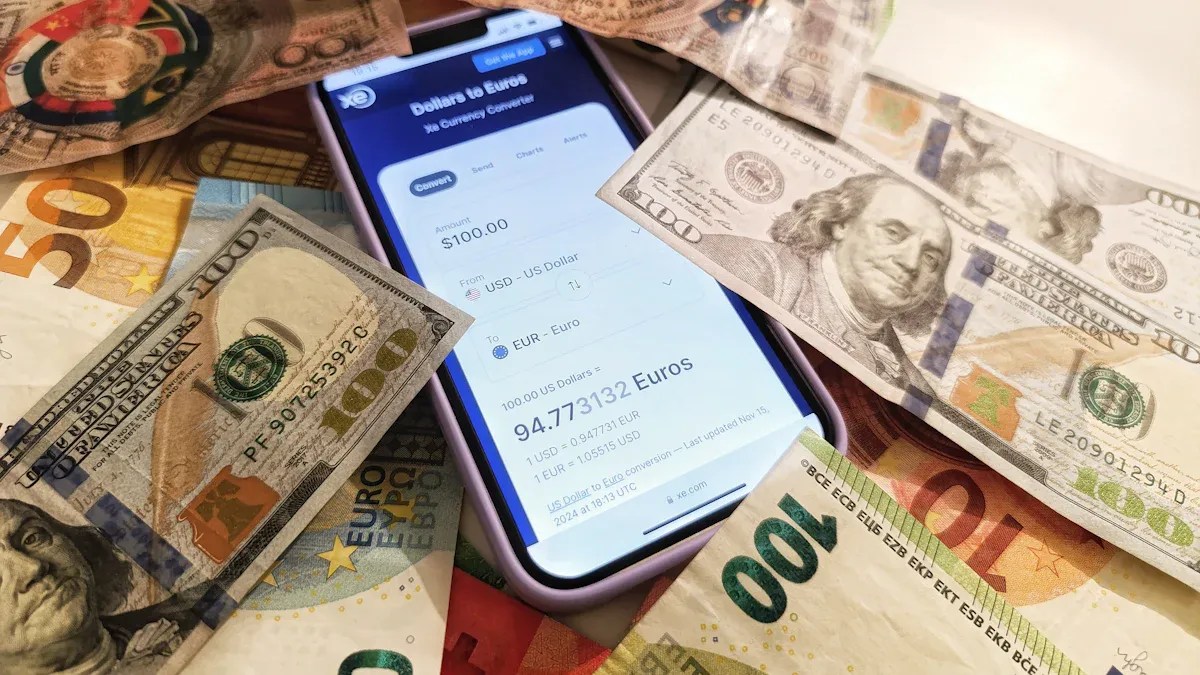
Image Source: pexels
Are you worried that money sent from the US to Taiwan will get stuck or require complicated procedures?
In reality, most delays and confusion stem from not fully understanding the restrictions on transfers from the US to Taiwan. All issues revolve around two core points:
- Annual foreign-exchange settlement quota
- Single-transaction declaration threshold
Once you master the rules for these two numbers, every transfer will be smooth and worry-free.
Key Takeaways
- When sending money from the US to Taiwan, remember two critical figures: you can settle a maximum of USD 5 million into TWD per year, and any single incoming transfer exceeding the equivalent of NT$500,000 requires declaration.
- Online platforms are generally cheaper and more transparent than traditional banks, while mailing checks is slow and risky — not recommended.
- Always double-check the recipient’s English details and honestly state the purpose of the transfer to avoid delays.
- For large incoming transfers, banks may request proof of fund source — prepare documents in advance.
US to Taiwan Transfer Restrictions: Amounts and Declaration Rules

Image Source: unsplash
The most important aspect of sending money from the US to Taiwan is the amount limits. These rules exist to comply with Taiwan and US financial regulations. Understanding the following two key figures will help you avoid delays and ensure funds arrive smoothly.
Annual Settlement Quota: USD 5 Million Cap
First, according to the Central Bank of Taiwan, every individual holding a Republic of China (Taiwan) national ID card has an annual limit of USD 5 million for converting foreign currency into New Taiwan Dollars (known as “settlement” or “結匯”).
How is this quota calculated?
- Eligible persons: Only individuals with Taiwan household registration in Taiwan.
- Calculation period: January 1 to December 31 each year.
- Calculation method: Total amount converted from all foreign-currency accounts to TWD in that calendar year.
Simply put, if the USD you receive stays in your foreign-currency account and is not converted to TWD, it does not count toward the USD 5 million quota. The rule applies only to the act of conversion.
Note for US tax residents: In addition to Taiwan regulations, if you are a US citizen or tax resident, the IRS requires reporting of foreign financial accounts under the Bank Secrecy Act. You must file an FBAR (Report of Foreign Bank and Financial Accounts) if:
- You have a financial interest in or signature authority over one or more foreign financial accounts, AND
- The aggregate value of those accounts exceeds USD 10,000 at any time during the calendar year.
FBAR filing is separate from your personal income tax return — be sure to comply to avoid penalties.
Single-Transaction Declaration Threshold: Equivalent to NT$500,000
The second key figure is the declaration requirement for individual transactions. Per Taiwan regulations, when a single incoming transfer or single conversion from a foreign-currency account exceeds the equivalent of NT$500,000, you must submit a “Foreign Exchange Receipt/Transaction Declaration Form” to the bank.
This is a declaration procedure, not a restriction. The bank will contact you to explain the source and purpose of the funds.
How much USD equals NT$500,000? It fluctuates with the exchange rate. The average TWD/USD rate over the past 90 days has been around 0.0325.
Reference table (based on 1 USD ≈ 31.94 TWD):
| New Taiwan Dollars (TWD) | US Dollars (USD) |
|---|---|
| 10,000 | 319.43 |
| 50,000 | 1,597.15 |
| 100,000 | 3,194.30 |
| 250,000 | 7,985.75 |
| 500,000 | 15,971.50 |
In practice, any single transfer over roughly USD 16,000 will likely trigger the declaration requirement. Filling out the form honestly and accurately is the fastest way to get funds released.
Comparison of the Three Main Transfer Channels & Their Limits

Image Source: pexels
After understanding the amount limits, the next step is choosing the best transfer method. The three most common channels — traditional bank wire, online platforms, and paper checks — differ greatly in fees, speed, and convenience.
Traditional Bank Wire Transfer Rules
Using your US bank to send an international wire is the most traditional method. You can do it in-branch or online.
However, convenience comes with relatively high costs and hidden fees.
Watch out for hidden correspondent bank fees: When banks route international wires, funds often pass through one or more intermediary banks. Each intermediary may deduct a processing fee directly from the principal, which is why the recipient sometimes receives tens of dollars less than expected.
Examples from major US banks:
- Chase Bank online international wire: approximately USD 40.
- Some banks waive the fee for transfers over USD 5,000.
These fees exclude the unfavorable exchange rate markup banks apply. For large or frequent transfers, the costs add up significantly.
Recommendation: Always ask your bank for the full fee breakdown (wire fee + correspondent fees + exchange rate) before sending.
Online Platforms (Wise / Remitly) Limits
In recent years, platforms like Wise (formerly TransferWise) and Remitly have become popular for their transparent fees and near mid-market exchange rates.
Wise example – sending USD 10,000 to Taiwan:
| Payment Method | Estimated Total Fee (USD) |
|---|---|
| Wire transfer | 36.40 |
| Wise balance | 31.42 |
| ACH bank debit | 30.29 + 0.28% |
Online platforms are usually cheaper and faster (often same-day or next-day arrival). They do have their own per-transaction or daily limits, separate from Taiwan’s NT$500,000 declaration rule — check the platform’s policy for large transfers.
Risks and Inconvenience of Mailing Paper Checks
Mailing a physical check is the least recommended method. It is the slowest and carries the highest risk.
In Taiwan, you cannot cash a US check directly. You must deposit it for “collection,” meaning the bank mails the physical check back to the issuing US bank for clearing — a process that takes 4–8 weeks.
Common reasons checks are rejected or delayed:
| Rejection Reason | Explanation |
|---|---|
| Incomplete information | Missing or incorrect date, payee name, or amount |
| Post-dated or stale-dated | Dated in the future or older than 6 months |
| Account issues | Closed account or insufficient funds |
| Stop payment or suspected fraud | Issuer stopped payment or bank flags as fraudulent |
Avoid checks unless you have absolutely have no other option.
Prepare Correct Transfer Details to Prevent Delays
After choosing a channel, the next step is preparing flawless recipient information. Most delays are caused by spelling mistakes or incomplete data, not amount limits.
Transfer Information Checklist
Before filling out any wire form, double- and triple-check the following (must match bank records exactly):
- Full English bank name: e.g.,
Bank of Taiwan - Bank SWIFT/BIC code: 8 or 11 characters (e.g., Taiwan Bank head office:
BKTWTWTPXXX) — ask your branch or use the head office code - Branch English address
- Recipient English name — must match the account name letter for letter
- Recipient foreign-currency account number
- Recipient contact phone number
Important: To receive USD smoothly, the recipient must have a foreign-currency account in Taiwan. Sending USD directly to a TWD account forces immediate conversion at the bank’s posted rate.
Recommended Purpose of Transfer Descriptions
When declaring the purpose, be honest and specific. Vague answers like “personal use” may trigger additional questions.
Common acceptable purposes:
| Purpose | Example Scenario |
|---|---|
| Family support | Living expenses for family in Taiwan |
| Education expenses | Tuition, housing, study-abroad costs |
| Salary income | Wages earned in the US |
| Investment funds | Purchasing stocks, funds, etc. |
| Service income | Payment for consulting, design, etc. |
Documentation for Large Transfers
For transfers exceeding the equivalent of NT$500,000, banks may request supporting documents for anti-money-laundering compliance:
- Proof of source: pay stubs, US bank statements, asset sale contracts
- Purpose-specific documents: investment application forms, etc.
Having these ready speeds up processing.
In summary, to handle US-to-Taiwan transfers smoothly:
- Remember the two key thresholds: annual USD 5 million settlement quota & NT$500,000 single-transaction declaration
- Choose the right channel based on amount and frequency
- Prepare complete, accurate English recipient details and state the purpose honestly
With proper preparation, transferring money from the US to Taiwan is actually simple and fast — no need to over-worry!
FAQ
What if I exceed the annual USD 5 million quota?
You can still receive USD into your foreign-currency account. You simply cannot convert it to TWD until the quota resets on January 1 of the next year. The money remains safely in USD.
Do I absolutely need a foreign-currency account in Taiwan?
Strongly recommended. Without one, incoming USD is automatically converted at the bank’s rate, reducing your control over timing and rate.
Can I ask family members to help settle the funds?
Yes. You can send money to family members and let them use their own annual USD 5 million quota. Each person’s quota is calculated independently.
Can I write any purpose for the transfer?
Absolutely not. You must be truthful and specific (e.g., “family support” or “salary income”). Vague descriptions can cause delays.
*This article is provided for general information purposes and does not constitute legal, tax or other professional advice from BiyaPay or its subsidiaries and its affiliates, and it is not intended as a substitute for obtaining advice from a financial advisor or any other professional.
We make no representations, warranties or warranties, express or implied, as to the accuracy, completeness or timeliness of the contents of this publication.
Related Blogs of

The Relationship Between Fed Rate Cuts and New York Stock Market Fluctuations Is No Longer a Simple Cause-and-Effect


After Over 100 Billion in Buybacks, Has Tencent's Long-Term Investment Logic Changed?


Want to Invest in the Chinese Stock Market? Start by Understanding the Shanghai Composite Index

Understand the Core Differences Between the Nasdaq Composite Index and Nasdaq 100 Index in One Article

Choose Country or Region to Read Local Blog
 Australia
 Austria
 Belgium
 Canada
 Cyprus
 Czech Republic
 Denmark
 Estonia
 Finland
 France
 Germany
 Greece
 Hong Kong
 India
India Indonesia
 Ireland
 Italy
Italy Japan
Japan Latvia
 Lithuania
 Luxembourg
 Malaysia
 Malta
Malta Morocco
 Nepal
Nepal Netherlands
 New Zealand
 Norway
 Pakistan
 Philippines
 Poland
 Portugal
 Romania
 Singapore
 Slovakia
 Slovenia
 South Africa
 South Korea
 Spain
Spain Sweden
 Thailand
 The United States
 Turkey
 United Arab Emirates
 United Kingdom
 Vietnam
Contact Us




BIYA GLOBAL LLC is a licensed entity registered with the U.S. Securities and Exchange Commission (SEC No.: 802-127417); a certified member of the Financial Industry Regulatory Authority (FINRA) (Central Registration Depository CRD No.: 325027); regulated by the Financial Industry Regulatory Authority (FINRA) and the U.S. Securities and Exchange Commission (SEC).
BIYA GLOBAL LLC is registered with the Financial Crimes Enforcement Network (FinCEN), an agency under the U.S. Department of the Treasury, as a Money Services Business (MSB), with registration number 31000218637349, and regulated by the Financial Crimes Enforcement Network (FinCEN).
BIYA GLOBAL LIMITED is a registered Financial Service Provider (FSP) in New Zealand, with registration number FSP1007221, and is also a registered member of the Financial Services Complaints Limited (FSCL), an independent dispute resolution scheme in New Zealand.