A 35-Year Journey Through Ups and Downs: A Comprehensive Review of the Development History of China's Stock Market




Image Source: unsplash
Since the formal opening of exchanges in 1990, China’s stock market has traveled an extraordinary path for over thirty years. It started from an “experimental field” and has now grown into an important force in the global capital market.
This history is not just an accumulation of numbers and events, but a microcosm of the dreams, struggles, and reflections of several generations.
| Country/Region | Total Market Capitalization (million USD) | Year |
|---|---|---|
| China | 11,870,548 | 2025 |
This journey is crucial for understanding the present and looking toward the future.
Key Points
- China’s stock market started in 1990, developing from an “experimental field” into a globally important market.
- China’s stock market has undergone multiple important reforms, such as the share-trading reform and the registration system reform, which have helped make the market more standardized.
- Through mechanisms like Shanghai-Hong Kong Stock Connect, China’s stock market has become more closely connected with international markets, attracting more international investment.
- The registration system reform makes it easier for companies to list, allowing the market to play a greater role in selecting good companies.
- China’s stock market now focuses more on supporting technological innovation, helping the high-quality development of the national economy.
Germination and Pioneering (1984-1992): Birth of Exchanges
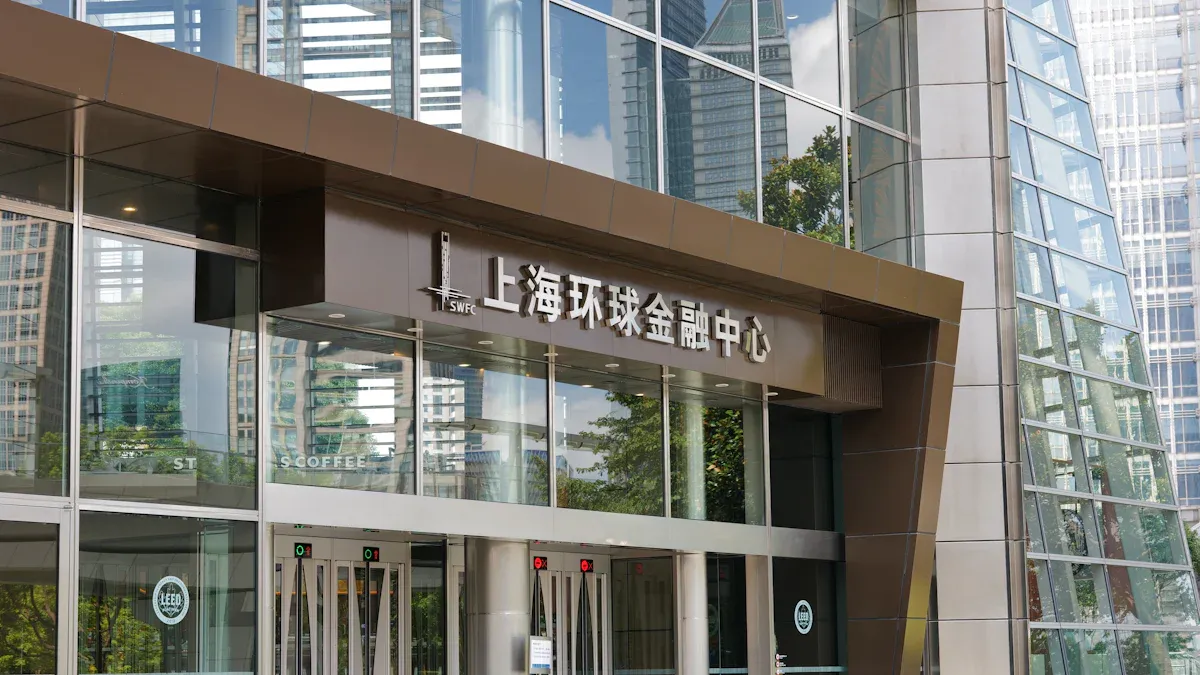
Image Source: unsplash
The seeds of China’s capital market were quietly sown in the wave of reform and opening up in the 1980s. Along with the exploration of economic system reform, the joint-stock system became a new attempt to revitalize enterprises.
Joint-Stock System Experiment and the “Old Eight Shares”
In 1984, Shanghai Feile Audio Company issued the first publicly tradable stock in New China to the public. This event marked the official start of the joint-stock system experiment. Subsequently, a batch of enterprises followed suit, forming the initial group of listed companies, collectively known by the market as the “old eight shares.” The trading of these stocks initially took place over the counter, on a small scale, but they ignited the public’s initial enthusiasm for securities investment and laid the foundation for the subsequent establishment of the market.
Formal Opening of Shanghai and Shenzhen Exchanges
To provide a centralized and standardized venue for stock trading, the preparation of exchanges was put on the agenda. At the end of 1990, the Shanghai Stock Exchange opened first. Soon after, the Shenzhen Stock Exchange also commenced operations.
| Event | Date |
|---|---|
| Formal Establishment | December 1, 1990 |
| Opening | July 3, 1991 |
The successive openings of the Shanghai and Shenzhen exchanges marked China’s stock market transitioning from the era of decentralized over-the-counter trading to the era of centralized bidding on exchanges, with a national securities market framework initially taking shape.
The “810” Incident and the Establishment of the CSRC
The early development of the market was full of frenzy and chaos. The 1992 Shenzhen “810” incident was the most typical example.
At that time, millions of subscription lottery forms triggered an unprecedented rush, eventually evolving into a mass incident.
- Event Background: In August 1992, Shenzhen planned to issue 5 million new share subscription lottery forms.
- Participation Scale: Over 1.2 million people from across the country flooded into Shenzhen to queue, with over 30 billion in deposits (approximately $545 million) and remittances pouring into local banks.
- Event Process: Due to chaotic management and rumors of malpractice, on-site order collapsed, leading to serious conflicts.
This incident exposed huge gaps in early market regulation. To standardize market development and prevent risks, the establishment of a regulatory system was imminent. The China Securities Regulatory Commission (CSRC) was formally established in October 1992. Its birth marked the launch of a unified regulatory system for China’s securities market, as the market began to bid farewell to barbaric growth and gradually move toward standardization.
Standardization and Growing Pains (1993-2004): Building the Basic System of China’s Stock Market
The establishment of the CSRC opened the standardization process of China’s stock market. However, the path from barbaric growth to orderly development was full of challenges and pains. Problems such as excessive speculation and insider trading exposed during rapid market expansion once triggered profound reflections on the “stock market as casino” theory. During this period, the market established various basic systems through exploration, laying the cornerstone for future healthy development.
From “Same-Day Round-Trip Trading” to “Next-Day Round-Trip Trading” and Price Limit System
To curb excessive speculative behavior in the market, regulatory authorities introduced a series of key trading rules.
- Trading Settlement System Reform: In 1995, the market adjusted the stock trading settlement system from “same-day round-trip trading,” which allowed buying and selling on the same day, to “next-day round-trip trading,” requiring stocks bought on the day to be sold only on the next trading day.
- Price Fluctuation Limits: In December 1996, the Shanghai and Shenzhen exchanges formally implemented a 10% daily price limit system.
Financial market price limits are designed to help regulate and stabilize trading activity, prevent excessive volatility, and protect investors from extreme price fluctuations.
The establishment of these two systems effectively reduced intraday volatility in the market, adding a “safety valve” for stable market operation.
Enactment of the Securities Law and the “519” Rally
The foundation of system construction lies in legalization. At the end of 1998, the Securities Law of the People’s Republic of China was formally enacted and implemented on July 1 of the following year. This was the first fundamental law of China’s capital market, marking that market development henceforth had laws to follow and providing legal weapons to combat securities crimes. Against the backdrop of favorable policies and gradually clarifying legal frameworks, the famous “519” rally erupted in 1999, with the Shanghai Composite Index rising over 50% in just one and a half months, greatly boosting market confidence.
Establishment of the SME Board
As economic development progressed, the demand for financing channels for small and medium-sized enterprises became increasingly urgent. In May 2004, the Shenzhen Stock Exchange established the Small and Medium Enterprise Board. Its birth aimed to provide financing opportunities and growth space for growth-stage enterprises temporarily unable to list on the main board, marking a key step in the construction of China’s multi-level capital market system. However, the improvement of systems was not achieved overnight. By 2005, after a prolonged bear market, the Shanghai Composite Index fell below the 1000-point integer mark, bottoming at 998.23 points. The market’s growing pains reached their peak, foreshadowing a profound change on the horizon.
Transformation and Growth (2005-2014): Full Circulation and Multi-Level Market
After years of bear market bottoming, the market welcomed profound changes amid the pains. In 2005, with the launch of a series of key reforms, China’s stock market entered a new stage of rapid growth. This period started with resolving historical issues and was marked by building a multi-level market, staging magnificent bull-bear conversions and laying a solid foundation for the market’s long-term development.
Core Reform: Launch of the Share-Trading Reform
For a long time, a fundamental institutional defect plagued market development: the split-share structure. In early 2005, about two-thirds of shares in the market were non-circulating. These shares and publicly held circulating shares had “same shares, different rights,” causing market structure fragmentation and severely affecting investor confidence and corporate governance efficiency.
The share-trading reform, hailed as a major reform with “no turning back once the arrow is released,” aimed at core goals of allowing non-circulating shares to gain listing and trading rights through consideration compensation, achieving full circulation of shares across the market.
This top-down reform fundamentally resolved the historical problem plaguing the market for over a decade. It unified the interest base of all shareholders, cleared the biggest obstacle to improving listed company governance and enhancing market pricing efficiency, and opened the floodgates for the subsequent epic bull market.
Index Surging to Historical High of 6124 Points
The success of the share-trading reform greatly released market vitality, igniting an unprecedented bull market. Starting from the historical low of 998 points, the Shanghai Composite Index soared all the way.
- Reform Dividend Release: Full circulation expectations led to market value revaluation, attracting massive funds into the market.
- High-Speed Economic Growth: China’s strong economic performance at the time provided solid earnings support for the bull market.
- Surging Investor Enthusiasm: “Everyone trading stocks” became a social phenomenon at the time, with account openings surging.
Driven by this frenzy, the Shanghai Composite Index reached a historical high of 6124.04 points in October 2007. This number remains a profound memory in the hearts of many veteran investors. However, after the revelry, accompanied by the global financial tsunami triggered by the U.S. subprime crisis, the market quickly reversed, experiencing drastic adjustments. This complete bull-bear cycle gave investors a deeper understanding of risks.
Launch of ChiNext and Financial Instrument Innovation
After reforms on the main board concluded, building a more complete structure and richer function multi-level capital market system was put on the agenda. To support economic transformation and technological innovation, a brand-new board emerged.
On October 30, 2009, the Shenzhen Stock Exchange’s ChiNext Board (ChiNext) formally launched. According to statements from regulatory officials at the time, launching ChiNext was a strategic decision by the central government. Its core mission was:
- To provide a financing platform for innovative and fast-growing enterprises.
- To focus on supporting high-tech companies and SME development.
- To assist China’s economic transformation from manufacturing to knowledge economy.
The launch of ChiNext was vividly called “China’s Nasdaq” by the market, opening the door to direct financing for a batch of highly growth-potential tech enterprises and significantly enhancing the capital market’s ability to serve the real economy.
At the same time, the market’s financial instruments began to enrich. Innovations such as stock index futures and margin trading were successively launched, providing investors with more trading strategies and risk management tools, marking the market transitioning from a unidirectional long-only era to a more mature and complex stage.
Opening and Deepening (2015-Present): Registration System and Two-Way Opening
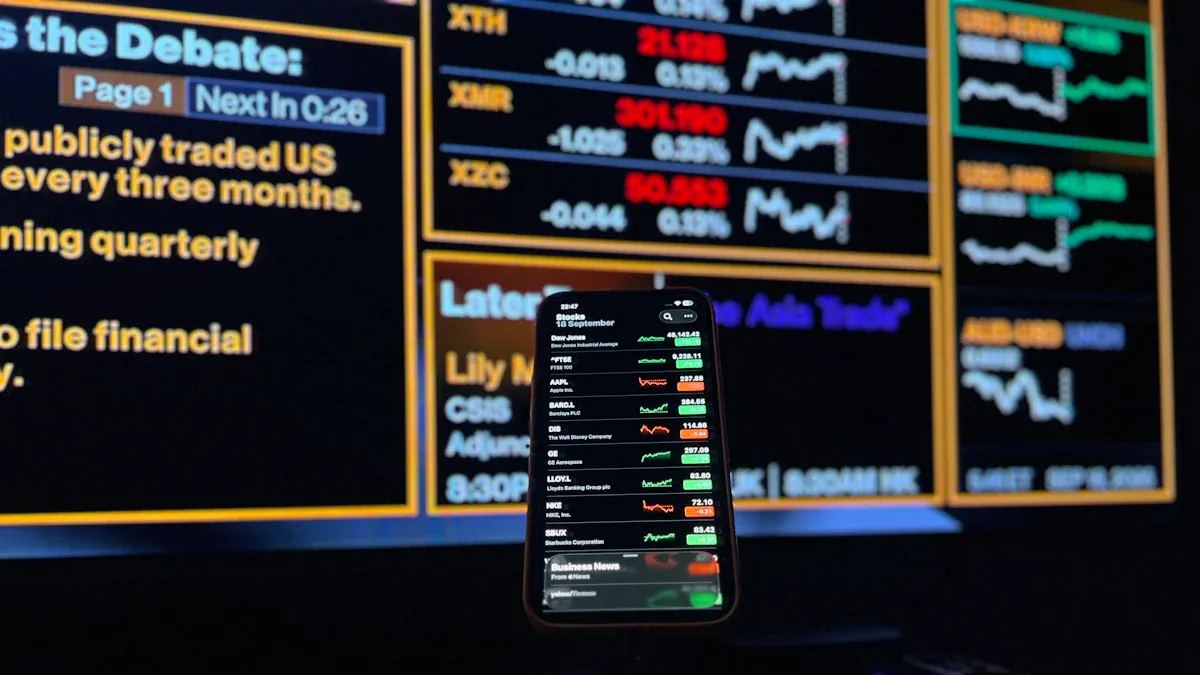
Image Source: pexels
Entering a new development stage, China’s capital market has initiated profound changes centered on “opening” and “deepening.” On one hand, through establishing interconnectivity mechanisms, the market has integrated into the global financial system with unprecedented breadth and depth; on the other hand, the issuance system reform centered on the registration system has fundamentally reshaped the market’s operational logic, pushing it toward a new journey of high-quality development.
Interconnectivity Mechanisms and A-Shares’ Inclusion in MSCI
If the share-trading reform resolved internal structural issues, then the establishment of interconnectivity mechanisms opened the door to the outside world. This mechanism allows qualified international and mainland Chinese investors to directly invest in each other’s market stocks through local exchanges’ trading and settlement systems.
| Program Name | Launch Date |
|---|---|
| Shanghai-Hong Kong Stock Connect | November 17, 2014 |
| Shenzhen-Hong Kong Stock Connect | December 5, 2016 |
This initiative greatly facilitated international capital entering the Chinese market. As an important achievement of market opening, major international index providers also began including A-shares in their global index systems. The “A-share inclusion” process by MSCI was particularly representative.
The MSCI China A Inclusion Index is designed to track the process of progressively including A-shares in the MSCI Emerging Markets Index. The index is tailored for global investors accessing the A-shares market via the Stock Connect mechanism and is calculated using stocks based on the offshore RMB exchange rate (CNH).
A-share inclusion proceeded in phases, advancing steadily:
- February 28, 2019: MSCI announced increasing the inclusion factor of China A-shares in the index from 5% to 20%.
- May 31, 2019: The first phase of weight increase took effect.
- November 2019: MSCI completed the annual inclusion plan, adding 168 mid-cap A-shares with a 20% inclusion factor.
“Inclusion in MSCI” not only brought considerable incremental funds to China’s stock market but, more importantly, promoted alignment with international standards in corporate governance, information disclosure, etc., accelerating the market’s own maturity and development.
Registration System Reform: From STAR Market to Full Market
The issuance system is the entrance and source of the capital market. For a long time, the A-share market implemented an approval system, where regulators judged enterprise value and investment risks. The registration system reform is a profound “delegation, regulation, and service” change, with its core shifting the selection of enterprise issuances to the market.
The curtain of this reform was officially opened by the establishment of the STAR Market.
On November 5, 2018, Chinese leaders announced the establishment of the STAR Market on the Shanghai Stock Exchange and piloting the registration system.
The establishment of the STAR Market and the pilot of the registration system marked elevating the capital market’s ability to serve technological innovation to an unprecedented strategic height. On the basis of successful piloting on the STAR Market, the registration system reform was steadily extended to the full market:
- 2020, ChiNext reform and registration system pilot.
- 2023, registration system reform formally implemented on the main board.
Thus, the A-share market fully entered the registration system era. This means the regulatory focus shifted from “whether the enterprise is worth investing in” to “whether information disclosure is authentic, accurate, and complete,” strengthening responsibilities of issuers and intermediaries, and laying an institutional foundation for market survival of the fittest and optimal resource allocation.
Embarking on a New Journey Toward High-Quality Development
With the deepening of the two major reforms—registration system and two-way opening—the capital market has entered a new stage of serving the real economy and promoting high-quality development. Regulatory authorities have launched a series of new policies aimed at supporting technological innovation and improving listed company quality.
The latest measures include:
- Adding a “growth tier” on the STAR Market, including all unprofitable tech companies, with stock codes attached with a “U” identifier for distinction.
- Expanding the application scope of the fifth set of listing rules to cover more frontier tech fields such as artificial intelligence, commercial aviation, and low-altitude economy.
- Implementing a pre-review pilot program for high-quality tech enterprises’ initial public offerings to improve review efficiency.
The results of these reforms are significant. As of October 2025, China’s stock market total capitalization has reached a historical high of approximately 14.95 trillion USD, with over 5000 listed companies and more than 200 million investors. Through 35 years of tumultuous changes, the market has grown from an initial “experimental field” into the “main battlefield” serving national strategies, forming a more standardized, transparent, open, vibrant, and resilient capital market.
Reviewing the over thirty-year journey, the core experience of China’s stock market lies in always resonating with national economic reforms. Adhering to marketization and rule of law is the cornerstone of its healthy development.
The market is establishing a punishment mechanism with “matching rights, responsibilities, and interests” through revising the Criminal Law and Securities Law, and promoting the shift of regulatory focus toward marketized and legalized supervision.
Today, the market stands at a new historical starting point, shouldering the new mission of serving technological innovation and promoting economic transformation. Looking to the future, a more standardized, transparent, open, vibrant, and resilient capital market is forming, which will play a more important role in serving the real economy and national strategies.
FAQ
Why did China establish a stock market?
China established the stock market to serve economic system reform. It provides enterprises with a new financing channel, helping companies raise development funds. This promotes enterprise joint-stock transformation and advances the construction of a market economy system.
What is the share-trading reform?
The share-trading reform resolved the historical issue of “same shares, different rights.” Through specific methods, it allowed previously non-circulating shares to gain circulation qualifications. This reform unified the interests of all shareholders, clearing obstacles for healthy market development.
What does the “810 incident” refer to?
The “810 incident” occurred in Shenzhen in 1992. The issuance of new share subscription lottery forms attracted approximately $545 million in funds, but chaotic management triggered a large-scale mass incident. This event directly prompted the establishment of the China Securities Regulatory Commission, marking the market beginning to move toward standardized regulation.
What is the difference between the approval system and the registration system?
These two systems are different rules for company stock issuance and listing. Their core difference lies in the role played by regulators.
- Approval System: Regulators not only review information but also judge the company’s investment value.
- Registration System: Regulators mainly review the authenticity and completeness of information disclosure, leaving company value judgment to the market.
*This article is provided for general information purposes and does not constitute legal, tax or other professional advice from BiyaPay or its subsidiaries and its affiliates, and it is not intended as a substitute for obtaining advice from a financial advisor or any other professional.
We make no representations, warranties or warranties, express or implied, as to the accuracy, completeness or timeliness of the contents of this publication.
Related Blogs of

Focusing on AI and Semiconductors: In-Depth Analysis of 10 Leading Future US Tech Stocks


Essential Apps for Getting Started with US Stock Futures: These Apps Will Turn You into a Pro


US Stock Market Holiday Countdown: How Investors Should Position for Next Week's Trading


How to Choose US Major Indices: Pros and Cons Analysis of S&P 500, Dow Jones, and Nasdaq

Choose Country or Region to Read Local Blog
 Australia
 Austria
 Belgium
 Canada
 Cyprus
 Czech Republic
 Denmark
 Estonia
 Finland
 France
 Germany
 Greece
 Hong Kong
 India
India Indonesia
 Ireland
 Italy
Italy Japan
Japan Latvia
 Lithuania
 Luxembourg
 Malaysia
 Malta
Malta Morocco
 Nepal
Nepal Netherlands
 New Zealand
 Norway
 Pakistan
 Philippines
 Poland
 Portugal
 Romania
 Singapore
 Slovakia
 Slovenia
 South Africa
 South Korea
 Spain
Spain Sweden
 Thailand
 The United States
 Turkey
 United Arab Emirates
 United Kingdom
 Vietnam
Contact Us




BIYA GLOBAL LLC is a licensed entity registered with the U.S. Securities and Exchange Commission (SEC No.: 802-127417); a certified member of the Financial Industry Regulatory Authority (FINRA) (Central Registration Depository CRD No.: 325027); regulated by the Financial Industry Regulatory Authority (FINRA) and the U.S. Securities and Exchange Commission (SEC).
BIYA GLOBAL LLC is registered with the Financial Crimes Enforcement Network (FinCEN), an agency under the U.S. Department of the Treasury, as a Money Services Business (MSB), with registration number 31000218637349, and regulated by the Financial Crimes Enforcement Network (FinCEN).
BIYA GLOBAL LIMITED is a registered Financial Service Provider (FSP) in New Zealand, with registration number FSP1007221, and is also a registered member of the Financial Services Complaints Limited (FSCL), an independent dispute resolution scheme in New Zealand.